.jpg)
The best landing page generator options of 2026 include: Unbounce, Leadpages, Landingi, Instapage, and GetResponse. The selection of the best one for your business will be influenced by factors such as: your budget, traffic levels, and the necessity of AI testing and integrations.
Abstract
The use of landing pages has changed since they were manually designed and written. Now, many landing pages can be created with AI assistance, allowing teams to develop campaign materials within minutes instead of hours. Not all tools are made equal.
This guide provides you with the ability to compare AI landing page generators with respect to copy quality, design versatility, conversion optimization functions, integration capabilities, and cost. This will assist you in selecting the perfect tool to enhance your performance and speed.
Top AI Landing Page Generators: At a Glance
What Are AI Landing Page Generators and Why They Matter
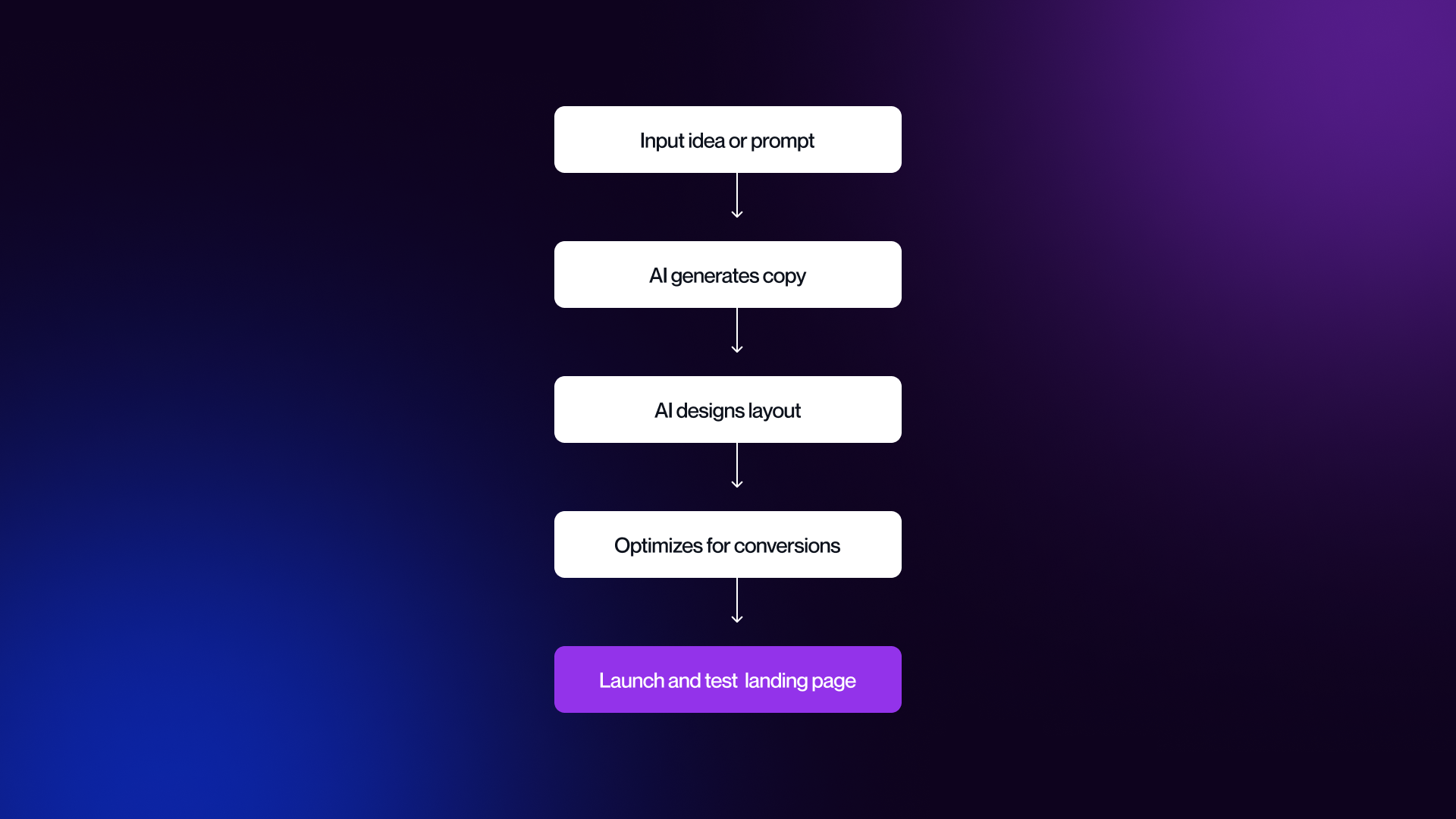
AI landing page generators help marketers automate some of the most important elements required in creating a professional landing page. These include content (copy), layout (design), and optimization.
All three play a significant role in allowing marketers to get their new business pages performing extremely well quickly.
Defining AI Landing Page Generators
AI Landing Page Builders are tools that utilize Artificial Intelligence to build landing pages based on a simple input or a few sentences.
Unlike most other landing page builders that provide drag and drop design features (require the user to write content separately, AI landing page builders allow the marketer to create copy and design elements at the same time.
These platforms are powered by Natural Language Processing, which:
- Generates content that converts
- Machine Learning algorithms that recommend layouts
- Generative Design Systems that create the pages
With this combination, users are able to create a landing page in less time, with a better starting
point for optimization.
Marketers will no longer need to handwrite headlines, choose section designs, test CTAs, etc. Instead, they can produce entire landing pages within minutes. This allows marketers to move away from producing campaigns and towards executing them using AI.
Growing Importance of Modern Businesses
The trend in creating AI landing page builders represents a larger paradigm shift in marketing
technologies. According to ResearchAndMarkets.com, the global landing page builder market will grow from approximately $715 million in 2025 to $2.7 billion by 2035, at a CAGR of 14%, driven by AI adoption.
Companies have several reasons for this shift.
First, they can be more efficient in terms of time. Companies that previously spent days developing a campaign, including briefing, writing copy, designing, and developing the landing pages, can now develop their campaigns in a matter of hours.
Second, they can be more efficient in terms of budget.
Third, companies can scale much faster.
As a result, companies can run more campaigns, test more different versions of each campaign, and react to changes in their markets more quickly.
Lastly, AI-based tools are becoming much more about performance. Therefore, features such as automated A/B testing, generating multiple AI-based versions of a landing page, and copy that focuses on conversions are all impacting the number of leads generated.
Key Differences: AI vs Traditional Builders
The biggest difference between AI and traditional Landing Page Builders is the level to which they automate. With AI tools, you can automate copy generation, recommend layouts, and optimize your CTA's. AI tools are ideal for rapid deployment of campaigns, scaling testing, and decreasing dependence on your design or copy teams.
With a traditional builder, you have complete manual control over your landing page creation. Traditional builders such as Webflow and WordPress allow you to manually create your own layout, write your own copy, and define the content of each page.
Additionally, they allow you to customize and gain more control over your brand. If you want a deeper comparison, check out our Webflow vs WordPress comparison blog.
AI vs Traditional Landing Page Builders
Core Comparison
Speed Comparison Bar Chart
Use Case Decision Tree
START: What matters most?
├── Speed & volume
│ └── → AI Landing Page Generators
│
├── Conversion testing at scale
│ └── → AI Landing Page Generators (Unbounce, Instapage)
│
├── Brand control & design precision
│ └── → Traditional Builders (Webflow, WordPress)
│
├── Custom integrations / complex builds
│ └── → Traditional or Custom Development
Core Features to Evaluate
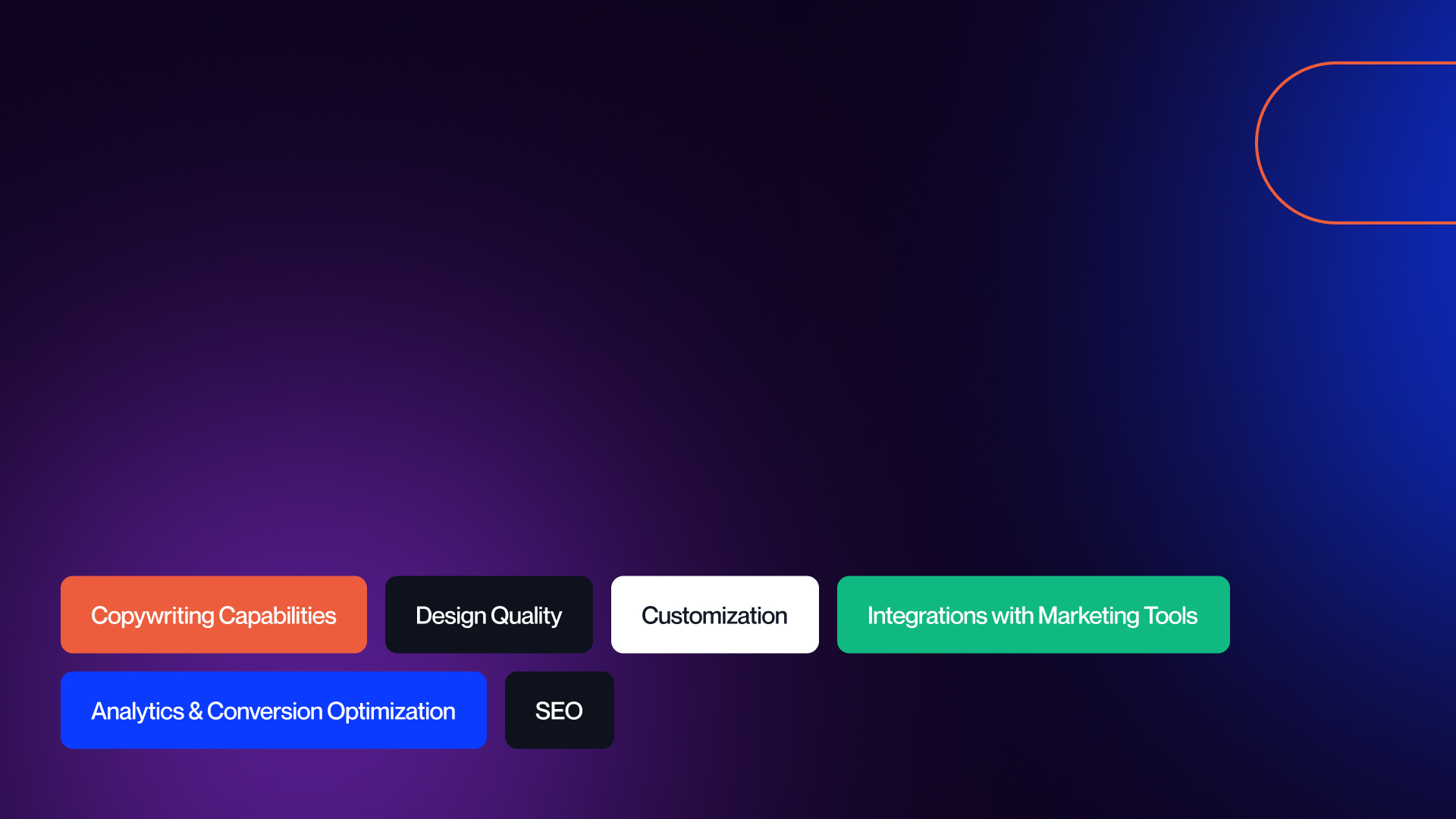
It’s important to understand that not every AI landing page delivers the same outcomes, and this is why evaluating things like design, copy, integrations, and optimization features is absolutely integral.
Finding the right combination impacts performance speed, as well as your site’s conversion performance.
AI Content and Copywriting Capabilities
AI landing page generators come with a wealth of benefits for businesses, not least the fact that they can produce copy instantaneously. Most of them can generate headlines, subheadings, CTAs, and actual body content from short prompts aimed at a specific purpose
It is essential to keep in mind that quality can vary considerably when it comes to AI tools producing copy. Some churn out generic content, while others (like Unbounce) are able to produce more contextual content based on intent or audience. This difference is notable when it comes to structure and readability, and, most importantly, conversions.
Customization is also improving. A lot of platforms allow for alignment with brand voice, and this is the area where Landingi stands out, with support options for over 35 languages making it perfect for global campaigns.
Template and Design Quality
Templates are key to determining how quickly you can launch high-performing pages. Most tools offer large template libraries, ranging from 100 to 500+ designs, covering use cases like SaaS signups, webinars, and ecommerce offers.
AI enhances this by recommending templates based on your industry or campaign goals. Instead of manual browsing, users can generate layouts based around their input.
However, design quality differs, and some platforms are more focused on speed of delivery over originality. This can result in generic-looking pages that get lost among the competition. Alternatively, platforms like Framer or Instapage provide more polished and modern designs.
Mobile responsiveness is also crucial, and high-performing tools automatically optimize layouts for mobile. This is essential due to a landing page statistic from SEO Sherpa that reveals mobile accounts for 83% of landing page traffic.
Customization and Design Flexibility
AI can certainly speed up creation, but customization is the element that really determines how far the final design can go. Many AI tools allow only basic adjustments to things like font, colors, images, and layout structure.
Platforms like Unbounce and Instapage give more flexibility than the likes of Wix, which limits detailed customization.
The AI tradeoff paradox is clear, with increased automation providing greater speed, but less control than manual design.
Smaller businesses and startup teams can utilize AI to achieve faster launch times, but those agencies focused on greater detail and design will typically need more in-depth customization to enhance performance optimization.
Integrations with Marketing Tools
Integration with marketing tools is a key part of improving functionality, and this is why it’s essential to ensure your landing pages integrate with your marketing ecosystem. The majority of AI landing page generators can integrate seamlessly with:
- CRMs like HubSpot, Salesforce, and Pipedrive
- Email marketing tools like GetResponse
- Analytics platforms such as Google Analytics
- Ecommerce platforms like Shopify
GetResponse stands out because it combines email marketing and landing pages into a single cohesive platform. This is essential for reducing reliance on third-party integrations.
Analytics and Conversion Optimization
Conversion performance is integral to any modern website and landing page, and this is one element where AI landing page generators can really stand out.
Many platforms have built-in analytics dashboards that track key metrics like bounce rates, conversions, and engagement. Advanced tools allow for deeper analytics via things like A/B testing.
Unbounce is a great example of this, and its Smart Traffic feature uses AI to route visitors to areas most likely to convert… with the company claiming up to a 30% increase in conversion rates on average.
Instapage uses heatmaps and session recordings to give your teams greater insight into user behavior and friction points.
SEO Optimization Features
AI landing page generators focus on speed and conversions, but SEO remains critical for long-term traffic. Many AI tools support basic on-page SEO features, including:
- Meta titles and descriptions
- Alt text for images
- Custom URLs
A lot of these platforms also offer limited support for structured data and schema markup, but this is often less robust than traditional builders.
Page speed also matters, and AI-generated pages often come with unnecessary elements that impact Core Web Vitals, meaning optimization still requires some manual refinement.
AI-generated copy needs to be reviewed for SEO quality. It might be fast and easy to produce, but it is often lacking in originality and depth. Both factors are crucial for SEO rankings. If you want to improve organic performance, combining landing pages with the right strategy is essential. Exploring the best AI SEO tools alongside strong Webflow SEO capabilities provides a lot more control over long-term traffic.
AI Landing Page Generator Feature Matrix
AI Capabilities
Design & Templates
Conversion Features
Integrations
SEO
Pricing
Top AI Landing Page Generators
The leading AI landing page tools vary depending on what your business needs them for, as well as the role they play in improving your landing pages. From conversion-focused platforms such as Unbounce, to beginner-friendly options like Wix, making the right choice depends on budget, goals, and level of control needed.
Evaluation Methodology
Comparing AI landing page generators objectively involves assessing five key criteria: AI copy quality, ease of use, design output, cost, and CRO.
Each platform is assessed using the same prompt in order to assess how well it can generate a complete, conversion-ready landing page. This allows for a direct comparison of the pertinent factors.
But not all of these factors are weighted equally, and which mattress is the most valuable depends on what your business values. A lot of tools can generate visually appealing pages, but consistently improving conversion rates via testing and optimization tends to be less common.
Best for Businesses and Agencies
Unbounce

Unbounce remains one of the leading conversion-focused AI landing page builders on the market. Its Smart Traffic features utilizes AI to route visitors to the area most likely to convert, with Unbounce reporting up to 30% average lift in conversion rates.
The platform also includes Smart Builder for AI-powered page creation, as well as Smart Copy for generating headlines, CTAs, and supporting content. This is a combination focused on generation and optimization.
With prices ranging from $74 to $187 per month, visitor limits are between 20,000 and 50,000, depending on the plan. Unbounce is perfectly suited for agencies and marketing teams that need to run numerous campaigns, and where A/B testing and performance optimization are critical.
Instapage

Instapage is the optimal choice for organizations seeking enterprise-grade marketing campaigns, and it excels in personalization, a core component of modern landing pages. This is something that sets it apart from pure AI generation and helps boost conversion opportunities.
Features like heatmaps and performance insights provide a more in-depth understanding of user behavior and habits, which is highly effective when combined with collaboration tools.
Pricing starts at $199 per month for the Build/Optimize tier plan, while custom enterprise-level pricing is perfect for advanced projects.
Instapage is the standout choice for enterprise-grade organizations looking for data-driven optimization and personalization, as opposed to focusing solely on speed alone.
Landingi
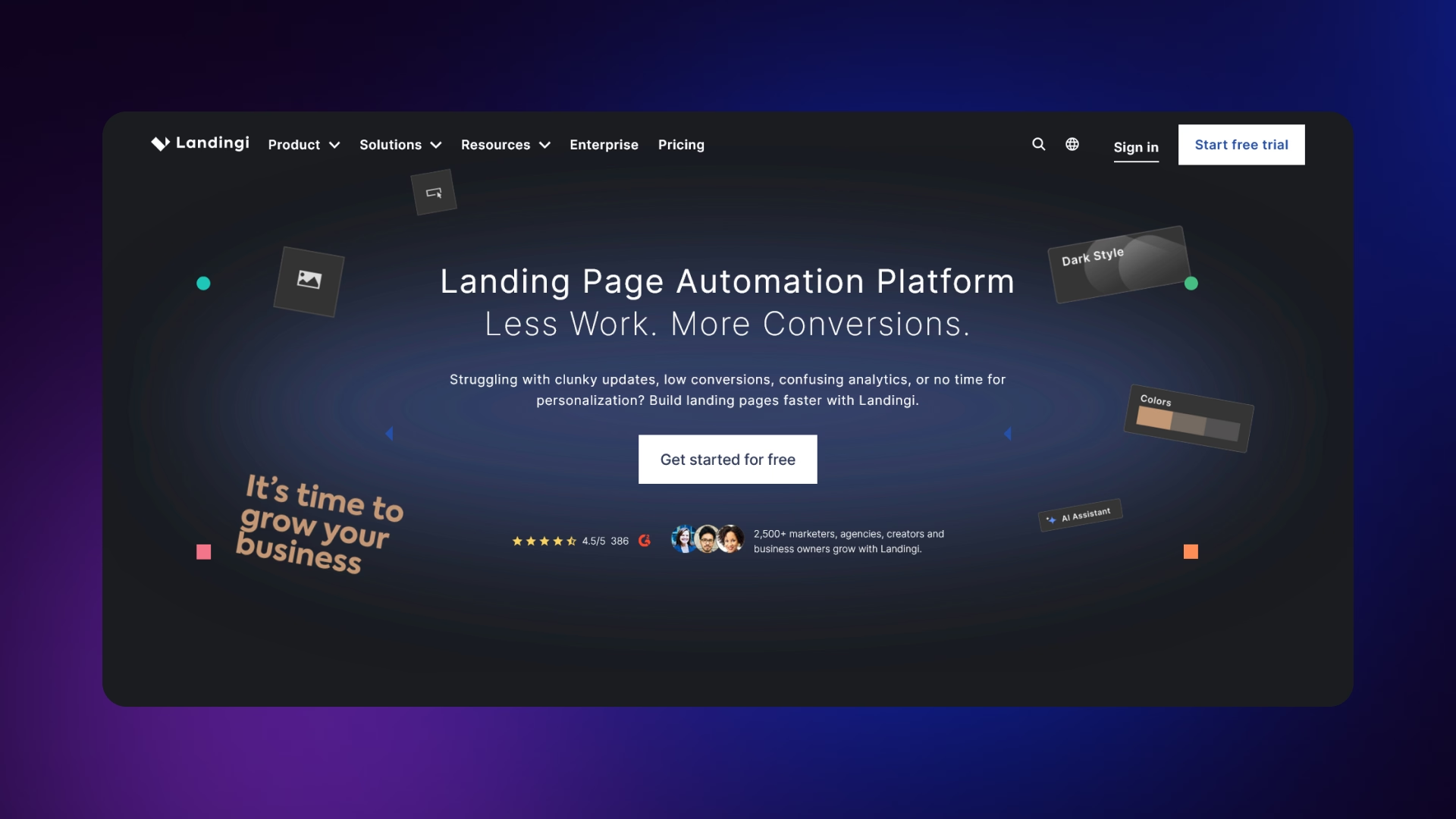
Landingi provides the perfect balance between an affordable platform and a functional one, making it ideal for agencies working across multiple verticals.
Its in-built AI Assistant helps generate and refine copy, including tone adjustments of multilingual support across more than 35 languages, making it vital for global marketing campaigns.
Landingi offers more than 400 templates and modular ‘smart sections’ to speed up page creation. Pricing ranges from £20 per month for the Lite plan to £49 per month for the Pro plan, with the Enterprise plan costing £920 per month. Visitor caps are dependent upon the plan you choose.
Landingi is the optimal choice for teams seeking scalable, multilingual landing pages without the need (or cost) for enterprise tools.
Best for Startups and Small Businesses
Leadpages
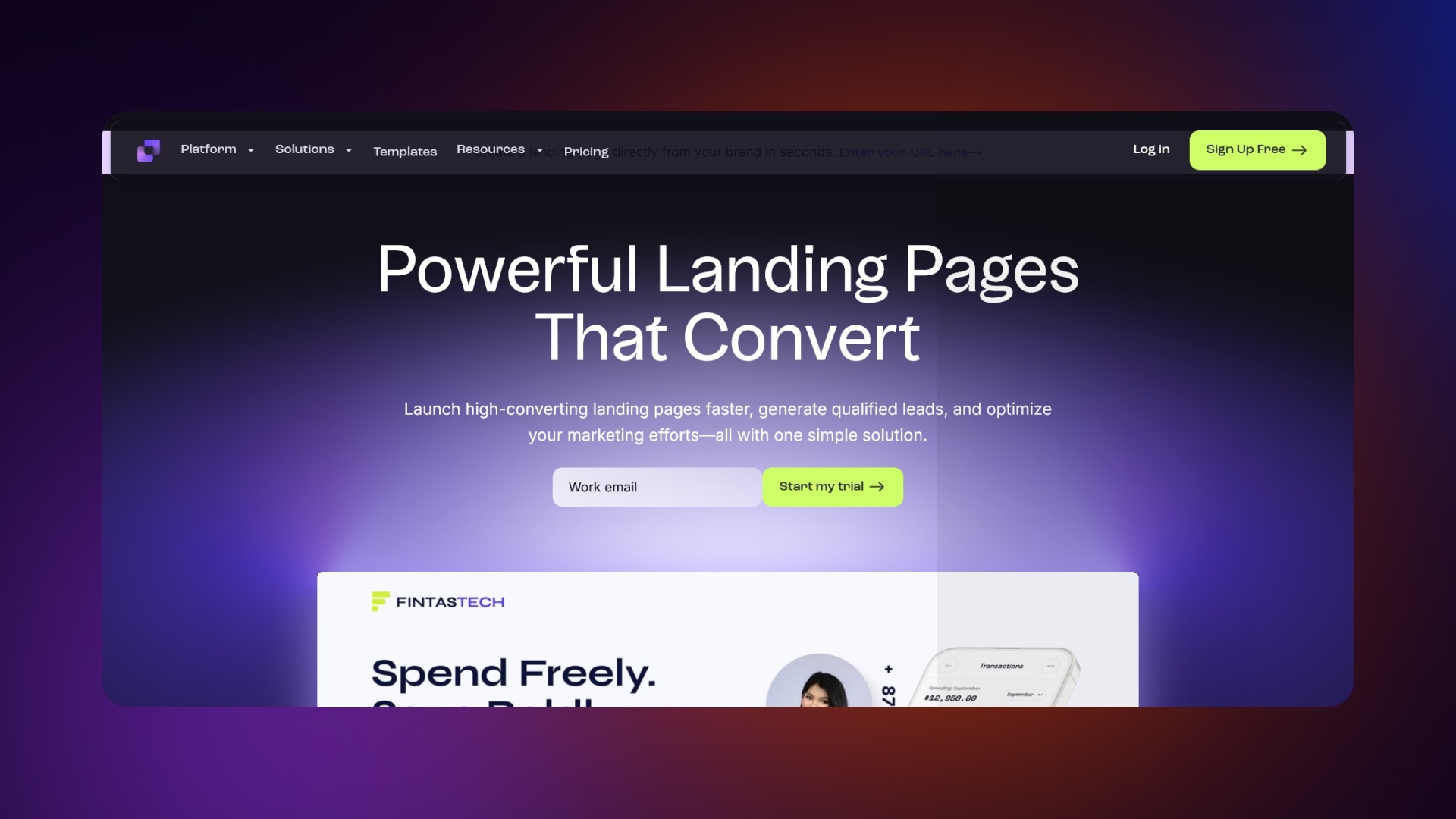
Leadpages stands out as one of the most cost-effective choices, with multiple pricing options to meet a range of different business budgets.
The Leadmeter function equips organizations with real-time suggestions focused on boosting conversion rates. This helps improve optimization without the need for in-depth technical knowledge and experience. With more that 500 templates to choose from, and a Webflow-style drag-and-drop builder, Leadpages is ideal for speed and accessibility.
Leadpages stands out for small businesses and startups seeking reliable performance while avoiding high costs and unnecessary complexity.
GetResponse
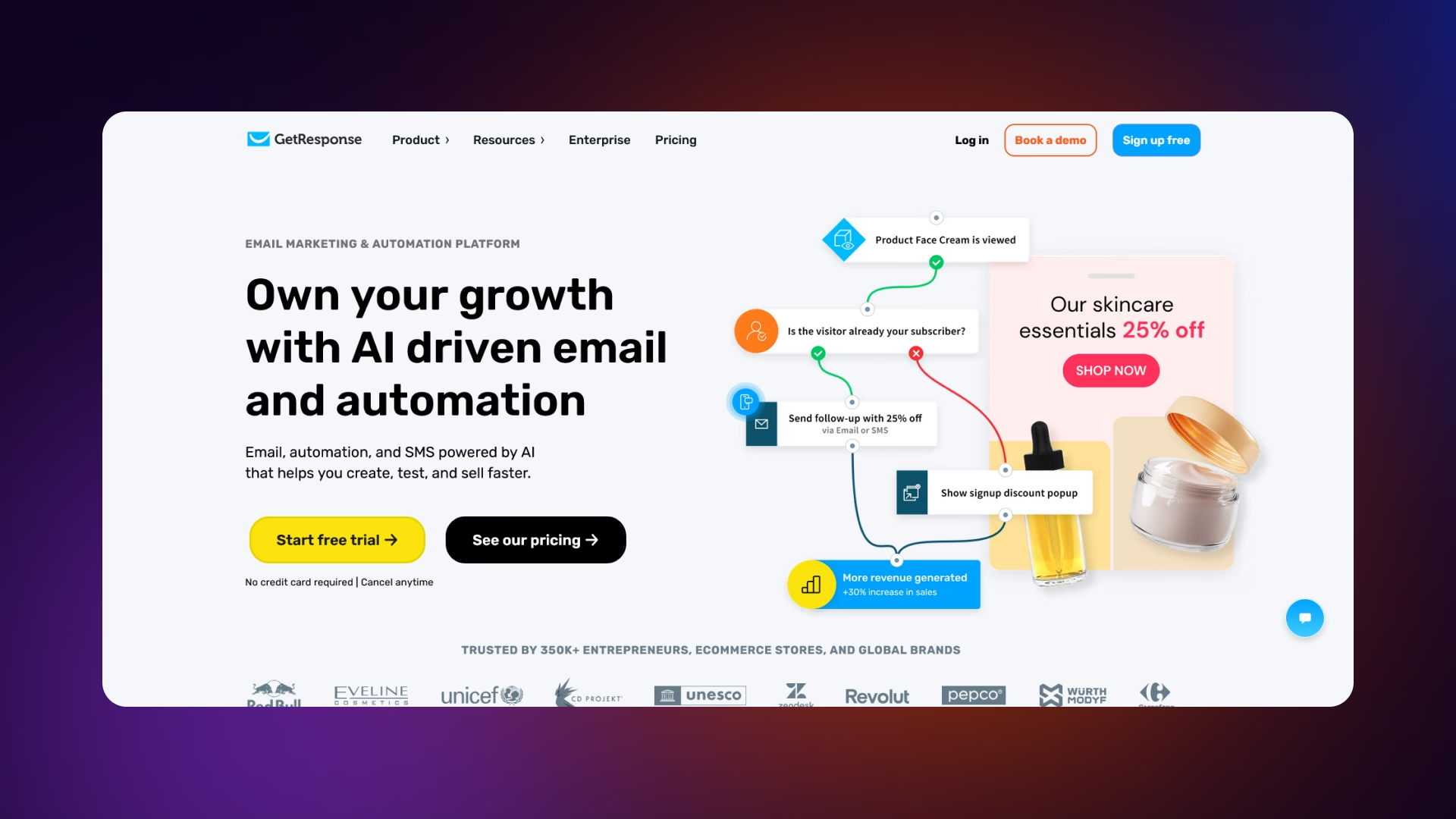
GetResponse combines landing pages and email marketing in one streamlined platform, which helps it stand out from the other choices on the market. This AI generator can create full landing pages using a short questionnaire, which significantly reduces setup and launch time.
Pricing for GetResponse ranges from $19 to $99, depending on features and the size of your contact list.
This is a strong choice for email-first marketers who are seeking an all-in-one platform, as opposed to managing multiple tools.
Wix
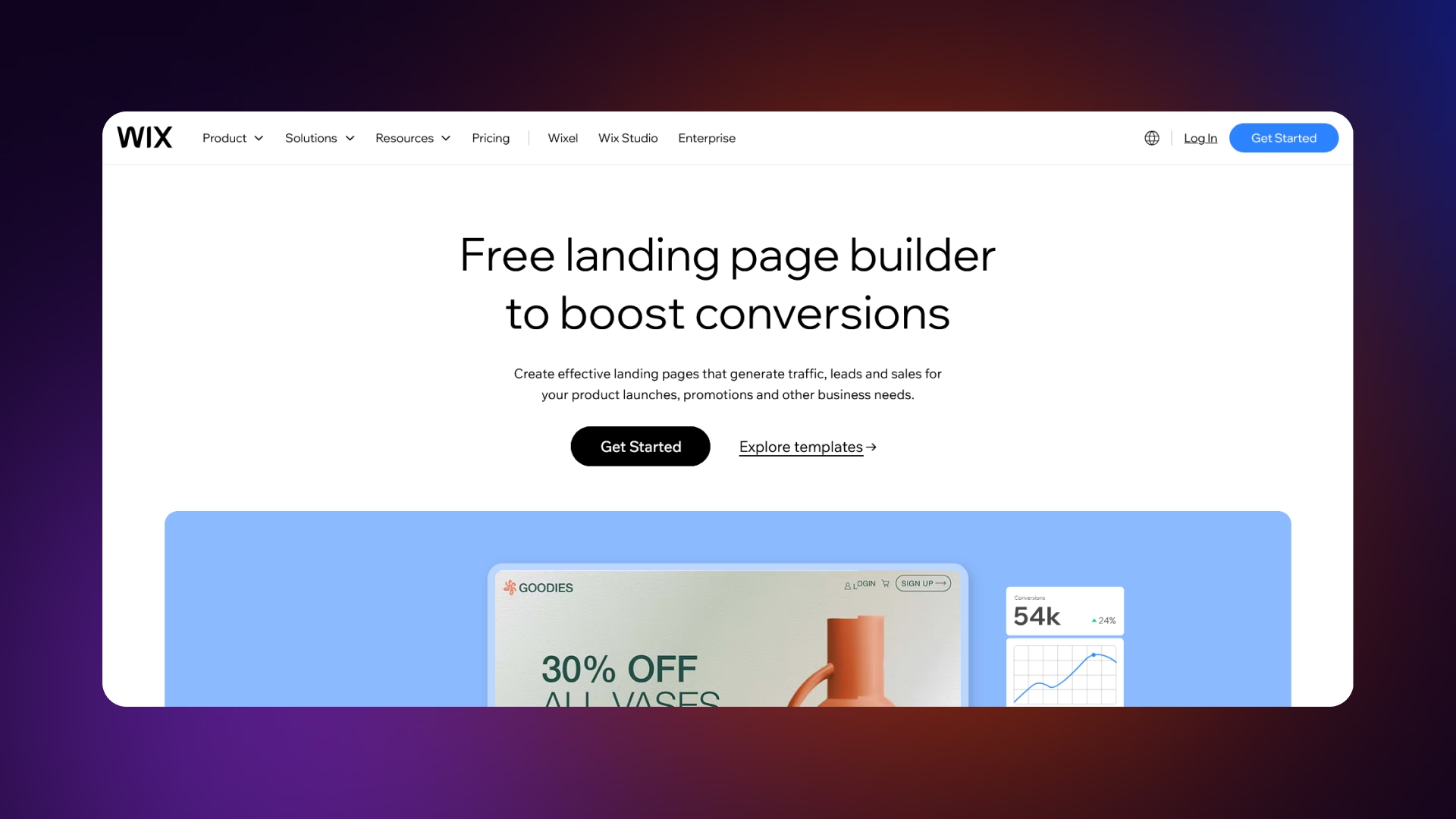
Wix is the most beginner-appropriate option in this category. The AI website builder can help generate landing pages quickly with minimal input, making it perfect for non-technical users.
The trade-off here comes with control and performance. Wix might be suitable for basic use cases, and its output tends to be more generic and less optimized for conversion compared to specialized tools.
Wix is perfect for quick launches and easy, basic campaigns, where ease of use is more important than advanced optimization.
Best for Ecommerce
Replo
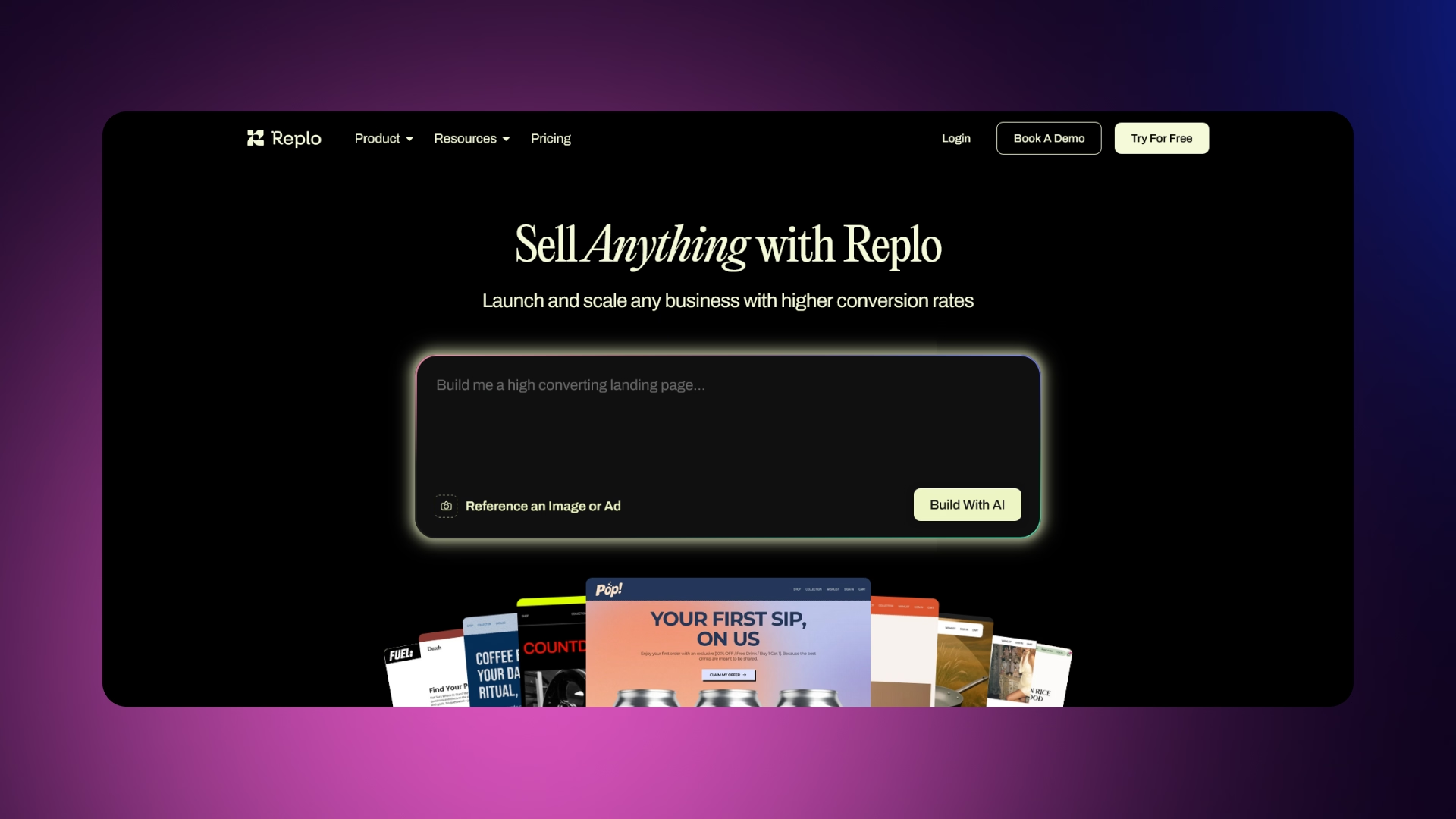
Replo’s Shopify integration makes it one of the strongest and most prominent options for ecommerce brands. Replo works by pulling real product data directly from Shopify and can generate landing pages via text prompts, screenshots, and existing URLs. This is the perfect way of being able to reduce the gap between product data and landing page creation.
Replo offers in-depth, pixel-level design control and built-in A/B testing through Replo Experiments, allowing your team to optimize performance without having to leave the platform.
The platform is best for DTC brands and Shopify stores that require fast, high-converting product and campaign pages.
Shogun
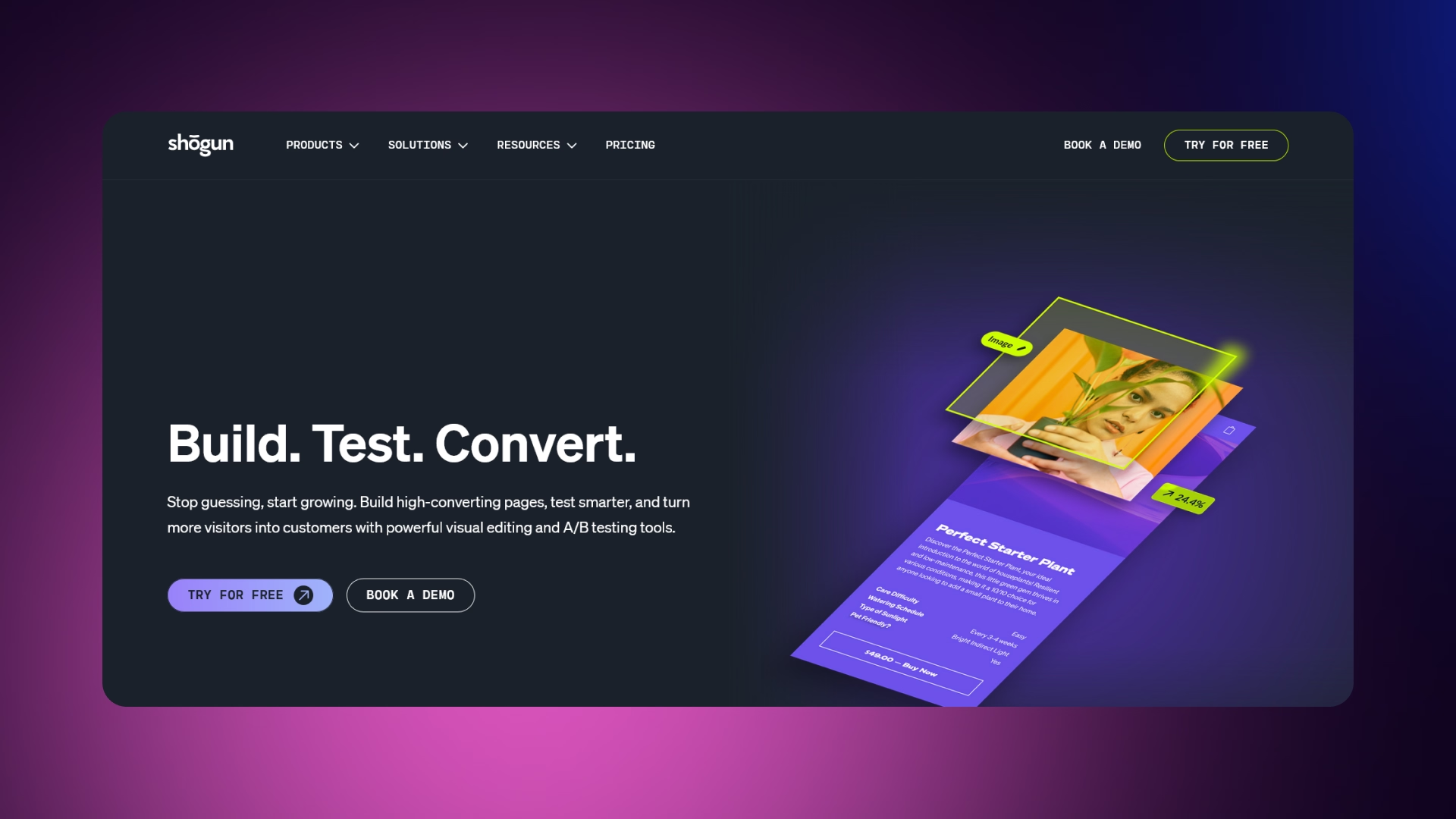
Shogun is also a Shopify-focused builder that emphasizes flexibility and customization. It does have some AI features involved, but its strength lies in the visual editor and ecommerce integrations, as opposed to AI-driven optimization.
PageFly
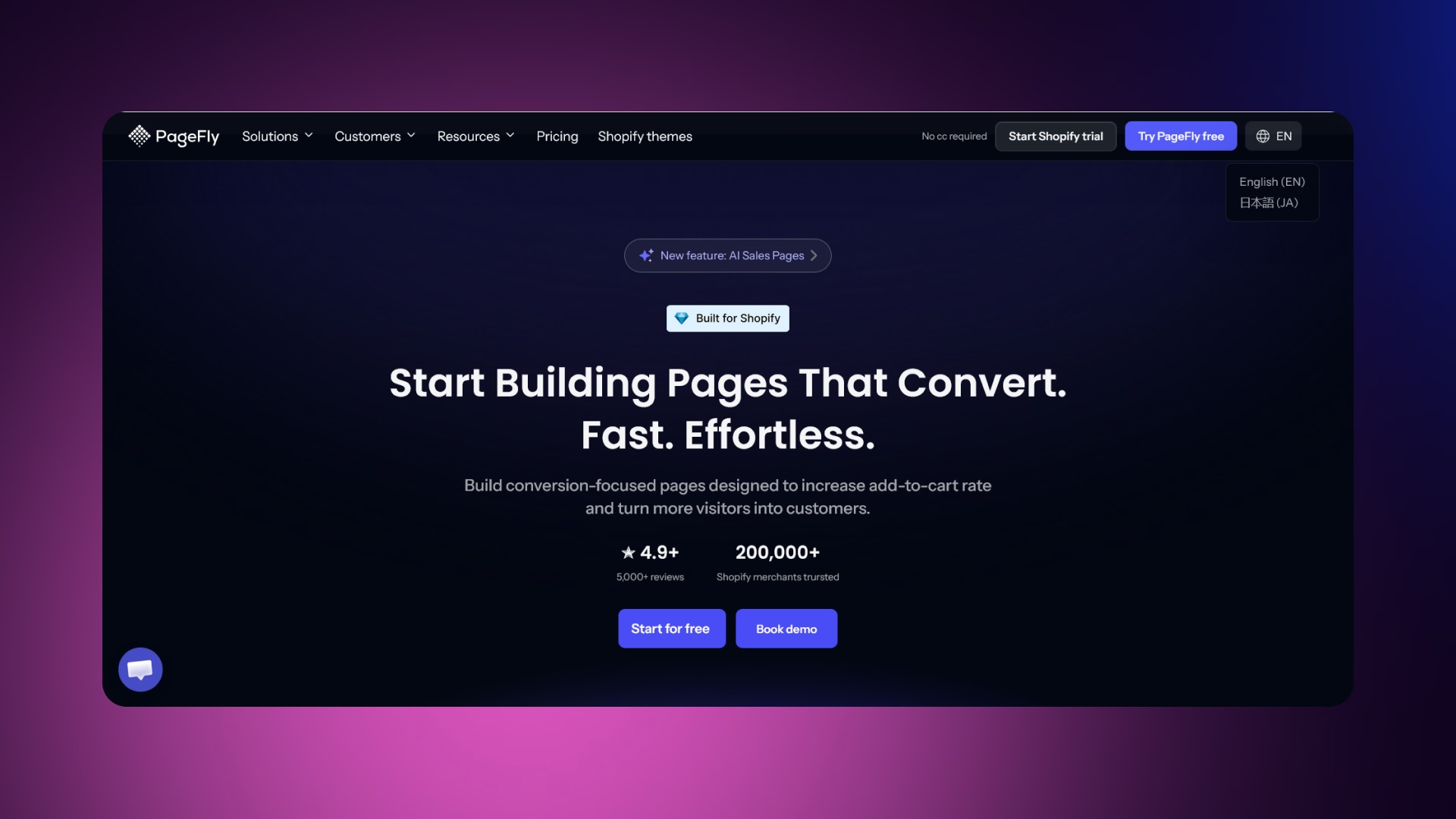
PageFly is one of the most budget-friendly Shopify alternatives on the market, with a large template library and plenty of excellent customization options. It’s perfectly suited to smaller ecommerce teams that require enterprise flexibility without dealing with enterprise pricing.
Niche and Specialized Tools
Some of the best tools do not fit neatly into the specific categories, but they serve specific use cases.
For instance:
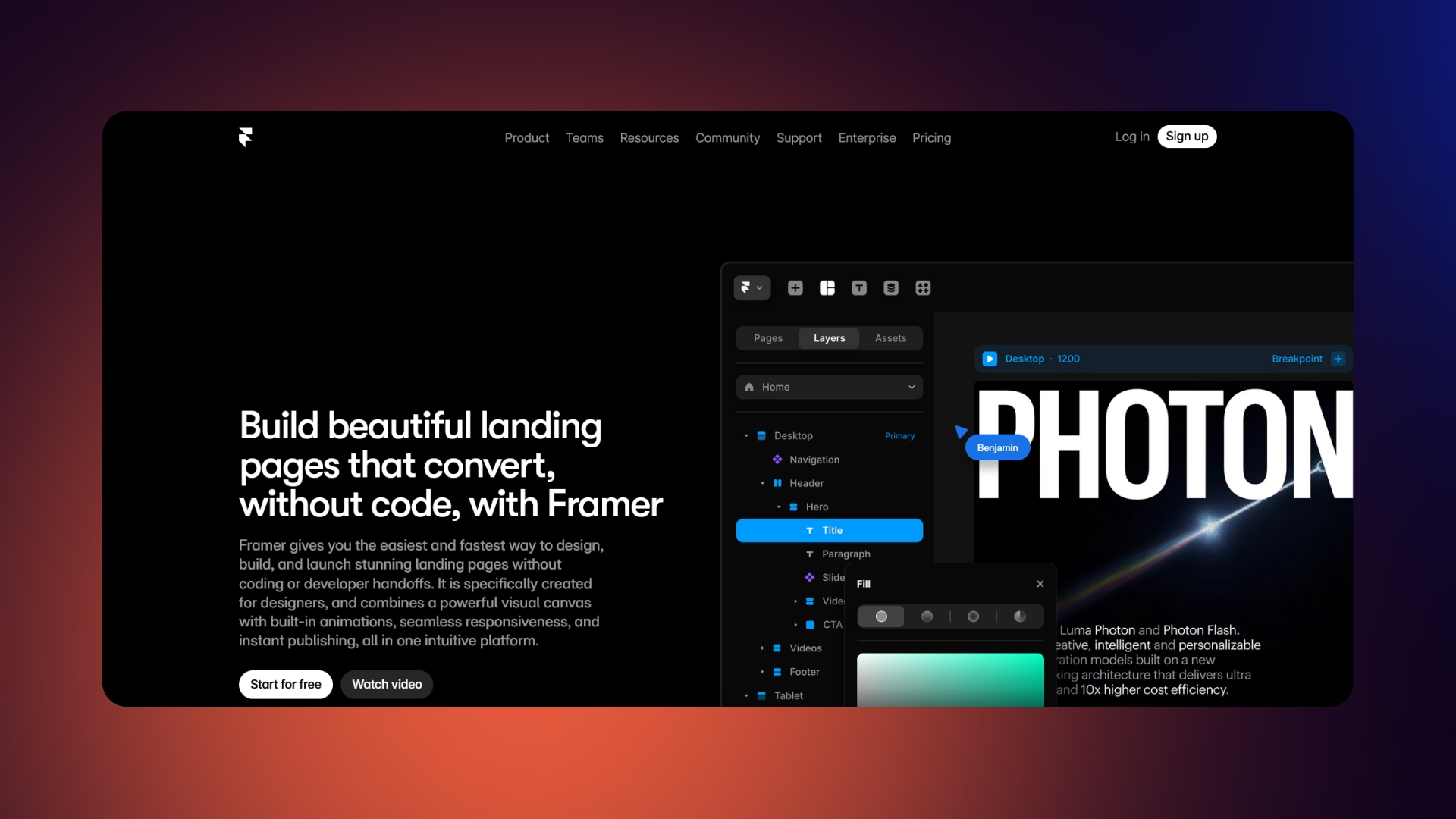
Framer is a design-forward builder with strong animation and visual capabilities. The AI features involved help to generate layouts as quickly as possible, but it is definitely better suited for design-led projects than conversion-focused campaigns.
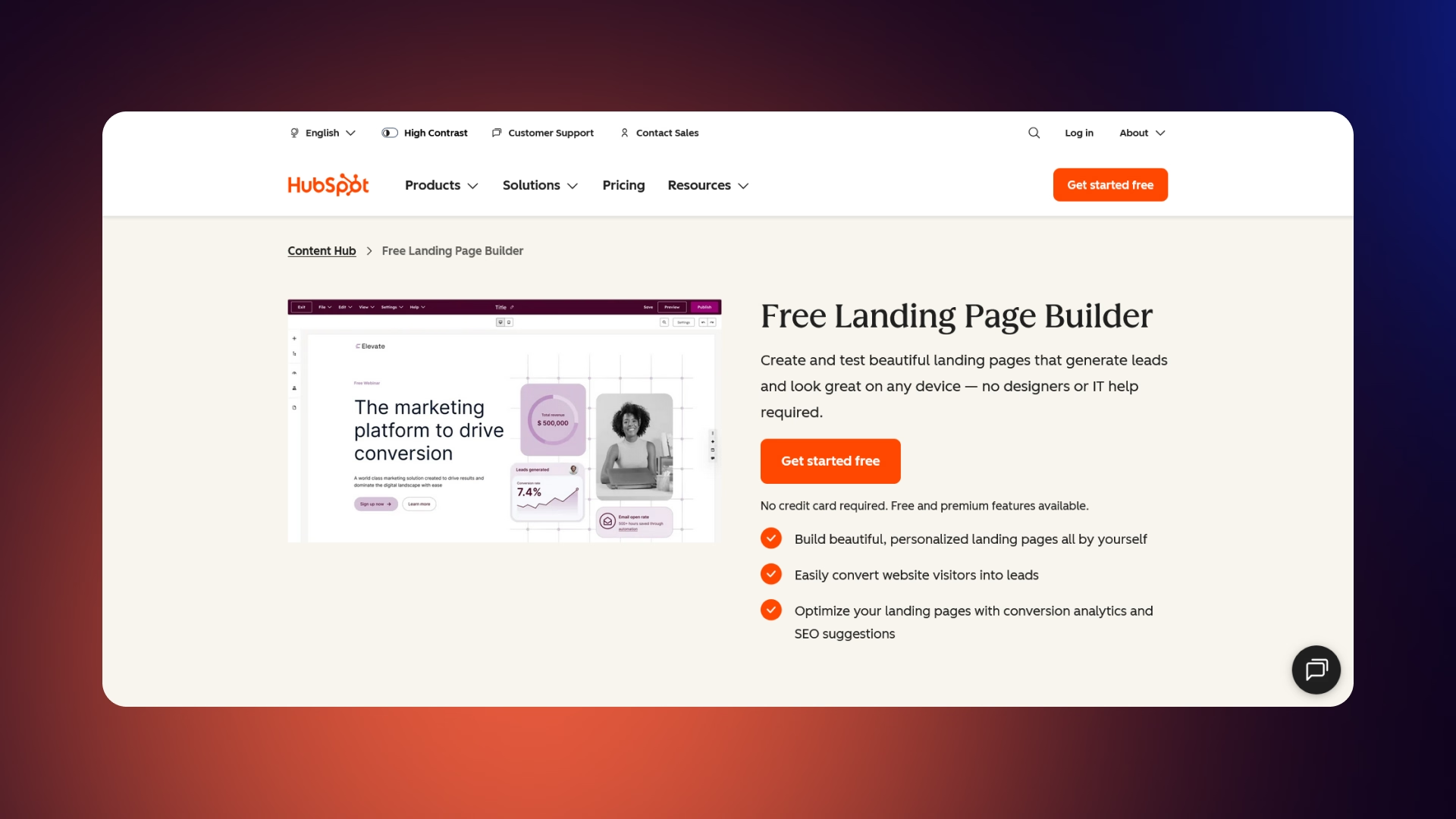
Hubspot integrates landing pages directly into its CRM ecosystem. This makes it perfect for teams already using HubSpot, but it’s less flexible when used as a standalone solution.
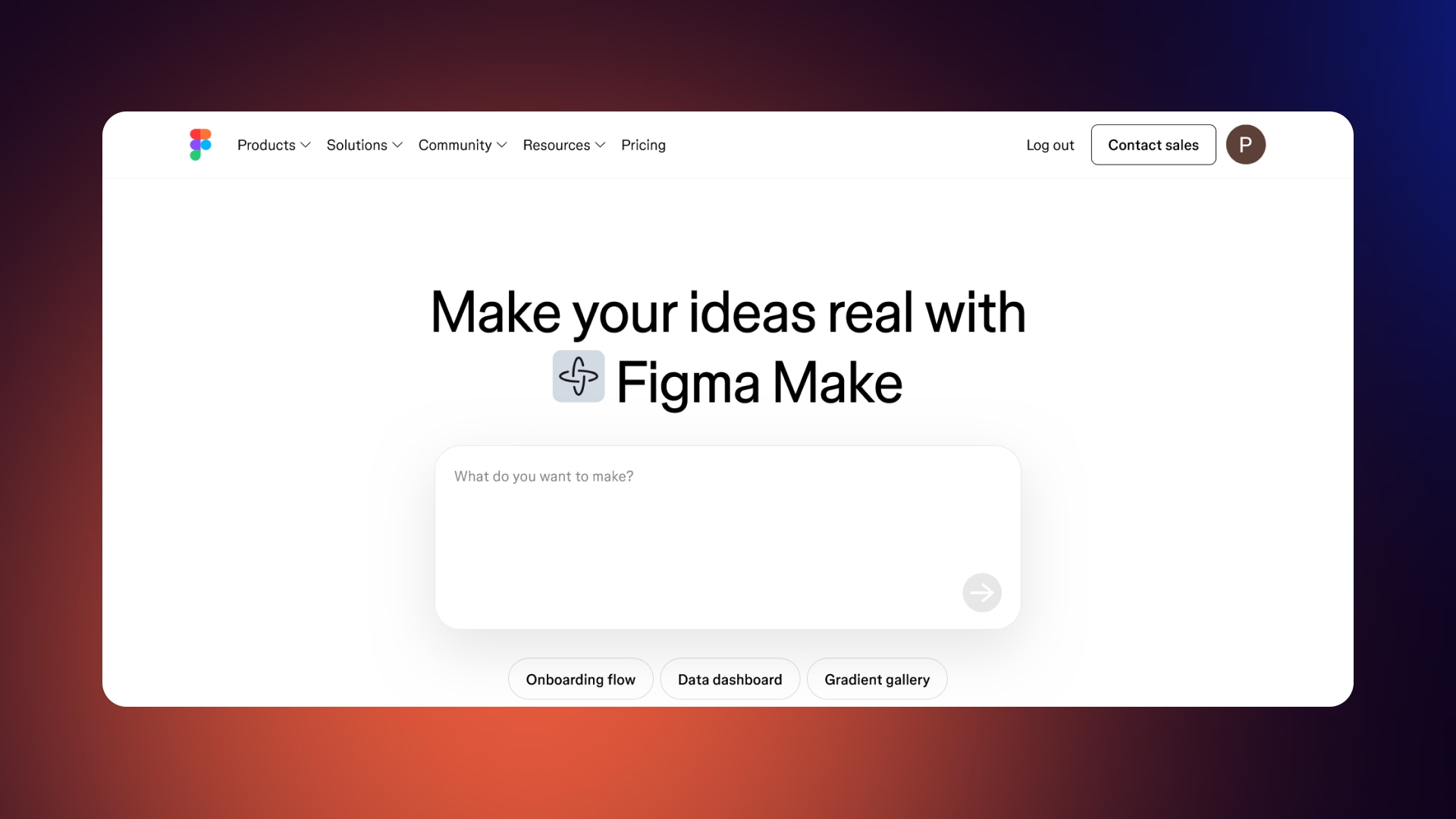
Figma Make supports your design workflows and rapid prototyping, making it useful for designers as opposed to marketers.
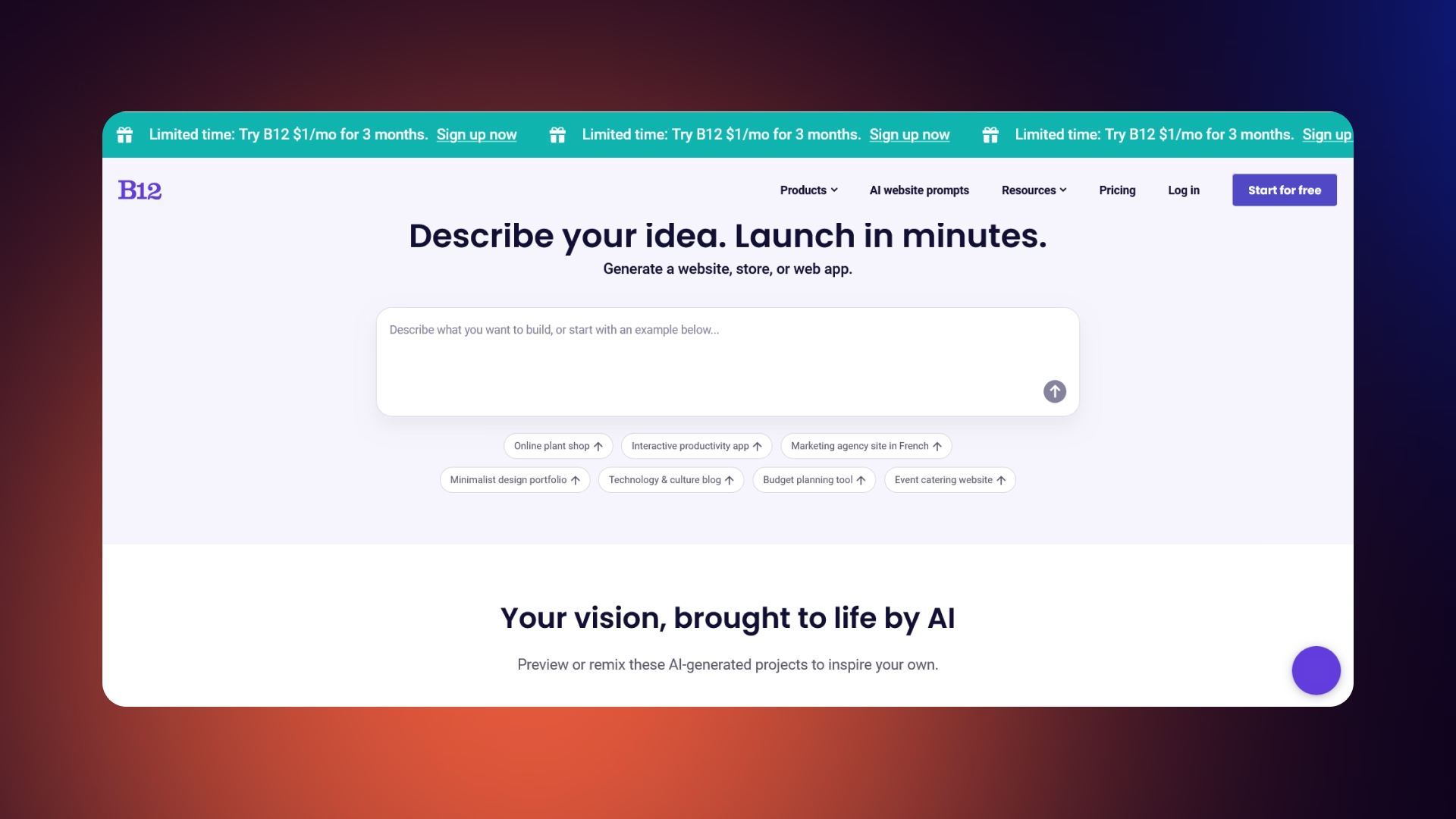
B12 is focused more on full automation, and can generate entire websites, including landing pages, with minimal input. While efficient, it also offers less control over things like customization.
AI Landing Page Generator Summary Comparison
Rating Legend
- ★★★★★ = Excellent
- ★★★★☆ = Very Good
- ★★★☆☆ = Good
- ★★☆☆☆ = Limited
- ★☆☆☆☆ = Poor
Pricing, Ease of Use, and User Experience
Scalability and long-term value are greatly impacted by things like pricing, usability, and customer support. This is why it’s so important to understand these factors so you can find the best platform to suit your budget and team capabilities.
Pricing Models and Plans
AI landing page generators typically follow three pricing models: subscription-based, freemium tiers, and usage-based pricing tied to traffic or features.
Most tools operate on monthly subscriptions, but the main differences lie in the visitor limits vs unlimited traffic. A visit to the Unbounce pricing page shows that the platform caps traffic between 20,000 and 50,000 visitors, depending upon the plan.
Leadpages pricing plans start at £39 per month (£30/annual) for a Standard plan, and £79 per month for a Pro plan (£60/annual). There are also Custom plans available for those seeking more in-depth and involved campaigns.
Free trials are commonplace across the category, with 14-day trials fairly standard for platforms including Unbounce, Instapage, and Leadpages. This means it is easy and user-friendly to test the tools before committing to one.
Hidden costs can sometimes occur, and it is important to watch out for these, as pricing can become more complex here. These hidden costs can include things like traffic overages, advanced features such as A/B testing, and integration costs for CRM or analytics tools.
Pricing scalability is vital for growing teams, and matters just as much as entry costs. Tools start off cheap and then can become expensive as traffic increases.
AI Landing Page Generator Pricing Comparison (2026)
What’s Included at Each Tier?
Visitor Limits vs Unlimited Traffic
Key Insight Callout: "Leadpages offers the best value for high-traffic sites with unlimited visitors on all plans. Unbounce justifies higher pricing with Smart Traffic AI optimization. Landingi provides the best multilingual value."
Ease of Use and Learning Curve
Ease of use is something that typically varies when it comes to AI landing page generators, and making the right choice for your business often depends on things like complexity and technical experience.
Wix, GetResponse, and Leadpages are certainly the most beginner-friendly. These are platforms that prioritize simple templates, setup guidance, and low-friction workflows, and this means they are ideal for smaller teams and startup businesses.
Unbounce and Landingi are mid-level, offering more advanced optimization features than the previous options, but also boasting strong accessibility. There’s definitely a learning curve, particularly when it comes to things like A/B testing, traffic rules, and performance tracking, and they are more manageable without the need for design or development.
Instapage and Webflow are at the more advanced end of the spectrum, providing greater control, and requiring more skill. Instapage is more complicated due to its collaboration and personalization features, while Webflow requires a strong grasp of layout, structure, and design.
This is the area in which AI adds genuine value. By being able to generate layouts, copy, and page structure automatically, this helps to reduce the technical work that is necessary to launch a page, and this helps teams spend more time on messaging, testing, and campaign strategy.
Customer Support and Resources
The quality of support you receive is also a decisive factor when it comes to teams that are running high-stakes campaigns. Unbounce stands out for its strong community, detailed documentation, and onboarding resources. The platform also offers live chat and support across the majority of plans, which makes it easier to troubleshoot issues as quickly and effectively as possible.
Leadpages provides a well-structured help center with guides, tutorials, and onboarding content. Leadpages might not provide the same kind of community depth as the likes of Unbounce, but it remains highly accessible for the majority of users.
Instapage is an enterprise tool that provides dedicated support, onboarding assistance, and account management, which is tied to higher pricing tiers.
Typically, the majority of platforms will provide tutorials, video walkthroughs, and community forums or support channels all across the board. The core difference here comes in how quickly and effectively users are able to resolve issues when they arise, and this becomes crucial as campaigns scale.
Pros, Cons, and Alternatives
Understanding the pros, cons, and alternatives of AI landing page generators is critical, and their speed and scalability come with the trade-off of customization and control. Complex needs, or a brand-critical focus might be better suited to alternatives like Webflow.
Key Advantages of AI Landing Page Generators
AI landing page generators come with multiple advantages that make them stand out from traditional methods. Speed is one of the biggest and most prominent advantages of AI landing page generators, and design elements that once took days to achieve, such as design, copy, and development, can now be achieved in minutes because of AI.
This is something that helps marketing teams to launch their campaigns faster, avoiding bottlenecks, and developing the best possible landing pages.
Cost efficiency is another major advantage. Businesses no longer require designers or copywriters for all their campaigns. AI takes charge of initial creation, whilst also reducing production costs and maintaining quality across the board.
The great thing about these tools is that they also scale well. Teams can generate multiple landing pages for different audiences, offers, or campaigns without increasing workload. This, combined with built-in mobile responsiveness, means you can ensure consistent performance across your devices.
With an increasing focus on optimization, AI tools utilize features like automated A/B testing, AI-generated variants, and traffic routing in order to improve conversion rates as well as faster production.
Common Limitations
Like traditional methods, AI landing page generators come with their limitations, and customization ranks as the most prominent. Many AI tools allow for basic edits, but they don’t offer the level of control that most companies need to provide the optimal brand experience. As a result, a lot of pages can feel similar, even among different companies, if they’re using the same platform.
AI-generated content brings a separate challenge with it… it’s fast and efficient, but it can also produce generic copy that does not completely align with brand voice or messaging. It will require manual refinement to improve it.
There are many SEO considerations you need to make, with AI-generated pages lacking depth and originality, and this is something that can limit organic performance if it isn’t properly optimized.
Pricing is also something that can scale quickly, with many tools charging based on advanced features or the amount of traffic involved. This means that as campaigns scale, costs can increase, and this is particularly true when it comes to high-volume teams.
Alternatives to AI Landing Page Generators
Teams seeking greater control may find that AI tools do not always offer the best option. Platforms like Webflow can offer pixel-perfect design flexibility and full customization, which makes them essential for brand-critical landing pages.
Webflow doesn’t actually include native AI generation, but it does give considerably greater control over things like layout, performance, and user experience. If you want a deeper comparison, check out our Webflow vs. WordPress comparison.
When it comes to teams evaluating costs and scalability, a detailed Webflow pricing breakdown can help provide context for how traditional landing page builders can compare with AI tools over time.
Custom development is perfectly suited to more complex scenarios, offering more complete control over design, integrations, and performance. However, this also comes with higher potential costs, and longer timelines.
In most cases, the majority of organizations will find a hybrid approach to be the most effective and impactful. Teams are able to utilize AI tools to generate initial drafts and then use custom designs to try to refine them and make improvements.
If your business needs high-performance, fully customized landing pages, you can close the gap by working with specialists. For instance, Veza Digital’s Webflow development services focus on developing conversion-driven pages which are tailored to specific business goals. Exploring the best Webflow agencies out there is a great way of understanding how different professionals approach custom builds.
With regards to SEO, being able to combine strong design and technical optimization is critical. Being able to leverage Webflow SEO capabilities helps ensure that landing pages stand out aesthetically, as well as performing well in search results.
Choosing the Right AI Landing Page Tool: Decision Framework
Step 1: Define Your Primary Need
Step 2: Budget Check
Step 3: Technical Skill Level
Decision Flowchart
START: What’s your top priority?
├── Conversion optimization
│ ├── Budget under $100? → Leadpages
│ └── Budget over $100? → Unbounce or Instapage
│
├── Speed and simplicity
│ ├── Need email too? → GetResponse
│ └── Just landing pages? → Wix or B12
│
├── Design quality
│ ├── AI-first? → Framer
│ └── Full custom? → Webflow (traditional)
│
├── Ecommerce / Shopify
│ └── → Replo
│
└── Multilingual
└── → Landingi
When to Skip AI Tools Entirely
CTA
FAQs
Q1. What is the best free AI landing page generator?
Wix provides the most functional free tier, while GetResponse and Landingi offer limited free plans, and the majority of premium tools will offer 14-day trials.
Q2. Which AI landing page builder has the best conversion rates?
Unbounce uses Smart Traffic AI which provides up to 30% average conversion rate increases. Instapage stands out by offering strong personalization features.
Q3. Is Unbounce worth the price?
Unbounce is absolutely worth the price for companies that favor conversion optimization. But smaller organizations like startups might find that platforms like Leadpages offer better value.
Q4. Can AI landing page generators replace designers?
While it’s true that AI landing page generators are great for dealing with basic landing pages, designers are crucial for things that are more in-depth, as well as for providing a more customized experience, and tackling brand-critical elements.
Q5. What’s the difference between AI landing page generators and traditional builders?
The principle difference between AI landing page generators and traditional builders is that AI tools excel at automating layout, copy, and optimization, whereas more traditional builders need manual design but offer greater control, customization, and personalization.
Q6. Which tool is best for Shopify landing pages?
Replo is the best choice for Shopify users because of its native integration options, and the ability to collect product data directly from stores.
Q7. Do AI landing page generators hurt SEO?
AI tools alone do not harm SEO, but the content they generate will certainly need some manual, human refinement in order to ensure it is original and ranks well.
Q8. What is Unbounce Smart Traffic?
Smart Traffic is an AI feature that works by automatically routing visitors to whichever landing page variant is the most likely to convert.
Q9. Which AI landing page tool is best for beginners?
For those with less technical knowledge and experience, Wix tends to be the most beginner friendly, with special mention also going to GetResponse and Leadpages.
Q10. How much do AI landing page generators cost?
Pricing can range from anything from free plans to around $20 per month for entry-level tools, up to anything around $200+ per month for enterprise-grade tools and platforms like Instapage.
Q11. Can I use AI landing page tools for A/B testing?
In a word, yes. Most tools support A/B testing, but if you want the most in-depth and advanced capabilities, Unbounce and Instapage are the optimal choices.
Q12. Which tool has the best AI copywriting?
If you are seeking the best possible tool to help with AI copywriting, Unbounce Smart Copy and Landingi AI Assistant are among the strongest options, but the quality of the copy depends significantly on the input prompts provided.