.jpeg)
We all want to rank high on search engines, but until now, SEO and content teams have spent hours researching and sorting keywords manually.
Teams had to handle optimization, content creation, tracking, and other SEO tasks all by themselves.
Many AI SEO tools emerged. They're innovative and flashy, promising to save you time, money, and brand reputation.
The truth is somewhere in the middle - yes, AI SEO tools do a phenomenal job, but the market is flooded with AI apps that promise a lot yet are often simple bots in an expensive wrapper.
Choosing the wrong tool burns your budget without delivering results.
Abstract
This guide explores the 16 best AI SEO tools available today. We’ve organized them by what they do - technical auditing, link building, or content writing, and included honest notes from our experience on where they fail in practice. As an SEO-focused agency working with B2B SaaS companies, we've tested virtually every tool on the market. These are the ones worth your money.
Quick-Reference: Best AI SEO Tools by Category
Quick Recommendation
Our Stack: At Veza Digital, we build our SEO services around a proven AI-powered core stack: Ahrefs (research + tracking), Surfer SEO (content optimization), and ChatGPT (ideation + drafts). This combination covers 90% of AI-assisted SEO tasks for most teams. Start here, then add specialized tools as needed.
Key Features to Look for in AI SEO Tools
Before subscribing to the latest AI SEO tool that caught your attention, you need to understand what, in essence, makes an SEO tool AI-powered.
The reality is that many tools automate basic math rather than using true artificial intelligence.
"Most AI SEO tools overpromise. I've tested dozens, and the ones that actually work don't try to do everything. They do one thing well and are transparent about how their AI gets results. If a tool can't explain its methodology, don't trust its outputs." - Marko Miljkovic, SEO Manager at Veza Agency Networks
To choose the right AI SEO tools, focus on these four core pillars:
Automation Capabilities
The tool should eliminate grunt work that once took SEO specialists several days.
- What to look for: Look for automated keyword clustering. Instead of a list of 500 keywords, it should group them into topics based on search intent. It should also perform scheduled site audits and send you an alert only when a critical issue, like a sudden drop in page speed or a broken "money page", is detected.
- Why it matters: The goal is to focus on strategy and let the tool handle the repetitive tasks. If a tool doesn't save you at least five hours a week, it isn't automating enough.
- Watch out for: "Black box" automation. Never trust a tool that makes changes to your live website without your approval. AI can still make mistakes that hurt your rankings.
Content Optimization Features
This is where AI mostly has the highest impact. Modern tools use Natural Language Processing (NLP) to "read" the top-ranking pages and tell you exactly what you need to write to compete.
- What to look for: You need NLP-based content scoring that updates as you type. The tool should suggest "entities" (related topics) and specific phrases that Google’s current algorithm expects to see. It should also analyze the structure of your competitors’ content, tracking how many headers, images, and lists they use.
- Why it matters: Content optimization tools like Surfer SEO or Clearscope bridge the gap between "writing for humans" and "writing for machines."
Competitor Analysis Capabilities
In 2026, you aren't just competing for the first page on Google with traditional blue links, you’re competing for mentions in AI Overviews (SGE).
- What to look for: Your tool must identify gaps in your content marketing strategy, the specific topics your competitors are ranking for that you are missing. It should also track backlink gaps, showing you exactly which websites are linking to everyone in your niche except you.
- Why it matters: Understanding your competitors' moves allows you to replicate their successes while avoiding their mistakes.
Analytics & Reporting
To refine a strategy and capture potential gaps, you need SEO tools that can give you reports and analysis.
- What to look for: Look for AI-generated insights that summarize your performance clearly. Instead of just showing a graph of traffic, the tool should say: "Your traffic grew by 10% this month because your cluster on 'Cloud Security' is now ranking in the top 3."
- Why it matters: Reporting should answer the question "so what?" Automated reports that connect your SEO work to a B2B SaaS SEO strategy and revenue are the most valuable.
AI SEO Tool Evaluation Checklist
Use this list to vet any new tool before you sign up:
- Intent Matching: Does the tool classify keywords by user intent (Informational, Transactional, etc.)?
- NLP Scoring: Does it give a real-time score of quality of content?
- AI Visibility: Does it monitor whether your brand is discussed in Google AI Overviews or ChatGPT?
- Crawl Depth: Does the technical SEO audit support over 10000 pages without collapsing?
- Integration: Is it integrated with Google Search Console and Google Analytics 4?
- Human-in-the-loop: Can you easily edit AI-generated drafts?
The 16 Best AI SEO Tools (2026)
By the end of 2026, there will be minimal difference between the terms SEO tools and AI tools since machine learning has become a part of every large platform.
Nevertheless, the tools that can be distinguished are the ones that assist you in making the transition to Answer Engine Optimization (AEO) and Generative Engine Optimization (GEO).
Here is our honest, practitioner-led assessment of the 16 tools currently defining the industry.
#1 Semrush: Best All-in-One AI SEO Platform
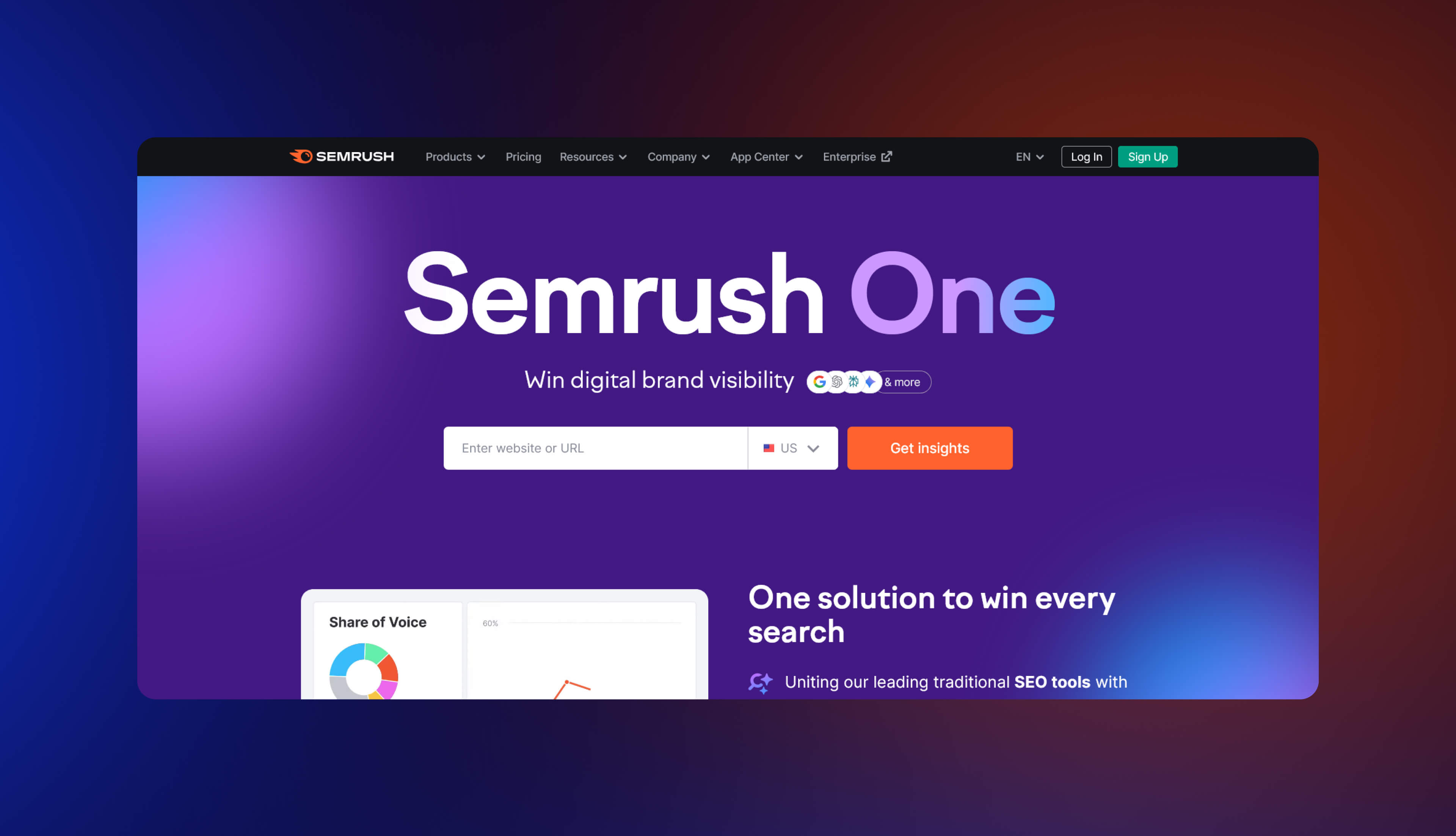
Semrush is the industry leader, making it the most complete tool on this list. By 2026, it will have moved beyond just tracking keywords to becoming a predictive intelligence platform. Semrush uses AI to analyze competitors and predict their next moves, not just their current tactics.
AI Capabilities:
- An end-to-end writing assistant that suggests topics based on real-time competitive gaps.
- Automatically groups thousands of keywords into intent-based clusters.
- It doesn't just find errors; it provides "Impact Scores" to tell you which fixes will actually move the needle.
Best for
- Agencies and mid-to-large marketing teams who need a "single source of truth."
Pricing
Pro $139.95/mo, Guru $249.95/mo, Business $499.95/mo.
Pros:
- The most robust competitive intelligence database on the market.
- Excellent client reporting and project management features.
- Regularly rolls out new AI features (like the AI Social Media Poster).
Cons:
- Significant learning curve; the interface can feel cluttered.
- The most expensive option for solo users.
Our Take:
"The Swiss Army knife of SEO. If you can only afford one tool, this is probably it, but be prepared to pay for features you might not use every day."
Important! Semrush Feature highlight: AI Co-Pilot
The AI Co-Pilot proactively analyzes your project data to send "Next Step" alerts, such as "A competitor just stole your featured snippet for (Keyword) here is a 3-step AI plan to take it back."
#2 Ahrefs: Best for Backlink Analysis & Research
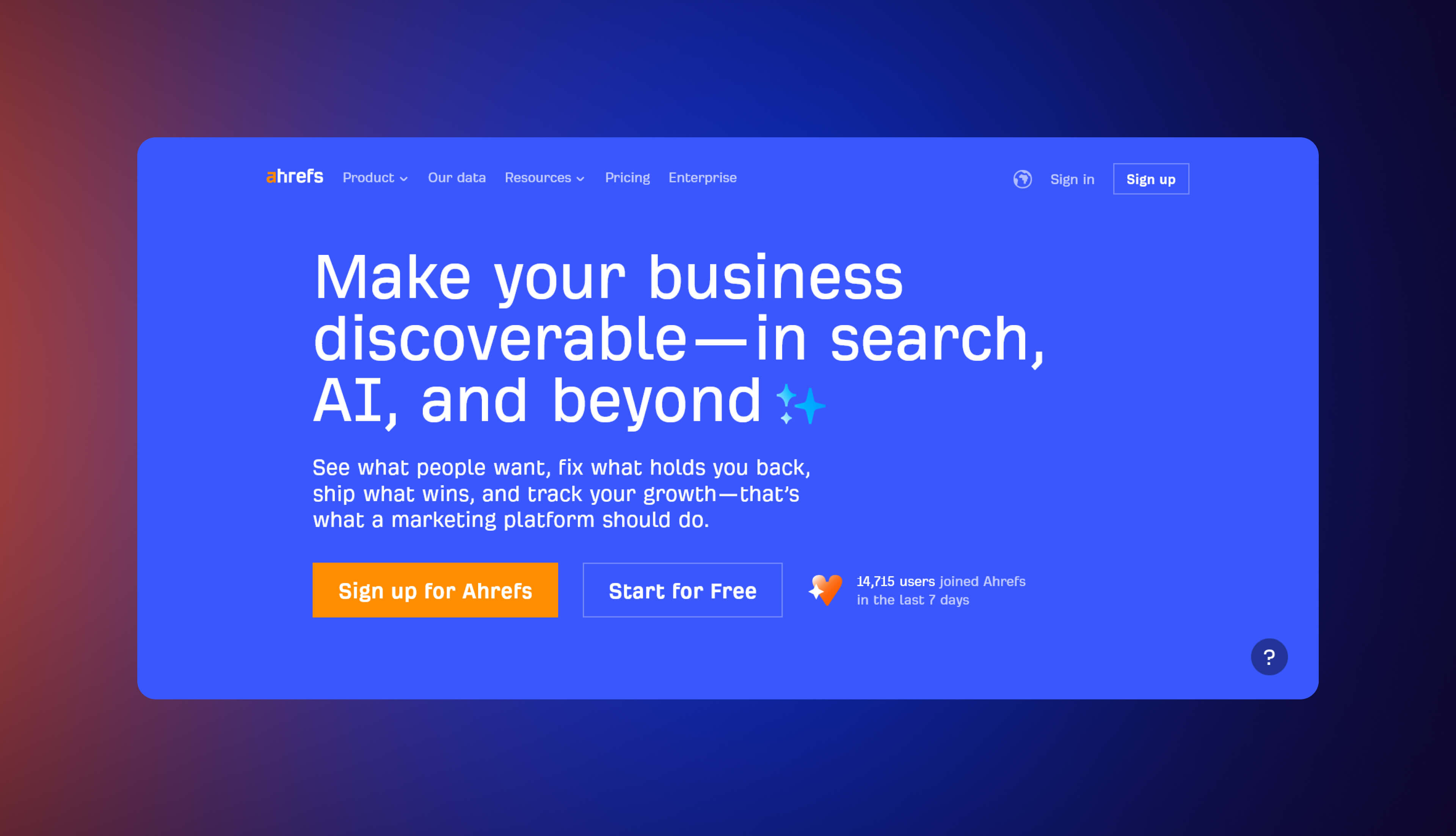
Ahrefs is known for providing the best data in the business. While Ahrefs was slower to adopt AI writing features, they've used AI to enhance data accuracy and insights. Ahrefs' 2026 updates focus on "Link Intent" and predicting how much traffic a new page will actually get.
AI Capabilities:
- A more nuanced score that considers "Generative Search" impact.
- Uses AI to filter out "AI slop" and find high-quality human-anchored content.
- Predicts future traffic based on historical trends and upcoming algorithm shifts.
Best for:
Link builders, data junkies, and those who prioritize "clean" data over fancy writing bots.
Pricing:
Lite $99/mo, Standard $199/mo, Advanced $399/mo.
Pros:
- Industry-leading backlink crawler (fastest and most accurate).
- The most intuitive UI of the "Big Three" tools.
Cons:
- No native AI content writer (requires integration with tools like Surfer).
- New "credits" system can make it expensive for heavy users.
Our Take:
"Ahrefs is still the gold standard for research. We use it for the 'why' and 'who,' then switch to other tools for the 'how-to-write'."
#3 Surfer SEO: Best for AI Content Optimization
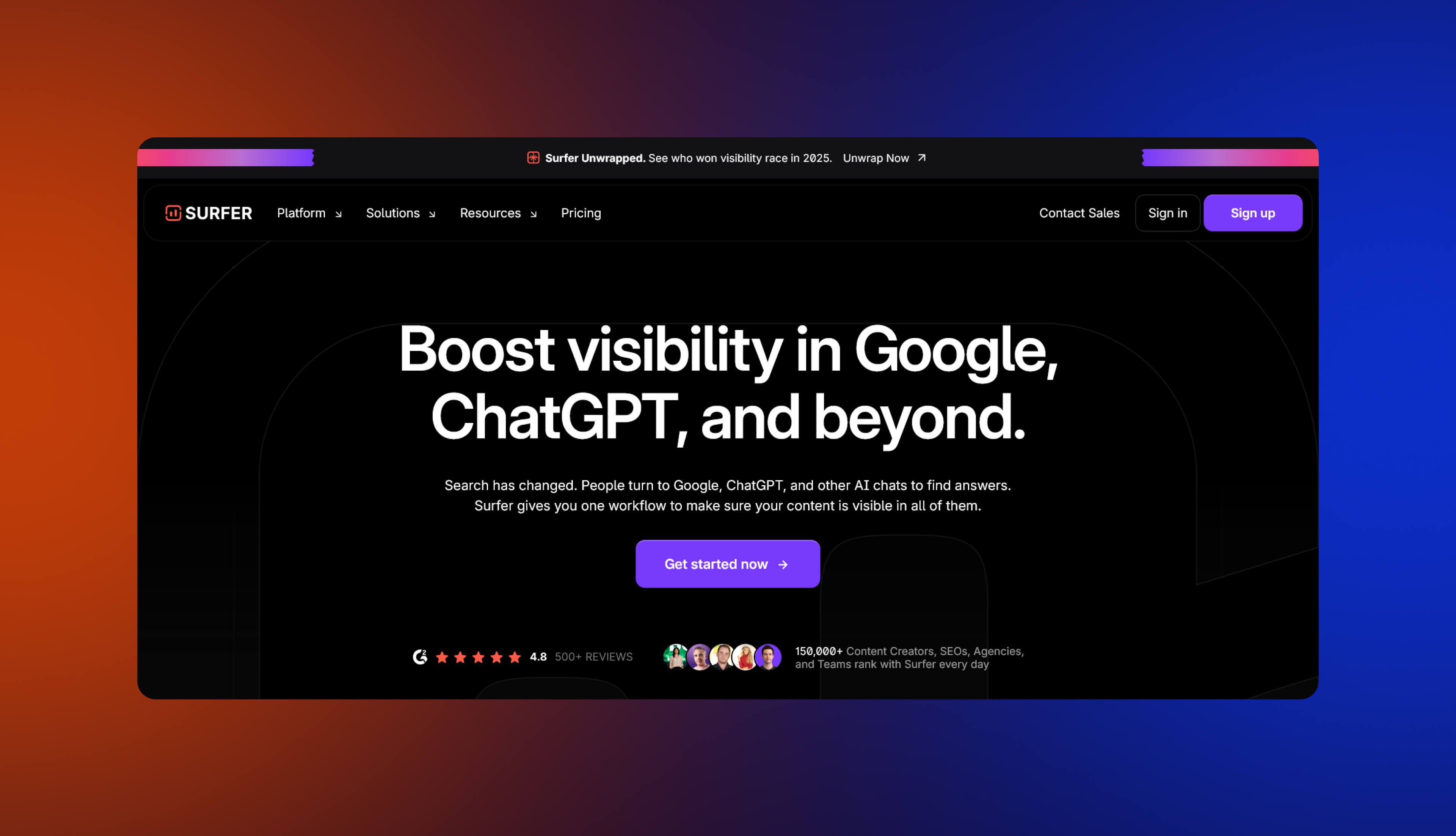
Surfer SEO is the tool we use most often at Veza Digital because it takes the guesswork out of writing. Instead of wondering how many times to use a keyword, Surfer looks at the top 10 results on Google and gives you a "recipe" to beat them.
AI Capabilities:
- Real-time feedback on how well your content covers a topic.
- A chat-based editor that can rewrite sections or add headings in your brand voice.
- One-click updates to older content to bring it back to a high score.
Best for:
Content agencies and SEO writers.
Pricing:
Essential $99/mo, Scale $219/mo, Scale AI (Custom).
Pros:
- Perfect integration with Google Docs and WordPress.
- Highly accurate "Keyword Density" and "Entity" recommendations.
Cons:
- Surfer AI articles require a separate per-article fee.
- Does not provide deep technical SEO or backlink data.
Our Take:
"Essential for anyone serious about ranking. At Veza Digital, we don't hit 'Publish' until our Surfer score is in the green. Contact our SEO team to build and optimize content that ranks from day one."
#4 Clearscope: Best for Enterprise Content Intelligence
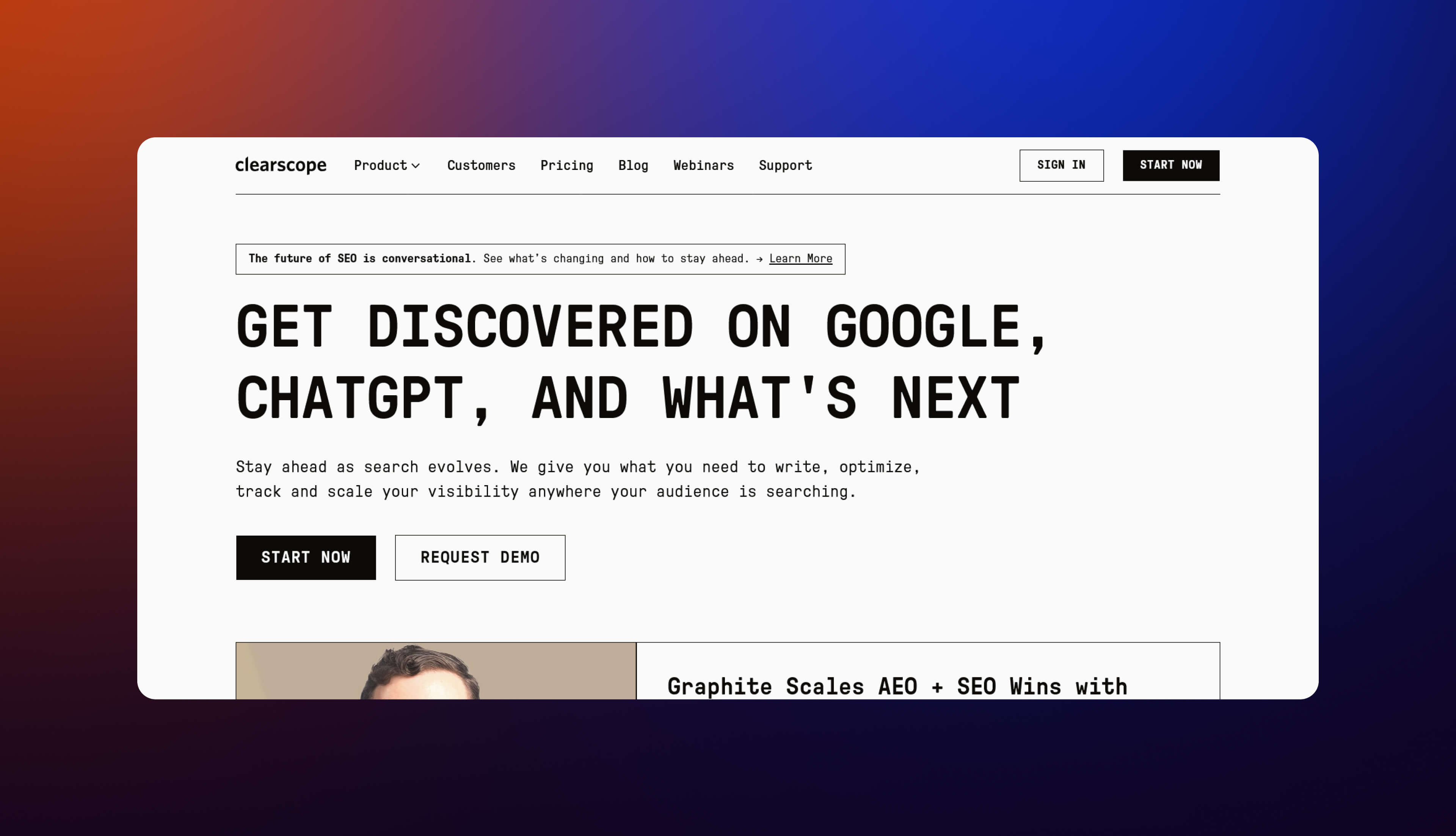
Clearscope is the high-end choice for teams that prioritize content quality over quantity. While other tools focus on "more content," Clearscope focuses on "better content." Its interface is incredibly clean, designed to help writers focus on covering a topic comprehensively without getting distracted by too many technical metrics.
AI Capabilities:
- Visualizes the "entities" your competitors are covering.
- Automatically flags pages that need an update.
Best for:
Large enterprise teams and high-end publishers.
Pricing:
Essentials $129/mo, Business $399/mo.
Pros:
- The most user-friendly grading system for non-SEO writers.
- Exceptional at identifying "search intent" gaps that other tools miss.
Cons:
- High entry price for small teams.
- Lacks the generative "AI Writing" features found in cheaper tools.
Our Take:
"The premium choice for those who value precision over features. If you manage a site with 1,000+ pages, Clearscope is your best friend."
#5 ChatGPT (GPT-4/5): Best AI Assistant for SEO Tasks
- A screenshot of ChatGPT homepage.
ChatGPT is now a sophisticated SEO assistant, far beyond its origins as a simple chatbot. With the ability to browse the live web and run Python code (Advanced Data Analysis), it can handle technical tasks that used to take hours.
AI Capabilities:
- Writing Schema markup, generating Regex, and auditing XML sitemaps.
- Categorizing thousands of keywords in seconds.
Best for:
Resourceful SEOs who know how to prompt.
Pricing:
Plus $20/mo, Team $30/mo.
Pros:
- Infinite versatility for $20/mo.
- Excellent for "First Draft" syndrome.
Cons:
- No native SEO data (you must provide the keywords/data).
- Potential for "hallucinations" in technical code.
ChatGPT SEO Use Cases Table
Our Take:
"The most underrated tool. It doesn’t replace Semrush, but it makes every other tool 10x faster."
#6 Conductor: Best for Enterprise AEO & Unified Search Intelligence
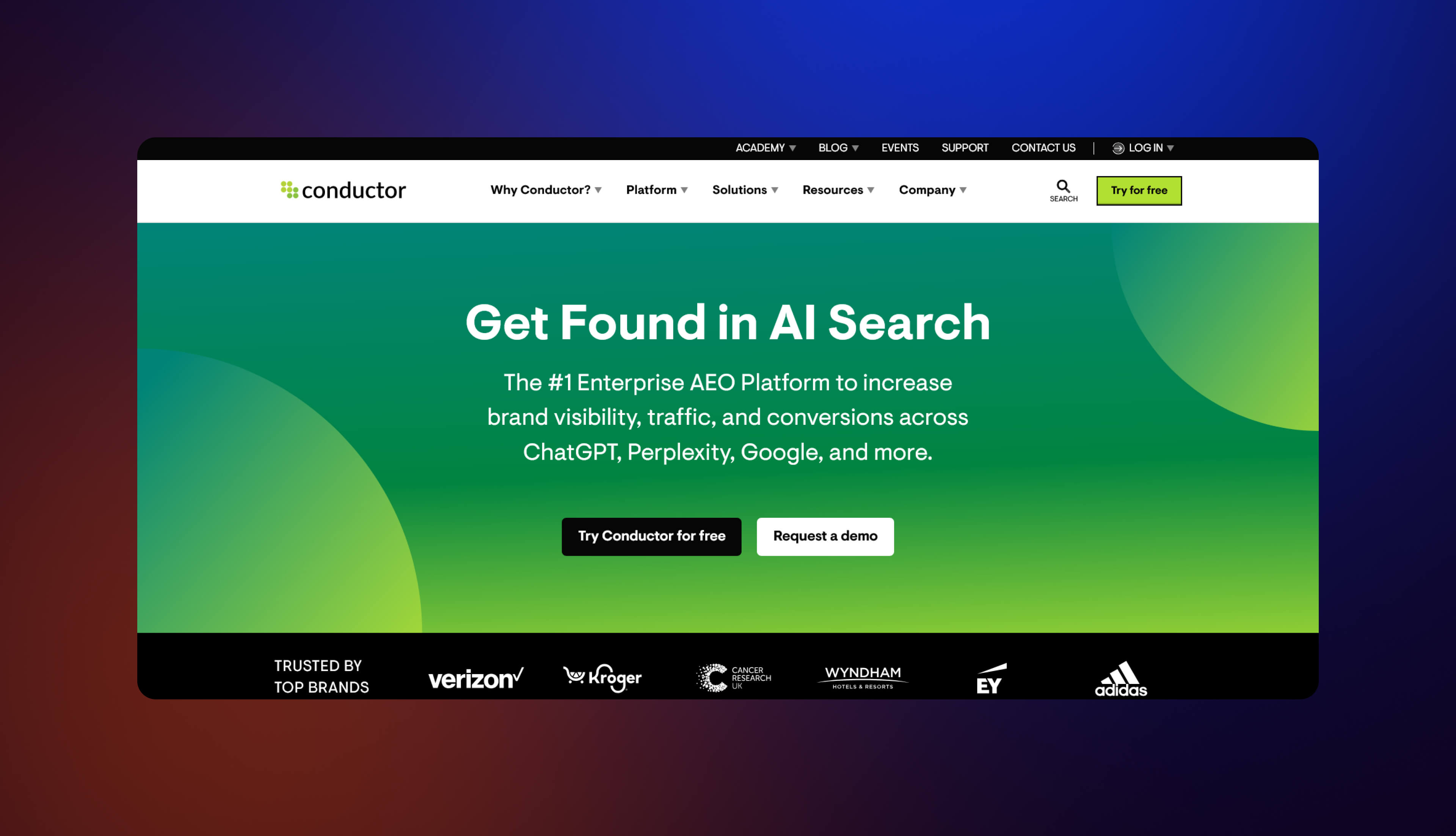
Conductor is built for large teams that need a single source of truth across SEO, content, and AI-driven search. While most tools focus on rankings or content optimization in isolation, Conductor connects everything, AI visibility, traditional search performance, and on-site data, into one system.
Conductor strength sits in Answer Engine Optimization (AEO), helping brands track and improve how they appear in AI tools like ChatGPT, Perplexity, and Google experiences.
AI Capabilities:
- Tracks brand visibility across AI answer engines and traditional SERPs
- Uses proprietary models trained on large-scale search and website data
- Delivers personalized recommendations based on competitors, audience, and content goals
Best for:
Enterprise teams managing multiple domains, large content ecosystems, and cross-functional workflows.
Pricing:
Custom enterprise pricing (demo required).
Pros:
- True all-in-one platform (SEO, content, AI visibility, analytics)
- Strong AEO focus, one of the few tools addressing AI search directly
- Built for collaboration across SEO, content, and product teams
Cons:
- Overkill for small teams or solo operators
- Requires onboarding to unlock full value
Our Take:
"If you're running SEO at scale, point tools stop working. Conductor replaces the patchwork with one system that shows what’s happening across Google and AI search, and what to do next."
#7 Claude: Best for Long-Form Content & Analysis

Claude (by Anthropic) has carved out a niche as the 'writer's AI. Its 200k+ context window allows you to upload entire eBooks or whitepapers and ask for an SEO-optimized summary or a series of blog posts based on that data.
AI Capabilities:
- Long-form content drafting for guides, pillar pages, and in-depth articles
- Content analysis and qualitative feedback on structure, clarity, and gaps
- Research synthesis across multiple sources and inputs
- Complex content outlining for large or technical topics
Best for:
Long-form thought leadership and nuanced research.
Pros:
- Fewer "AI-isms" than ChatGPT
- It can follow complex brand guidelines better
Cons:
No built-in SEO metrics.
Our Take:
"If ChatGPT is the coder, Claude is the editor. Use it for high-stakes content where tone matters."
#8 Frase: Best for Content Research & Briefs
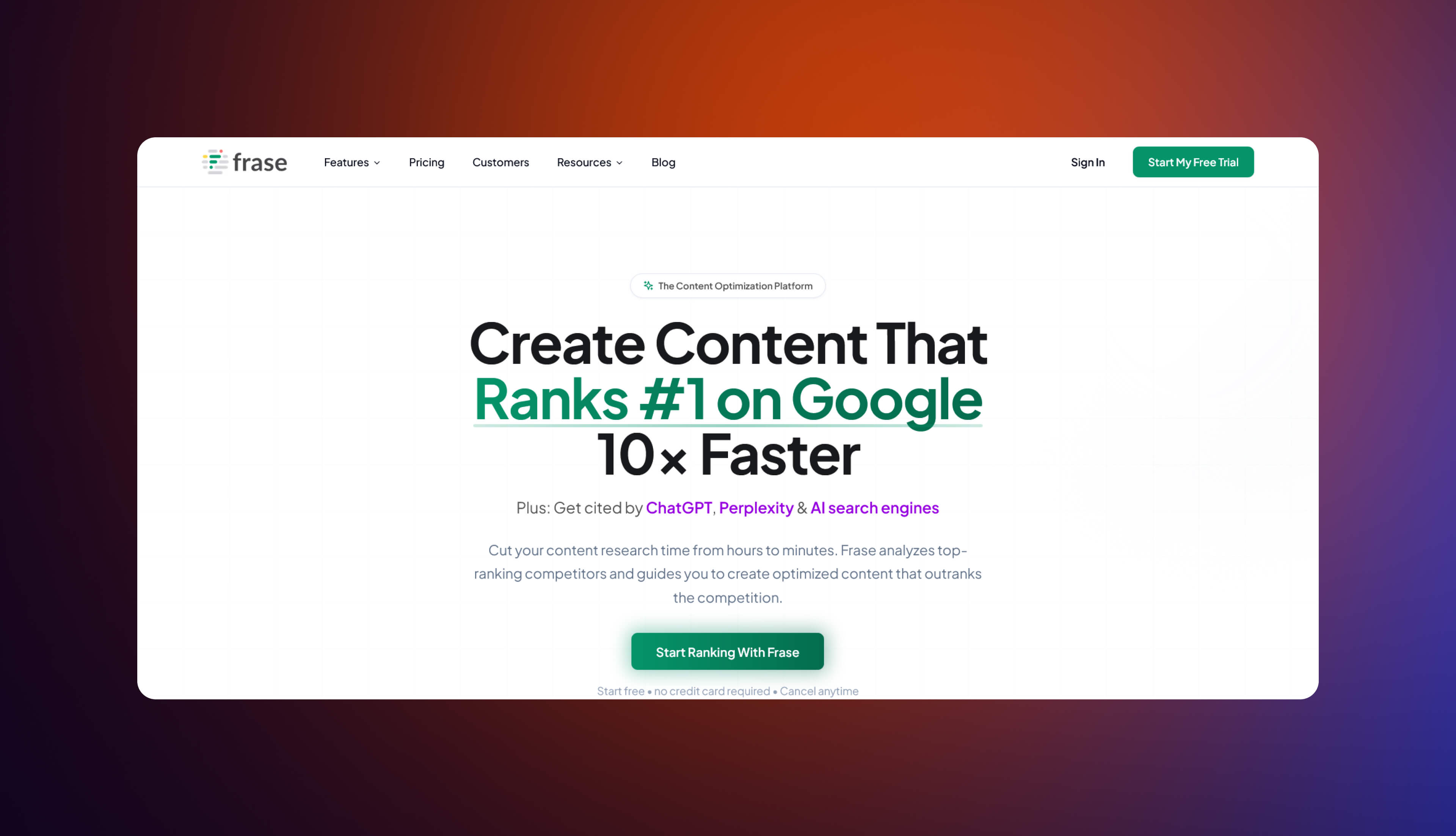
Frase is an AI tool built for one job: helping you understand what already ranks and turning that information into a clear content brief. Instead of guessing what to write, Frase analyzes the search results and shows which topics, questions, and subheadings matter. It focuses on preparation rather than writing.
AI Capabilities:
- AI-generated content briefs based on top-ranking pages
- SERP analysis to identify common topics and gaps
- Question research using People Also Ask and related queries
- Content optimization suggestions
- Built-in AI writing assistant for draft support
Best for:
Content teams and writers who need fast, structured research before writing.
Pricing:
Solo $15/mo, Basic $45/mo, Team $115/mo.
Pros:
- One of the best tools for building clear, usable content briefs
- Strong question research features
- Low entry price compared to competitors
Cons:
- Content optimization is weaker than Surfer
- AI writing output often needs editing
Our Take:
“Strong research tool at a fair price. If your priority is planning instead of polishing, Frase does the job well.”
#9 MarketMuse: Best for Content Strategy at Scale
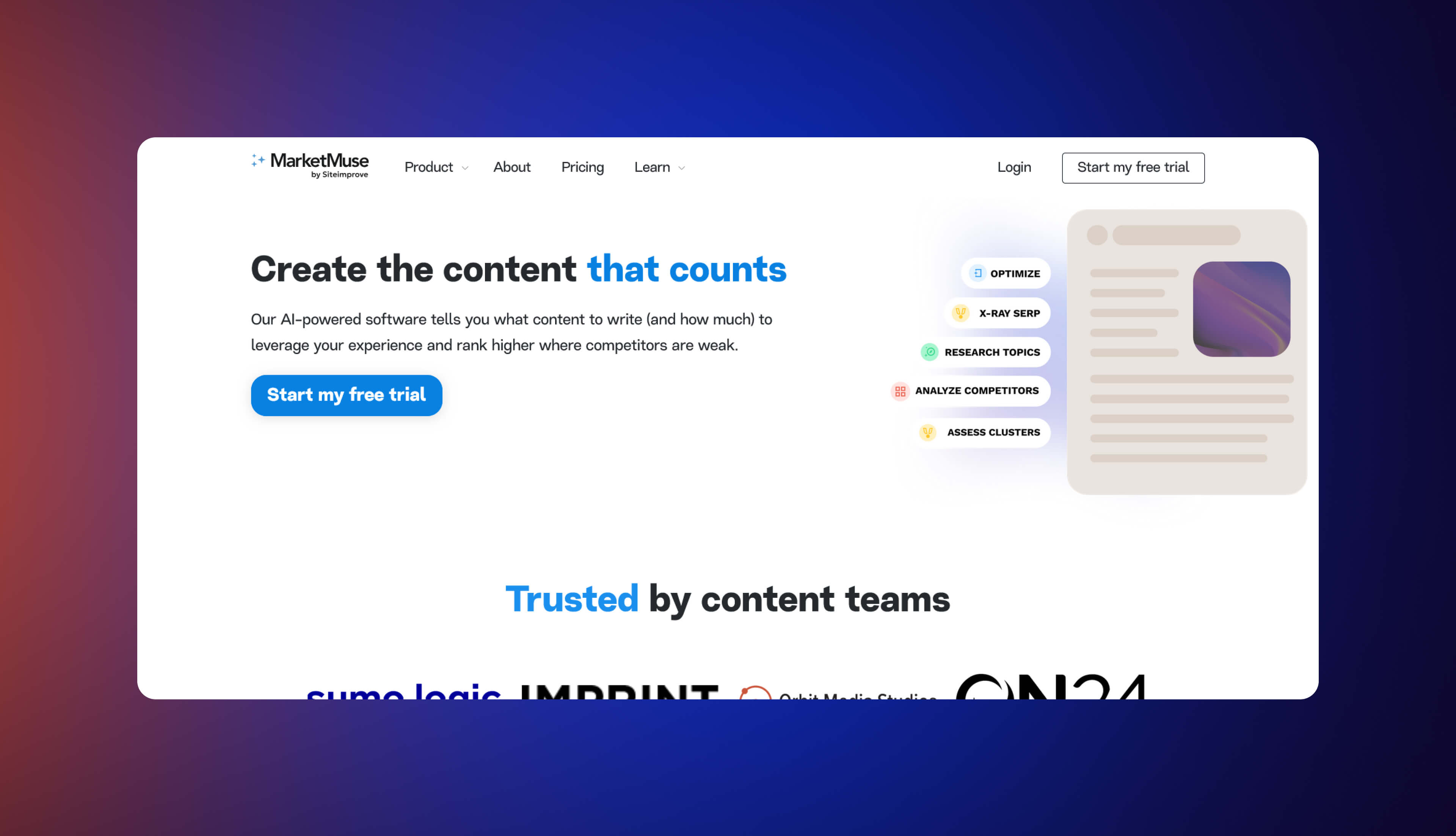
MarketMuse is a planning system, not a writing tool. It shows what your site should cover to build authority over time. It analyzes your existing content, compares it to competitors, and maps out topic gaps. This is a strategic tool, not something you open to write a blog post.
AI Capabilities:
- Full content inventory analysis
- Topic modeling and cluster creation
- Content scoring and optimization guidance
- Competitive content comparisons
- Personalized difficulty scores based on your site
Best for:
Large websites, publishers, and teams managing long-term content strategy.
Pricing:
Free tier, Standard $149/mo, Team $399/mo.
Pros:
- Excellent for planning content at scale
- Difficulty scores are tailored to your domain
- Strong topic modeling and coverage insights
Cons:
- Expensive once you need full features
- Steep learning curve
- Overkill for small sites
Our Take:
“Powerful for enterprise strategy. For most teams, it offers more depth than they will realistically use.”
#10 Jasper: Best for AI Content Generation
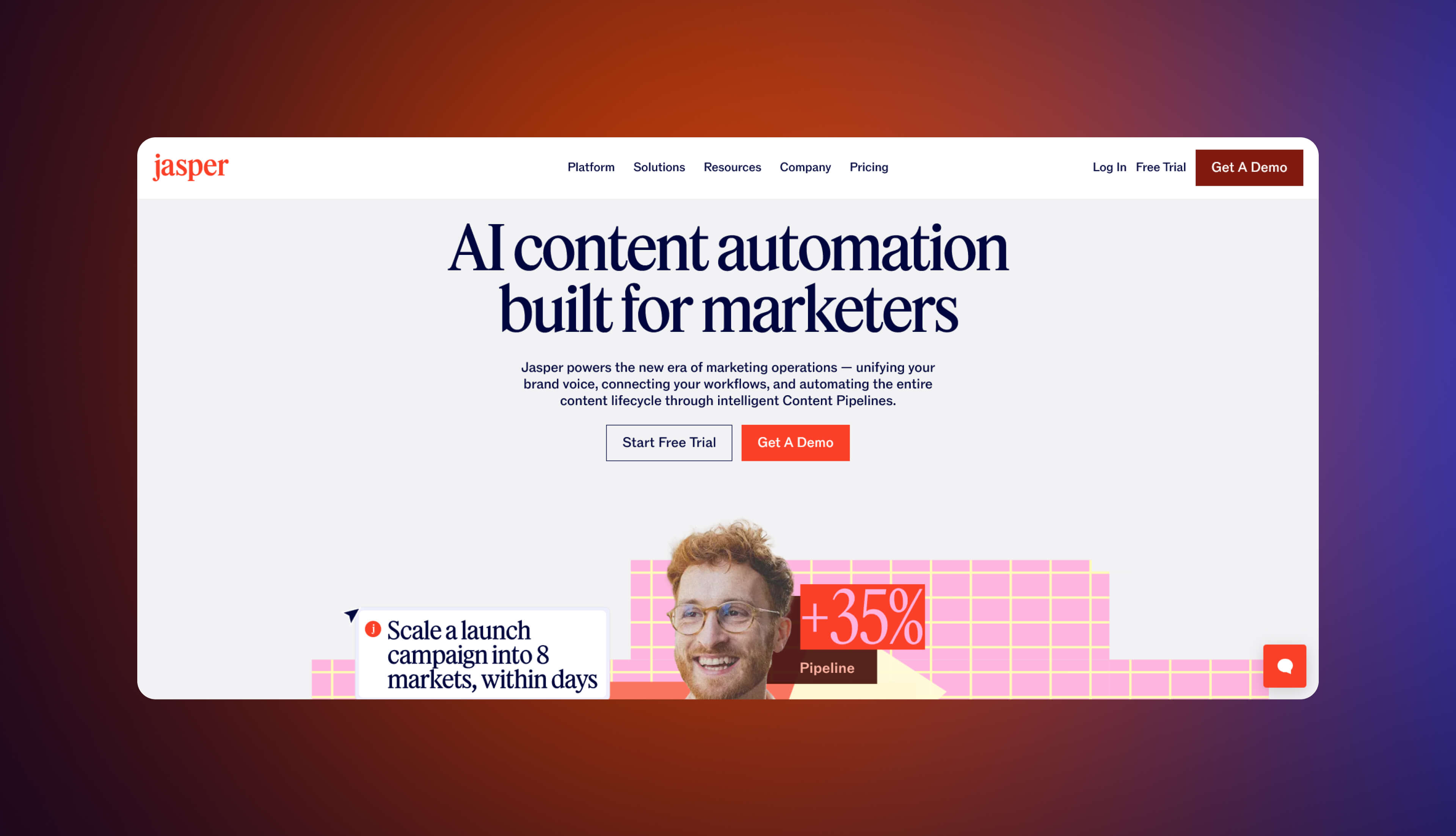
Jasper is an AI writing platform built for marketing teams producing content at volume. It focuses on speed and consistency, with templates and brand voice controls. Jasper works best when paired with external SEO tools, since its native SEO features are limited without integrations.
AI Capabilities:
- Long-form content generation
- Brand voice customization
- Pre-built templates for blogs, ads, and scripts
- SEO mode with Surfer integration
Best for:
Teams producing large amounts of content that need consistent tone.
Pricing:
Creator $49/mo, Pro $69/mo, Business (custom).
Pros:
- Strong writing output for drafts
- Helpful brand voice controls
- Works well with Surfer SEO
Cons:
- Expensive compared to using ChatGPT directly
- Requires editing for accuracy and depth
- SEO features depend on paid add-ons
Our Take:
“Useful for volume, but costly. For many users, ChatGPT paired with an SEO tool is a better deal.”
#11 Goodie AI: Best for Closed-Loop Answer Engine Optimization
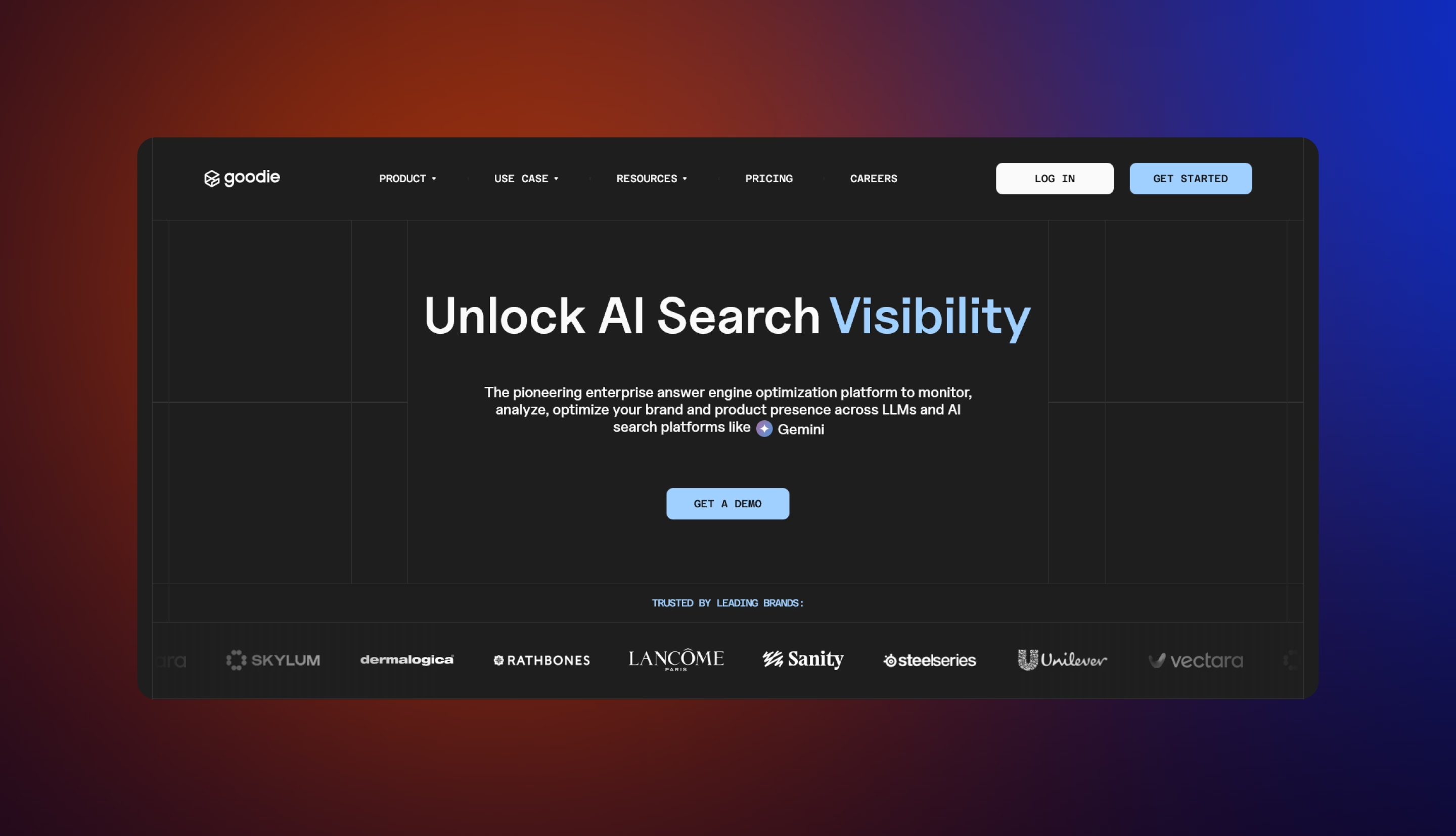
Goodie is purpose-built for the AI era of search, not a traditional SEO tool with AI features bolted on. As search expands beyond Google into answer engines like ChatGPT and Perplexity, Goodie helps brands track and improve their visibility across this new frontier, going beyond the content-writing focus of most tools on this list.
AI Capabilities:
- Visibility and sentiment tracking across owned, earned, and social sources
- Prompt research
- Cross-platform LLM tracking across every major model
- Competitor benchmarking
- AI-powered Content Studio with actionable recommendations for schema, llms.txt, and content topics
- Agent Experience Suite
- Agentic Commerce Suite
Best for:
Mid market and enterprise teams that need AI-first visibility tracking paired with a clear, actionable path to improving how they're cited in AI-generated answers, while tracking attribution.
Pricing:
Starting at $399/month. Custom and enterprise plans available.
Pros:
- Built specifically for AI search visibility, not retrofitted for AEO
- Tracks brand narrative and sentiment across every major LLM
- Delivers prioritized, actionable next steps across on-site and off-site content
- Includes an Agentic Commerce Suite and Agentic Experience Suite
Cons:
- Built for teams ready to actively invest in AEO, less suited to those focused strictly on traditional SEO metrics
- No data export functionality yet
Our Take:
“Goodie is where AEO becomes a closed loop system. Visibility metrics tied to content recommendations tied to downstream outcomes.”
#12 Screaming Frog + AI: Best for Technical SEO
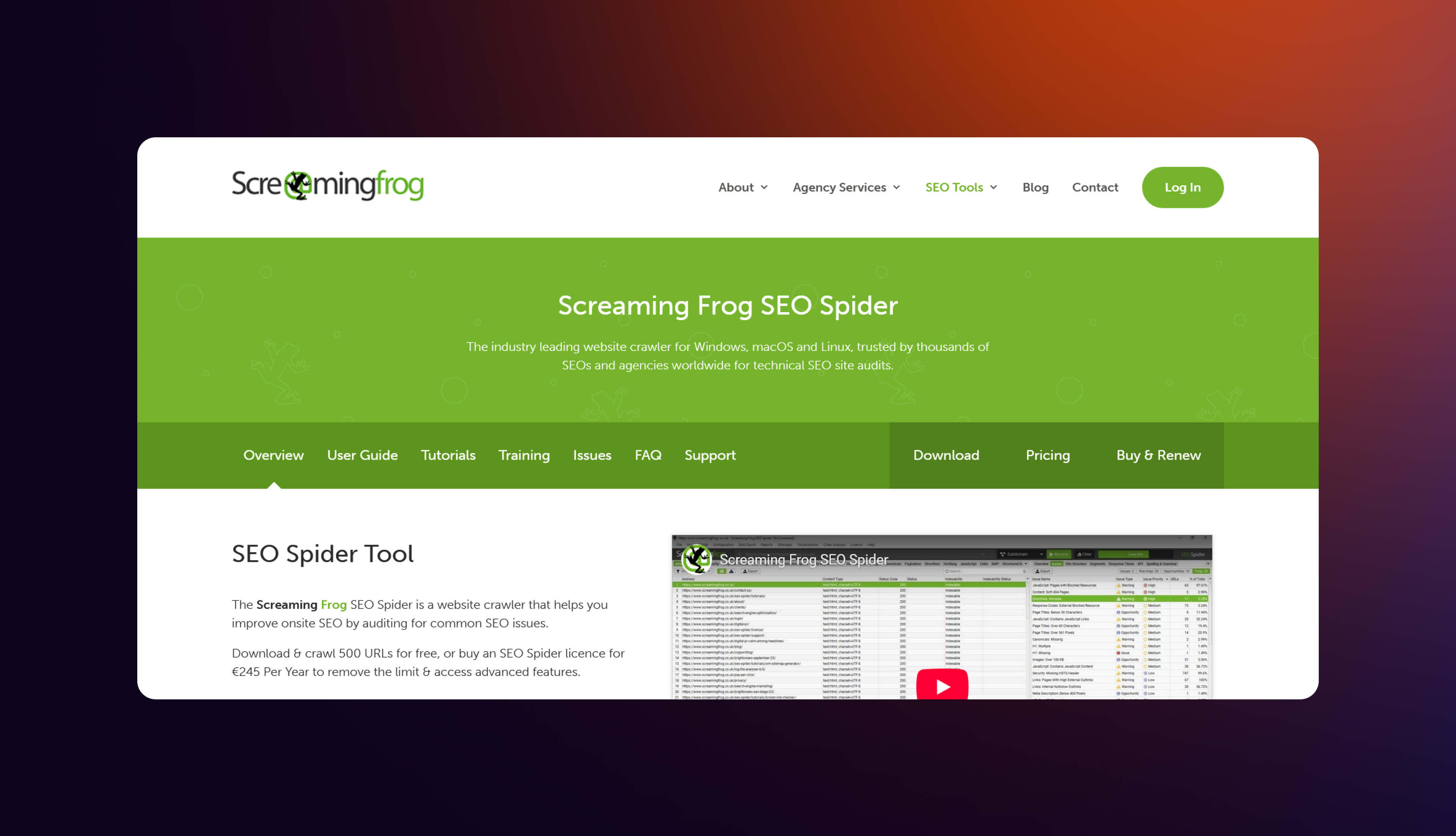
Screaming Frog is the industry-standard crawler for technical SEO. With AI integrations, it now goes beyond finding issues and helps process large amounts of crawl data faster. This is a tool for audits, not content creation.
AI Capabilities:
- OpenAI integration for content analysis
- Automated issue grouping and categorization
- Custom extraction with AI processing
Best for:
Technical SEOs and large-site audits.
Pricing:
Free (500 URLs), £199/year for unlimited crawling.
Pros:
- Deepest technical SEO crawler available
- AI integrations save time on large audits
- Low cost for unlimited use
Cons:
- Desktop-only software
- AI setup requires technical knowledge
- Not beginner-friendly
Our Take:
“Essential for technical SEO. The AI features make large audits more manageable, but expect a learning curve.”
#13 BrightLocal: Best for Local SEO
BrightLocal is specifically for local search. It focuses on local rankings, citations, and reviews, rather than general SEO. If your business depends on local visibility, this tool covers what matters.
AI Capabilities:
- AI-generated review response suggestions
- Automated citation management
- Local rank tracking
Best for:
Local businesses and agencies managing local clients.
Pricing:
Single Business $39/mo, Multi Business $59/mo.
Pros:
- Strong local rank tracking
- Review automation saves time
Cons:
- Limited to local SEO use cases
Our Take:
“If local search matters to your business, this is a clear choice. Otherwise, it offers little value.”
#14 Sitebulb: Best for Technical SEO Audits
Sitebulb is a crawler designed to explain technical SEO issues clearly. It focuses on visualization and reporting, making audit results easier to understand for clients and stakeholders.
AI Capabilities:
- Automated issue prioritization
- AI-generated audit hints
- Smart crawl recommendations
Best for:
SEO agencies producing technical audit reports.
Pricing:
Lite $13.50/mo, Pro $35/mo.
Pros:
- Clear visual reports
- Helpful prioritization of issues
- Strong client-friendly explanations
Cons:
- Desktop-only
- Requires time to learn
Our Take:
“Excellent for reporting and communication. Best used alongside Screaming Frog.”
#15 Alli AI: Best for On-Page Optimization at Scale
Alli AI focuses on automation. It allows large-scale on-page SEO changes without touching the CMS directly. This makes it useful for large or locked-down websites, but risky if misused.
AI Capabilities:
- Automated meta tag updates
- Bulk on-page changes
- Schema markup automation
- SEO A/B testing
Best for:
Large sites needing rapid on-page changes without developer support.
Pricing:
Consultant $299/mo, Agency $599/mo.
Pros:
- Handles changes at scale
- Unique SEO A/B testing feature
Cons:
- Some may find it expensive
- Can conflict with site setups
- Requires trust in automation
Our Take:
“Interesting for large operations. Most teams will not need this level of control.”
#16 NeuronWriter: Best Budget Content Optimizer

NeuronWriter is a lower-cost content optimization tool that mirrors many Surfer features. It focuses on NLP analysis and SERP-based recommendations without a polished interface.
AI Capabilities:
- NLP-based content scoring
- SERP-driven recommendations
- AI writing assistant
- Content planning tools
Best for:
Freelancers and small teams with limited budgets.
Pricing:
Bronze $23/mo, Silver $45/mo, Gold $69/mo.
Pros:
- Affordable pricing
- Solid optimization guidance
- Decent AI writing output
Cons:
- Interface feels dated
- Smaller ecosystem
Our Take:
“Best low-cost alternative to Surfer. It delivers most of the value at a lower price.”
How to Build Your AI SEO Tool Stack
Ai-seo-tool-stack
Alt: A simple graphic showing different AI SEO tool stacks
You don't need every tool on this list. Most software features overlap, and you only need a specific combination to get the job done.
Building a "stack" means choosing tools that talk to each other and cover the three main stages of the workflow: finding the right keywords, writing the content, and tracking the results.
To see how AI SEO Tool Stack works in practice, see our SEO results.
The Essential Stack (Most Teams)
Three tools handle 90% of SEO work for most businesses. This setup balances high-quality data with streamlined content creation.
- Research & Tracking: Semrush or Ahrefs. Pick one to be your primary database for finding keywords and checking backlinks.
- Content Optimization: Surfer SEO. Use this to grade your writing and ensure it is ready to rank.
- AI Assistant: ChatGPT Plus. Use this for building outlines, writing meta tags, and cleaning up data.
- Total Cost: Roughly $240-$340/month.
The Budget Stack (Startups & Freelancers)
If you are just starting and cannot justify a $300 monthly bill, you can get similar results with "lite" versions of the big platforms.
- Research & Tracking: SE Ranking ($52/mo). It tracks your ranks and audits your site just like the big tools but at a lower cost.
- Content Optimization: NeuronWriter ($23/mo). This offers the same NLP-based suggestions as Surfer but with fewer bells and whistles.
- AI Assistant: ChatGPT Plus ($20/mo). Still essential for daily tasks.
Total Cost: Roughly $95/month.
- The Trade-off: You will have slightly less data on your competitors, but you will have everything you need to grow a new site.
The Enterprise Stack (Agencies & Large Teams)
Large organizations need specialized tools because "all-in-one" platforms often lack the depth required for complex sites.
- Research & Tracking: Semrush Business. For the highest data limits and advanced API access.
Content Intelligence: Clearscope or MarketMuse. To manage content decay and topical authority across thousands of pages.
- Technical SEO: Screaming Frog + Sitebulb. Desktop tools that can crawl massive websites that cloud tools might miss.
- AI Assistants: ChatGPT Team + Claude Pro. For better data security and more human-sounding long-form content.
Integration Best Practices
A stack only works if the tools communicate.
Your first step should be connecting every tool to Google Search Console and Google Analytics 4. This ensures your AI tools are making recommendations based on your actual traffic, not just estimates.
Use plugins to save time.
For example, Surfer’s Google Docs integration allows you to see your SEO score while you write, preventing you from having to copy and paste back and forth.
Finally, audit your subscriptions every six months. If you find yourself using ChatGPT to write meta tags instead of the built-in tool in Semrush, cancel the extra feature and save the money.
AI SEO Tools: Pricing Comparison
Understanding the true cost of these tools requires looking past the "starting at" price.
Most platforms charge extra for AI features or limit how many times you can use them per month.
The table below breaks down the entry-level costs for the most popular options as of late 2026.
Keep in mind that "All-in-One" tools replace several smaller subscriptions, which can often be cheaper in the long run.
Pricing comparison table
Key insight: The "best" stack depends on budget. A $100/mo stack can outperform a $500/mo stack if you choose wisely and use tools effectively.
When budgeting, assume your costs will increase as your traffic grows. Most SEO tools scale their pricing based on how many keywords you track or how many pages you audit.
For a growing medium-sized business, expect to spend between $300 and $500 per month for a complete, professional-grade AI SEO setup.
Pros and Cons of AI SEO Tools
Using AI in your SEO strategy is no longer a luxury; it's a requirement to stay competitive. However, these tools are not magic.
They are advanced calculators that require a human at the wheel to prevent "autopilot" errors. To use them effectively, you must understand both their power and their pitfalls.
The Benefits
The most immediate advantage is Efficiency.
Tasks like keyword clustering or generating 500 meta tags now take minutes instead of a week. This allows you to scale your output without hiring a massive team.
Beyond speed, AI helps you make Data-Driven Decisions.
Tools like Ahrefs and Semrush now use machine learning to spot patterns in competitor behavior that a human eye would miss, such as a subtle shift in their internal linking strategy.
By standardizing these checks, you ensure Consistency across every page you publish, making it easier to maintain high quality as you grow.
The Limitations (Be Honest)
The biggest risk is False Confidence.
Just because a tool gives you a "Content Score" of 100 doesn't mean your page will rank; it just means you used the right keywords.
If you follow AI recommendations too rigidly, you risk Over-Optimization, which can make your writing feel robotic and actually hurt your rankings if it triggers Google's spam filters.
There is also a significant Creativity Gap.
AI struggles to provide original insights, unique case studies, or a personal "brand voice." Furthermore, cost creep is real. Between monthly subscriptions and "AI credits" for writing your budget can vanish quickly if you aren't careful.
CAUTION! Important Point:
AI tools amplify your existing skills. If you are a great SEO, they make you a "Super SEO." If you don't understand the basics, they just help you make mistakes faster.
Choosing the Right AI SEO Tools: Decision Framework
With dozens of options, the "best" tool is simply the one that fits your current business needs. Choosing an enterprise-level tool for a solo blog is just as wasteful as using a budget tool for a 10,000-page corporate site.
Factors to Consider:
- Primary Focus: Are you struggling with technical errors, or do you just need to write more blog posts?
- Team Size: Do you need a "multi-user" workspace with approval workflows, or are you a solo operator?
- Integration: Will the tool connect to your existing WordPress site or Google Search Console? If the data doesn't flow easily, you won't use it.
The Future of AI in SEO
As we move through 2026, we expect three major shifts.
First, Predictive SEO will become the standard; tools won't just tell you what happened, they will forecast which keywords are about to trend.
Second, AI Search Visibility (tracking ChatGPT/SGE mentions) will replace "Rank Tracking" as the most important metric.
Finally, Tool Consolidation will continue, will continue; you will see fewer niche apps
The best AI SEO tool is the one you actually use well. Start with the essentials, master them, then expand as your traffic and budget allow.
Actionable Tool: AI SEO Tool Selection Scorecard
Buying software based on hype leads to shelfware, tools you pay for but never use. Use this scorecard to determine which tool actually fills the gaps in your specific workflow.
Step 1: Rate Your Priorities (1-5)
Assign a value to each factor based on your current business needs. A "1" means it’s a minor concern; a "5" means your strategy fails without it.
Step 2: Match to Tools
Look at your highest-rated priorities above and match them to the following industry standards:
- Content Optimization Priority → Surfer SEO or Clearscope
- Keyword Research Priority → Semrush or Ahrefs
- Backlink Analysis Priority → Ahrefs
- Technical SEO Priority → Screaming Frog + Sitebulb
- Budget Priority → SE Ranking + NeuronWriter
- AI Writing Priority → ChatGPT + Jasper
FAQ: Frequently Asked Questions
What are AI SEO tools?
AI SEO tools are software platforms that use machine learning (ML) and natural language processing (NLP) to automate and improve search engine optimization. Unlike traditional tools that just show raw data, AI tools analyze that data to provide specific recommendations.
They can draft content, group thousands of keywords by intent, identify technical code errors, and even predict how much traffic a new page might generate before you write it.
Do AI SEO tools really work?
Yes, but they are assistants, not replacements. They work by processing data at a scale humans cannot match. For example, an AI tool can analyze the top 50 results for a keyword in seconds to find common patterns.
However, the "work" only results in higher rankings if a human verifies the output. Using AI to spam low-quality content will lead to penalties, but using it to improve research and structure is highly effective.
Are AI SEO tools worth the money?
For most professionals, the answer is yes because of the time saved. If a $100/month tool saves you 10 hours of manual keyword research, it has paid for itself.
For hobbyists or very small sites, free tools like Google Search Console and the free version of ChatGPT are often enough. The investment becomes "worth it" when you need to manage multiple pages or deep competitive data that free tools don't provide.
What is the best AI tool for SEO?
There is no single "best" tool, but Semrush is the most complete all-in-one platform for 2026. If you specifically need content optimization, Surfer SEO is the industry favorite.
For those on a strict budget who still want professional features, SE Ranking offers the best balance of price and power. The right choice depends entirely on whether you prioritize writing, technical health, or link building.
Is Surfer SEO worth it?
Surfer SEO is worth the investment if you publish content regularly (more than 2-3 articles a month). Its ability to provide a "real-time" SEO score based on live competitor data significantly increases the chances of ranking on page one.
However, if you only write occasional personal updates or don't care about organic traffic, the monthly subscription cost may be too high for your needs.
Is Semrush or Ahrefs better for AI SEO?
Semrush currently leads in AI-driven automation and all-in-one marketing features (including PPC and Social Media). Ahrefs is generally considered better for backlink data accuracy and deep keyword research.
In 2026, Semrush is the better choice for teams wanting AI writing assistants and "Co-pilot" features, while Ahrefs is the choice for data purists who want the most reliable link index.
Can ChatGPT be used for SEO?
Yes. ChatGPT is excellent for "processing" SEO tasks such as clustering keywords, writing schema markup, and generating content outlines. However, it lacks a live keyword database.
You cannot ask it for "accurate search volume" or "current rankings" because it doesn't crawl the web like a dedicated SEO tool. Use it to handle the logic and writing, but use a tool like Ahrefs for the raw data.
What is the best AI tool for content optimization?
Surfer SEO and Clearscope are the top contenders. Surfer is more popular for its aggressive optimization and affordable entry price. Clearscope is often preferred by enterprise teams for its "Topical Map" approach and cleaner interface.
If you are on a budget, NeuronWriter provides very similar optimization features for a much lower price point.
What is the best free AI SEO tool?
Google Search Console (GSC) remains the most important free tool; it provides direct data from Google. For AI-specific tasks, the free version of ChatGPT or Google Gemini are excellent for ideation.
For technical checks, the free version of Screaming Frog allows you to crawl up to 500 URLs, which is plenty for most small websites.
What AI tools do SEO professionals use?
Most pros use a "stacked" approach.
This typically includes Ahrefs for high-level research, Surfer SEO for drafting and editing, Screaming Frog for technical audits, and ChatGPT for custom tasks like Regex or Schema generation. Professionals rarely rely on just one tool; they use each for its specific strength.
Will AI replace SEO professionals?
No. AI is changing the tasks an SEO does, but it isn't replacing the need for an SEO. AI can generate data and drafts, but it cannot create a business strategy, understand brand nuances, or build real relationships for link building.
In 2026, the market is moving toward "AI-Augmented SEOs" - people who use these tools to do the work of a five-person team.
Is AI-generated content bad for SEO?
Only if it is "thin" or unedited. Google’s official stance is that they reward high-quality content regardless of how it is produced. However, raw AI output is often repetitive and lacks original insight (E-E-A-T), which can lead to poor rankings.
If you use AI to draft but have a human edit for accuracy and "voice," the content can rank just as well as human-only writing.
How do I avoid over-optimizing with AI tools?
Don't treat "scores" as the law. If an AI tool tells you to use a keyword 50 times but it makes the article unreadable, ignore the tool. Google prioritizes user experience over keyword density.
Use AI recommendations as a guide, but always do a final "human read" to ensure the text flows naturally and actually answers the user's question.