.jpg)
AI startups face a unique website challenge… It's important to look cutting-edge, but without descending into something that’s going to make you come across as gimmicky. You want to be innovative without being alienating, and technical whilst remaining accessible.
Your website must explain complex technology and build immediate trust, while converting skeptical visitors in mere seconds. In an AI-powered space, design can often prove to be the only true differentiator.
This is why the best AI startup websites are not interested in trying to look like AI. Instead, they make AI feel clear, credible, and valuable.
Abstract
AI startup websites are harder to design than pretty much any other category. You need to stand out in one of the most competitive markets in the world. Visitors will expect innovation, but they will also demand proof. If you’re too futuristic you risk creating disconnect, but if you’re too corporate you can wind up losing excitement.
This guide will help break down the best AI startup web design examples of 2026, and focus on what makes them effective, the patterns they shared, and the principles you can apply to your own site. We look at things like homepage structure, UX decisions, visual trends, trust-building strategies, and conversion tactics.
At Veza Digital, we’ve studied hundreds of AI startup sites in order to determine what actually works. This isn’t a case of copying aesthetics, but it’s about understanding the strategy behind great AI design.
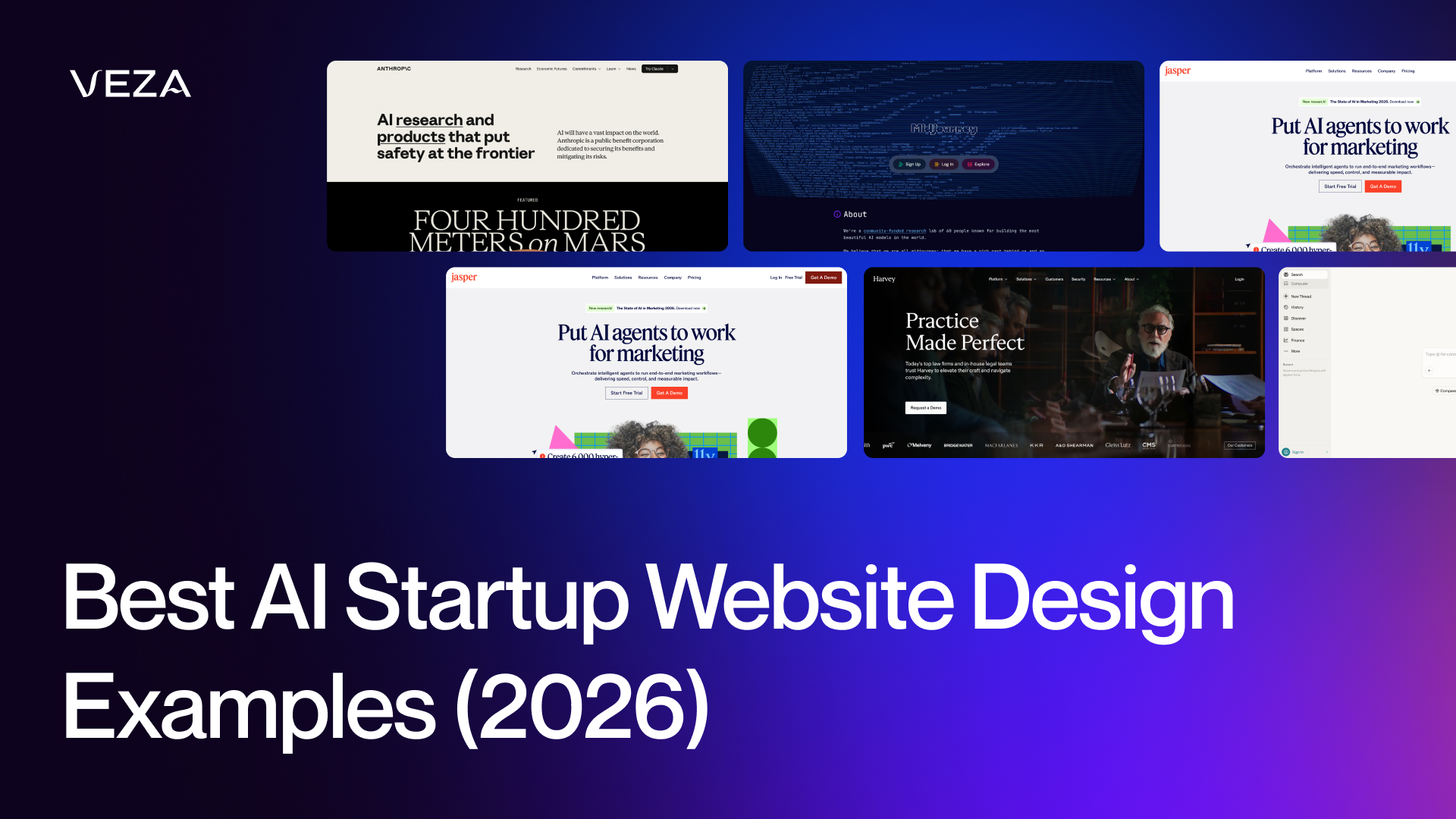
Quick-Reference: Top AI Startup Website Examples
AI Startup Website Design Patterns:
Color: Dark mode dominates, with gradient accents (purple, blue, cyan)
Typography: Bold sans-serifs, confident headlines
Hero: Product demo or clear value prop (avoid abstract AI imagery)
Trust: Logos, case studies, team credibility
Demo: Interactive or video product demonstrations
Tone: Confident but accessible, technical but clear
Key Characteristics of the Best AI Startup Website Design Examples
Before exploring individual companies more deeply, it is essential for you to understand the principles behind great AI startup web design.
The best AI startup website design examples aren’t successful because of the mode or gradient they use. They’re successful because they solve a key problem… they make complex technology more understandable, credible, and valuable in mere seconds.
Across generative AI, AI infrastructure, enterprise AI, and vertical AI companies, the best websites are those that consistently prioritize clarity, proof, and product demonstration above things like abstract visuals or hype.
Let’s break down what that looks like…
Homepage Design Excellence
Your homepage has a limited time of only around 3-5 seconds to be able to answer one key question: What does AI actually do?
The strongest AI homepages are those that instantly communicate function, audience, and value, and do so without the use of vague phrases and meaningless statements.
AI is complicated, but the homepage design needs to be the opposite to this. Minimalism is not an aesthetic trend, but it’s a strategic tool. Clean layouts create cognitive breathing room. Strong visual hierarchy directs attention. Fewer words, clearer meaning.
Typography plays a key role in AI websites, with bold, confident headlines dominating the category. Large statement text establishes authority, while supporting text is technical enough to provide expertise, while being readable enough to bring engagement.
Strong homepage examples include:
- Anthropic - Minimal and authoritative, relying on clarity and restraint.
- Jasper - Produce-focused with clear use cases and strong social proof.
- Runway - Cinematic and immersive, but always centered on the product.
The best AI startup homepage designs don’t over-explain, but, instead, they demonstrate value immediately.
Navigation and User Experience (UX)
AI startup websites often serve multiple audiences, such as developers, enterprise buyers, investors, and everyday users. Navigation must reflect that complexity without overwhelming your visitors.
The majority of successful AI websites use a simple primary navigation structure:
- Product
- Solutions
- Resources
- Company
Sticky navigation is common, especially for long, scroll-heavy pages. It ensures key actions, such as demo, sign up, and contact sales, remain accessible at all times.
AI-specific navigation patterns
It is important to make sure you have balance here.
Interactions need to enhance the experience, rather than distracting from it. Complex AI products often benefit from progressive disclosure, and reveal information in layers rather than presenting everything at once.
UX priorities for AI startups:
- Get visitors to the demo faster
- Explain the product more clearly
- Build trust progressively
- Offer conversion opportunities throughout
Mobile navigation needs to be a process that is seamless. Investors, journalists, and early adopters often encounter AI startups via social media on their phones. Friction kills curiosity.
Visual Design and Aesthetics
AI startup websites have helped develop recognizable visual patterns, but the strongest brands make use of them intentionally as opposed to generically.
AI visual design trends (2026)
- Dark mode dominates (over 70% of AI sites use it)
- Gradient accents (purple, blue, cyan)
- Subtle animations
- Occasional 3D or glass/blur effects
- Geometric grids and structured layouts
Color Palettes Table
Animations and interactivity need to feel purposeful, and this includes things like subtle hover states, scroll-triggered reveals, product micro-interactions, and delightful but fast-loading transitions.
There are also plenty of elements you need to try to avoid too, and this includes things like generic “AI brain” imagery, Matrix-style code rain, robot illustrations, and abstract neural network graphics.
Those cliches instantly signal surface-level branding. The best AI startup website design examples avoid visual stereotypes and instead build distinctive brand identities.
Branding and Storytelling
Design is brand strategy in visual form.
The most effective AI startup websites maintain consistent visual language across typography, color usage, button styles, and layout rhythm. Brand confidence shows up in consistency.
Strong AI storytelling includes clear mission values, case studies and success stories, a credible About page, and blog or research sections demonstrating thought leadership.
Because of the fact that AI claims are often abstract, storytelling must anchor them in real-world credibility. Logos, metrics, and named individuals help to add legitimacy, and a layer of trust that works as the core design for AI startups.
Call-to-Actions (CTAs) and Conversion Optimization
AI startups across different growth models: product-led growth (PLG), enterprise sales, waitlist-based launches. CTAs need to align with the business model.
These are some of the CTA types that work best for AI startups.
CTA Examples Table
It’s important to understand effective CTA design principles, such as high contrast, action-oriented copy, value-focused phrasing, and multiple placements with one primary focus. Clever copy can work well, but it is never as effective as clarity.
For deeper and more in-depth guidance on the best way to structure conversion flows effectively, explore these CRO strategies for SaaS to ensure your AI website doesn’t just look impressive, but instead it converts.
Design Principles Table
CTA: Want more inspiration beyond AI? Explore our curated list of the best B2B SaaS website examples to see how leading tech companies design for clarity and conversion.
Inspiring Examples of AI Startup Website Designs
Understanding design principles is very useful, but seeing how those ideas are applied in real websites is far more valuable. The leading AI startup websites combine strong visual identity with clear product communication and strategic user flows.
The thing that helps great AI startup websites to stand out from the average ones is not merely a case of the visual aesthetics of the site. Instead, a lot of it is down to how effectively the site’s design communicates value to visitors, as well as building trust and helping guide visitors towards more meaningful actions.
Across the industry, successful AI companies design their websites to demonstrate the product rather than merely describing it. Screenshots, live demos, and interactive tools replace abstract marketing language, and this allows visitors to quickly see what the product does, as well as how it can help them.
Innovative AI Landing Pages
Landing pages are commonly the most important and essential conversion surface for AI startups. Whether visitors arrive through search, social media, or investor referrals, the landing page must communicate value instantly.
The strongest AI landing pages focus on clarity. Instead of abstract explanations about AI, they actually showcase the product in action, making its benefits clear and obvious to users who are interested. These are some of the best example landing pages on the market:
Anthropic
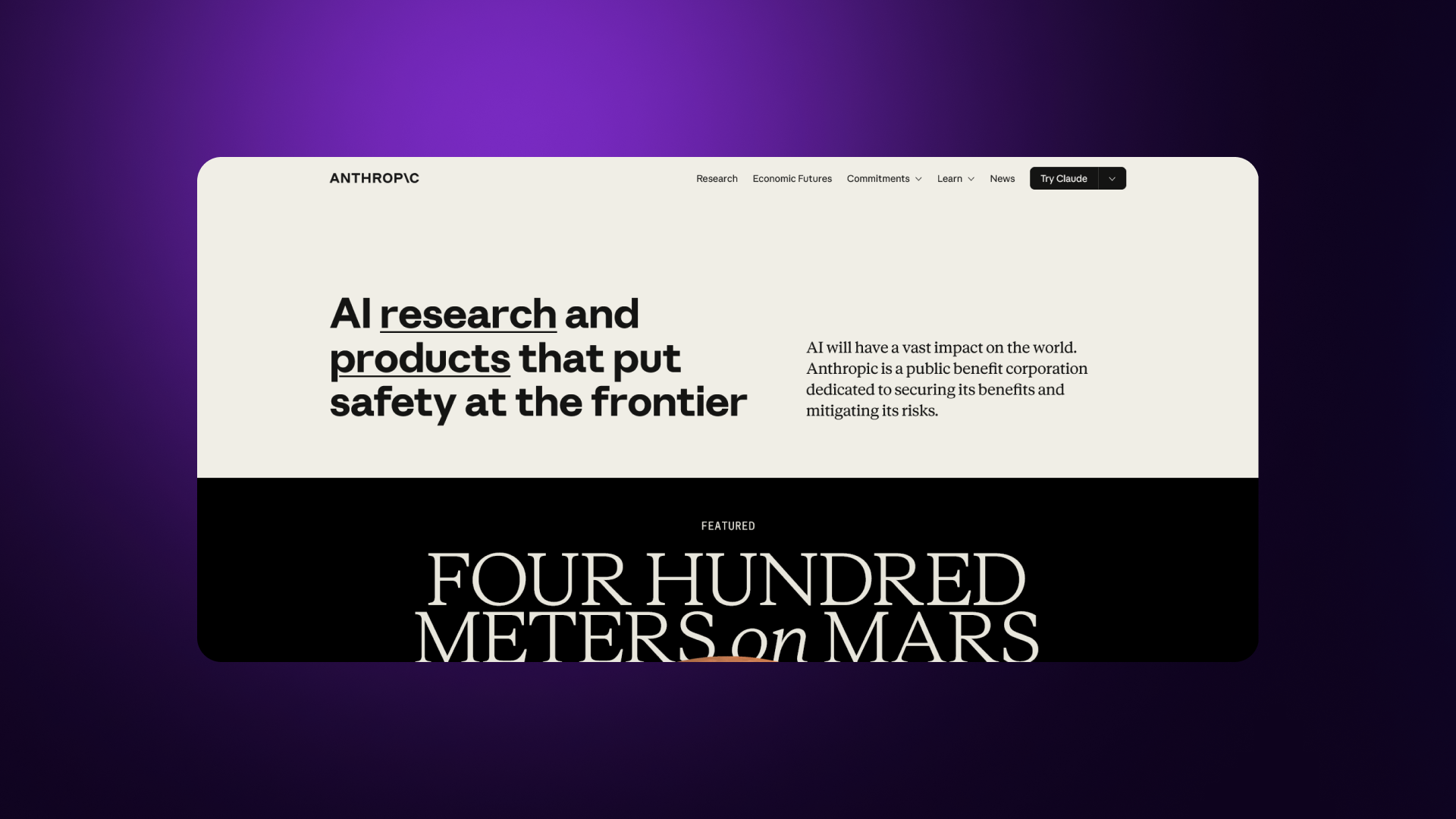
Anthropic’s website is a strong example of minimalist authority. The design is intentionally restrained, relying on generous whitespace, clear typography, and confident messaging rather than visual spectacle. The effect is that this provides greater credibility because it allows visitors to immediately understand that Anthropic is a serious, research-driven entity with substance.
Jasper
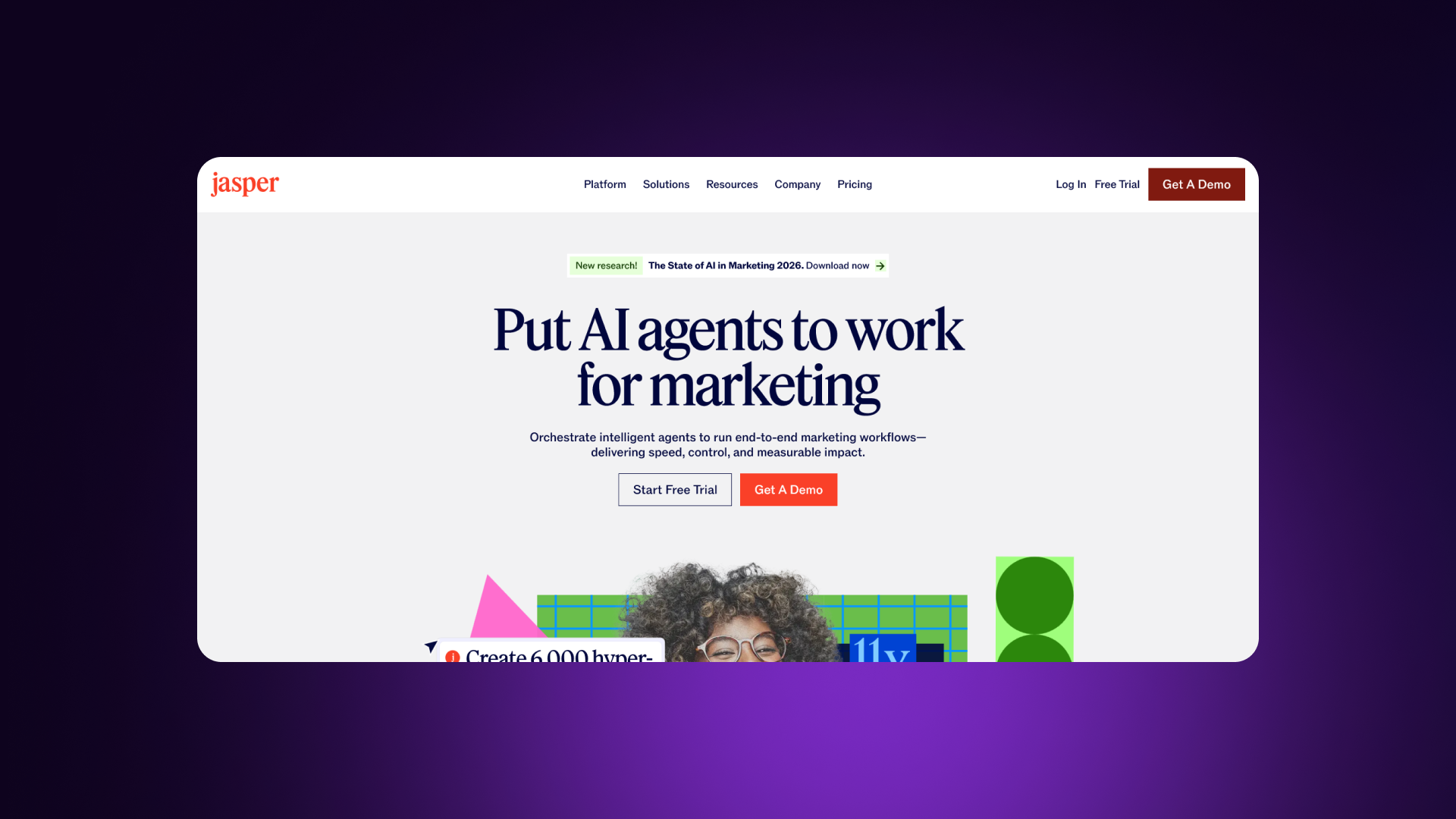
Jasper, on the other hand, takes a different approach, but is able to achieve the same type of clarity. Its hero section features product screenshots and use-case messaging that can explain exactly how the platform is able to help users create AI-generated content.
Runway’s
Runaway’s design reflects its audience of creators and filmmakers. The homepage uses a dark interface and visual outputs from the platform itself. By showing what users are able to produce with the tool, Runway’s design communicates value much more effectively than text alone.
Perplexity
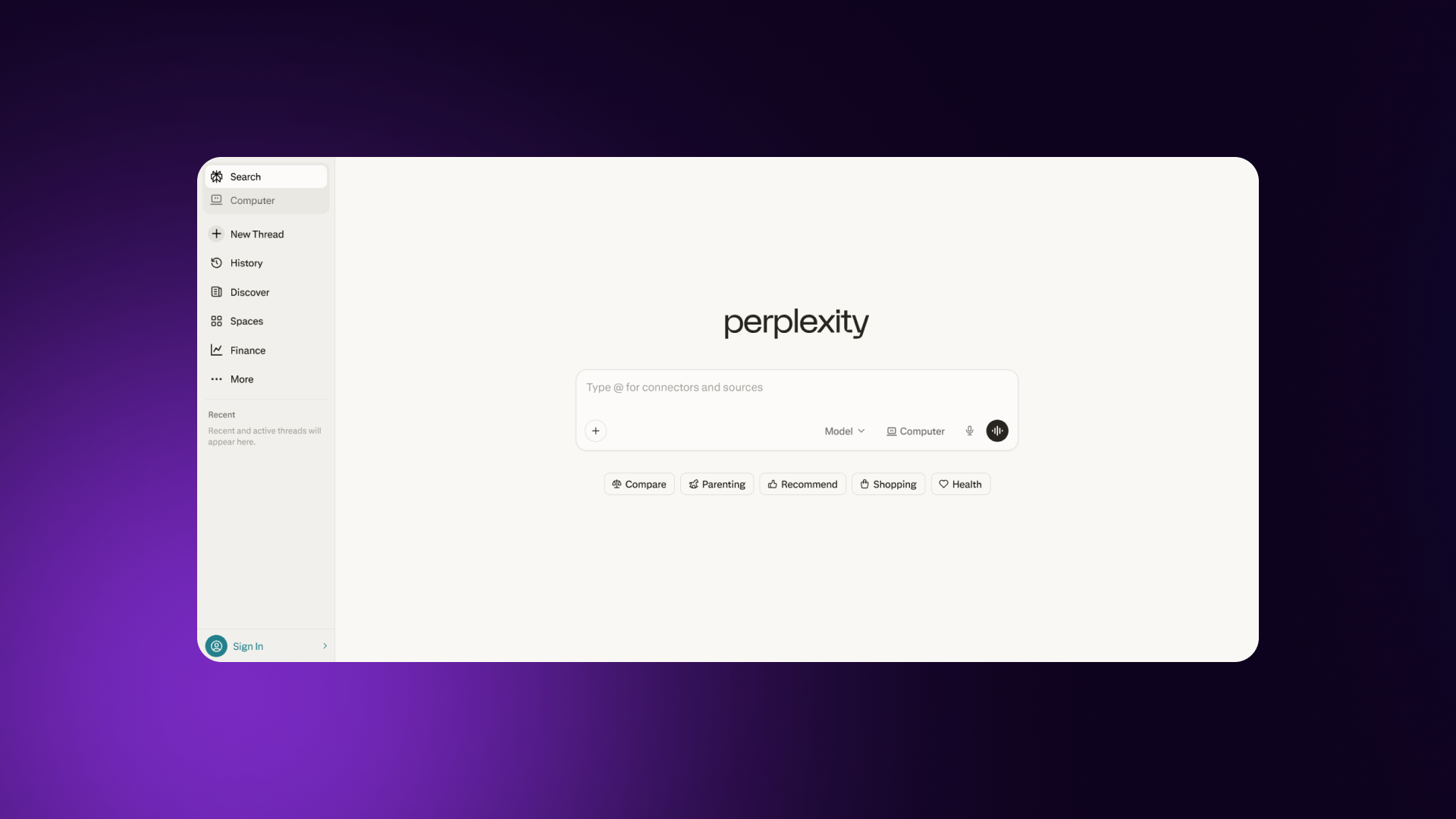
Perplexity actually takes an even more radical approach, with the interface itself becoming the main event. With a simple search box, visitors are able to interact immediately with the AI, and the site demonstrates its capabilities very quickly.
These examples illustrate one of the core principles of AI startup design, which mirrors the storytelling ethos of “show don’t tell.” Showing something is always more powerful than describing it, and this is the perfect way of being able to capture the imagination and attention of potential users.
Landing Page Analysis
Mobile Responsiveness & Adaptive Design
Mobile design is typically overlooked by early-stage startups, but it is a crucial component in how AI companies are perceived. Investors, journalists, and potential customers frequently encounter AI startups through social media or shared links, with the first experience of the site often happening via mobile device.
The leading AI startup websites maintain clarity and visual hierarchy on smaller screens, which typically involves simplifying hero sections, reducing headline length, and prioritizing a single primary CTA.
The majority of AI websites adopt a responsive design structure that serves to collapse complex navigation into a clean mobile menu. Content sections stack vertically to help them maintain readability, and CTAs are much larger and easier to access. Video demonstrations and product visuals need to be mobile optimised in order to improve performance.
Many AI startups can handle mobile very well, with Anthropic providing the most readable mobile experience due to its minimalist layout. Jasper is adaptive, ensuring screenshots remain visible even on smaller screens. Perplexity has an interface that naturally translates to mobile because it resembles a search engine.
Ultimately, responsive design should not be an afterthought, but instead needs to be an integral part of developing and establishing credibility.
Portfolios and Case Studies
AI startups tend to face trust problems, and this is because the technology is complex, and the marketing language can often be exaggerated, and visitors can wind up approaching AI claims with caution and skepticism.
Case studies and customer examples are among the most effective ways of addressing this issue. Being able to demonstrate real-world applications and measurable outcomes is one of the leading ways AI companies can transform abstract capabilities into credible results.
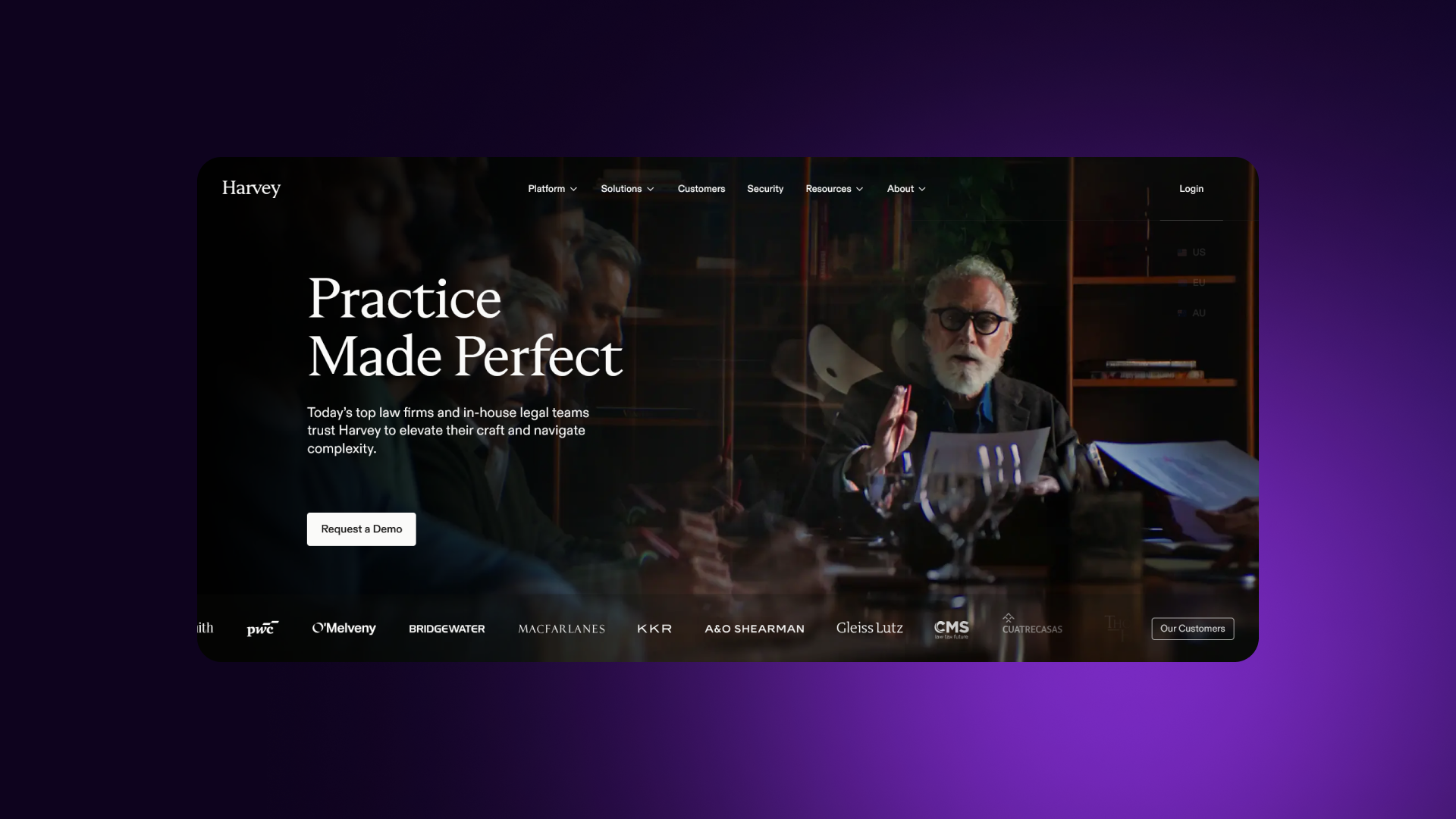
Legal AI platform Harvey is a great example of enterprise-oriented credibility. If you need more examples of how the right design strategy can translate into measurable results, explore our case studies.
Harvey’s website shows professional presentations, with structured case studies, and a clear explanation of how law firms are able to utilize technology in the best possible way. Here, design mirrors expectation, with a focus on evidence-driven trust.
Jasper integrates customer stories throughout, social proofing its sight, and combining testimonials with usage metrics and recognizable logos, which helps reinforce the idea that the product has widespread adoption.
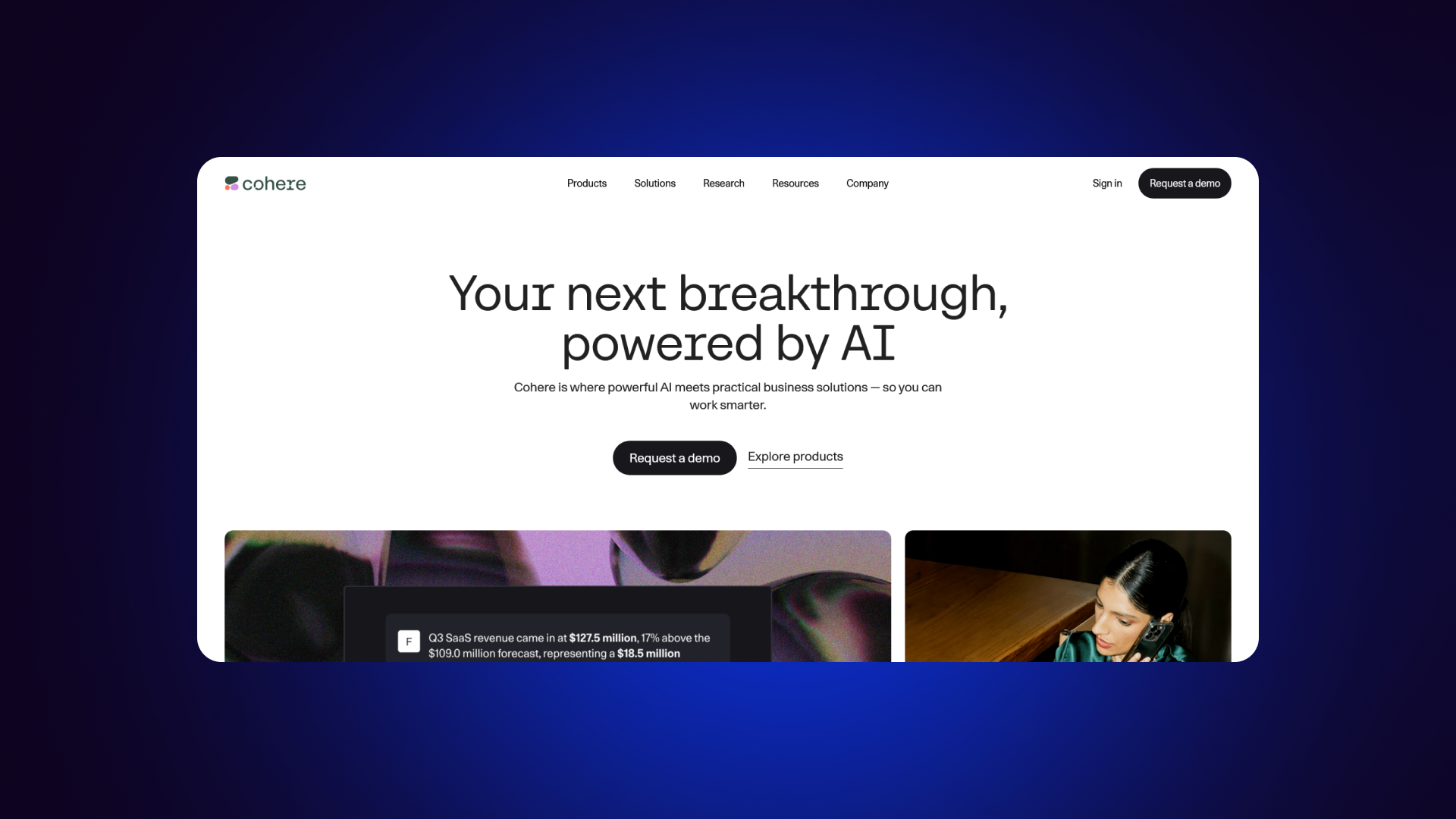
Cohere, on the other hand, takes a slightly different approach, showcasing cros-industry use cases. Instead of focusing on individual testimonials, the site demonstrates how well organizations can integrate its AI models into business workflows.
Generative AI companies might consider replacing case studies with portfolios, while Midjourney’s community gallery functions as proof of the platform’s capabilities, and Runway shows how work can be produced using its tools.
The important element here is a consistent strategy, which provides visitors with real outcomes, and leads to better credibility.
CTA: These examples are a great way of being able to understand how platform choices influence startup website design. Our guide to the best website builders for startups explains which tools founders utilize to build modern startup websites.
Unique Design Choices in AI Websites
Some AI startups deliberately break common design conventions, and these unorthodox approaches can cause a brand to become significantly more memorable.
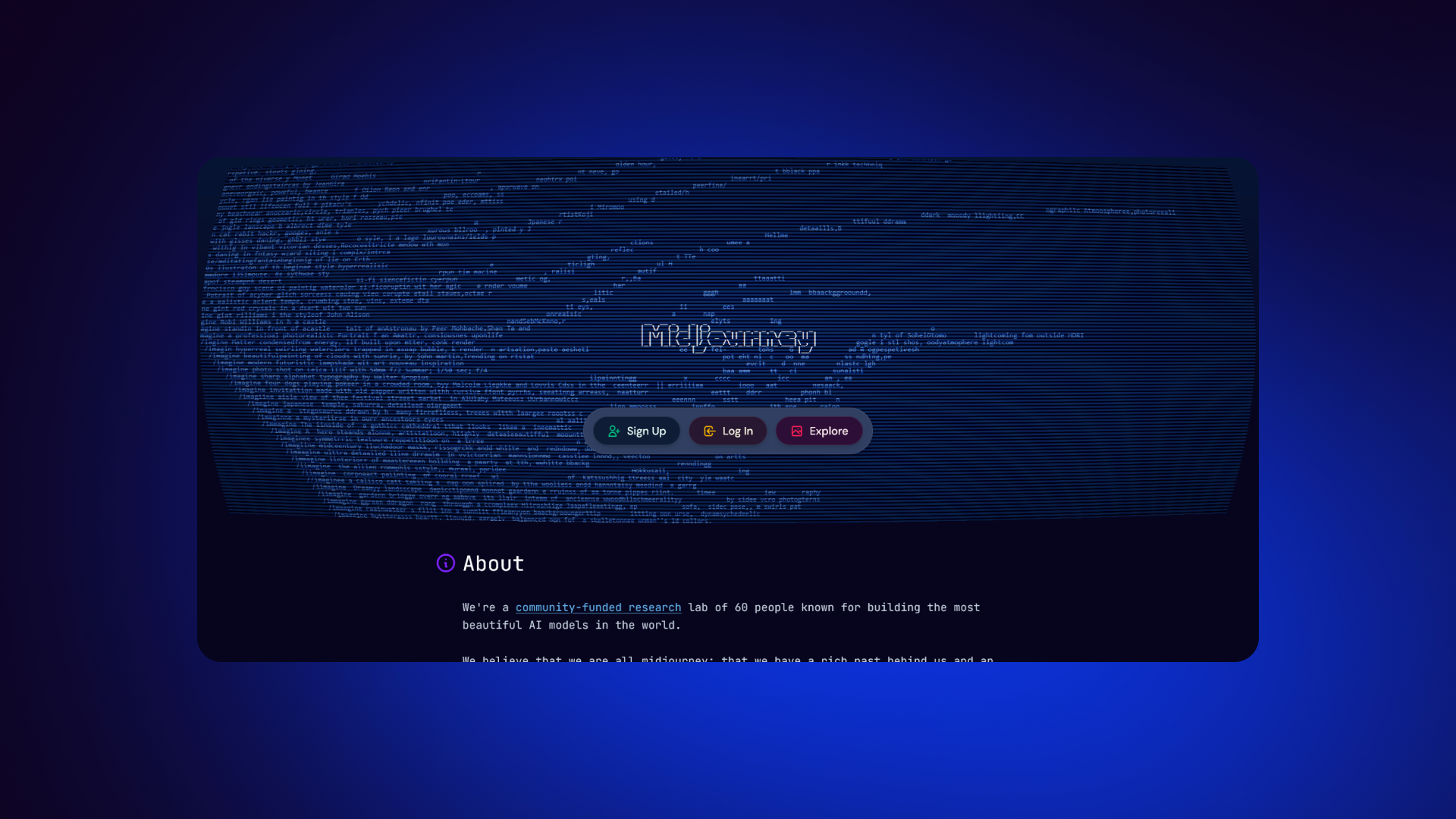
There are many examples of this, with Midjourney being perhaps the most unusual one. Discord was once its primary interface, with a minimal and basic website. The genius approach here was this allowed the Midjourney community to demonstrate what the technology could produce, providing organic discovery, and producing powerful results.
Perplexity’s homepage challenges traditional design patterns. By focusing the entire page around the search interface, the site becomes a live demonstration of the product. It allows visitors to try to tool immediately, and not have to wait to read a description.
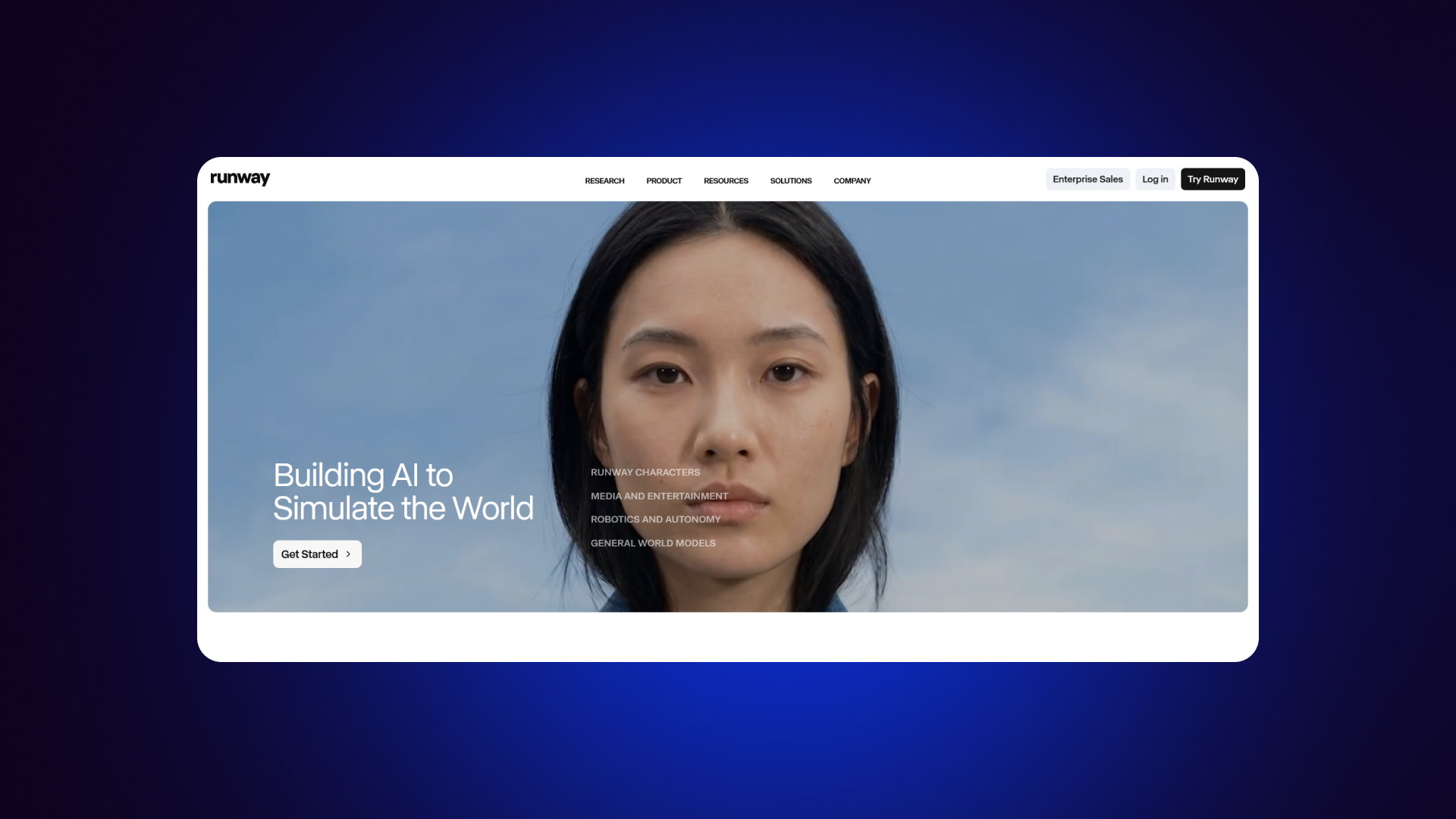
Runway uses visuals and motion to appeal directly to creative professionals. The design here feels more like a digital studio than a regular SaaS website, helping reinforce the creative element of the platform.
.png)
Hugging Face takes a very different approach by utilizing playful branding, and a focus on democratized AI. This is a simple choice that makes the platform more approachable, but still feeling like it serves a technical developer community.
Design innovation works best when it comes to reinforcing the product and audience. Building a website with strong design clarity requires a deep and comprehensive understanding of SaaS design patterns and startup positioning.
CTA: If you plan to build an AI startup website, work with Veza to help you create the best and most innovative site for you.
Trends and Future Directions in AI Startup Web Design
AI startup website design continues to evolve quickly as the industry grows and matures. A lot of these shifts align with broader AI UX/UI design trends, where interactive interfaces, conversational experience, and product-first design become central to producing value.
Early AI websites tended to rely on futuristic visuals and abstract graphics, but the newer versions are moving toward greater practicality and product-focused design.
Interactive product demonstrations are becoming the new normal, with many AI companies replacing static screenshots with the ability to experiment with the product directly from the homepage. This helps enhance understanding, while also reducing friction at the same time.
Another of the emerging trends is that of conversational design. With chat-based interfaces becoming more common, websites have become increasingly incorporative of interactive chat elements that mirror the way the AI product works.
Community integration is also growing in prominence, with Midjourney and Hugging Face showcasing how well user communities are central elements to the design, development, and credibility of websites.
Emerging Trends (2026)
It’s important to note that earlier trends are also fading, such as generic AI imagery, robotic illustrations, and abstract neutral networks. These are all examples of hype over substance, and the sorts of elements that enterprises want to be steering clear of.
The next gen of AI startups will be likely to focus on three core priorities: interactivity, accessibility, and credibility. These will be the foundational elements that successful companies will use to drive growth as AI becomes more integrated into everyday tools.
Examples Gallery Table
Applying These Insights to Your Startup Website
Being able to understand great design patterns is important, but it only matters if you’re able to translate the information into practical decision-making when developing and designing your own website. The strongest and most prominent AI startup websites are successful precisely because they follow clear design principles, and focus on credibility, clarity, and product demonstration.
No matter if you’re launching a new AI product, or you’re redesigning an existing website, the goal needs to be the same. You have to be able to communicate value quickly, build trust instantly, and guide visitors to where you want them to be.
Design Principles to Apply
Across the leading AI startup websites design examples, there are certain principles that remain consistent, and these are a core part of making more complex technology understandable, as well as maintaining credibility and visual innovation.
It is important for AI startups to focus on clarity over trying to be clever, and helping visitors to understand what your product does in seconds is key. Try to avoid abstract messaging, and instead focus on explaining the core value proposition of your business cleanly and concisely.
Remember the “show don’t tell” concept? That is the second major principle to consider here. Things like product demonstrations, screenshots, and output examples are significantly more effective than simply going for long descriptions. Being able to actually show AI working is a great way of building trust much faster.
Trust signals are a crucial part of this process. Logos of well-known customers, testimonials, and real case studies are the perfect way of countering skepticism and building trust around your AI marketing claims. At the same time, strong visuals communicate innovation without being overly gimmicky.
Finally, you need to make your AI products as accessible as possible to make them feel less intimidating. Your design has to make the technology feel approachable instead of overly technical.
Common mistakes that too many businesses are making include things like vague value propositions, over-reliance on generic AI imagery, and overlooking the importance of mobile performance.
Building Your AI Startup Website
Choosing the right platform can considerably impact how well you communicate your product and brand. Here are some of the final recommendations you need to consider.
There are a lot of AI startups that build marketing-focused websites, and Webflow provides the best balance between design flexibility and development speed. The visual development environment allows teams to create highly distinctive websites while maintaining fast iteration cycles.
Webflow also enables marketing teams to manage their content independently without the need for continual developer support, allowing them to scale effectively as the company grows.
Veza Digital recommendation:
For AI startups focused on marketing websites, Webflow is the perfect choice to provide the design flexibility needed to help your business stand out. Our Webflow development services, and we can help AI companies build websites that balance innovation with clarity.
CTA: Veza Digital builds Webflow websites for AI and B2B SaaS companies. We understand the balance of innovation and clarity. Work with Veza to design and the perfect AI startup website for your business.
FAQ - Frequently Asked Questions (Questions Only)
General
- What makes a great AI startup website?
Leading AI startup websites focus on clearly explaining their product, demonstrating genuine capabilities, and earning the trust of visitors through proof.
- What design style do most AI companies use?
Most AI tend to favor minimalist designs with bold typefaces, and product-focused visual elements.
- Should AI startup websites use dark mode?
Dark mode tends to be popular among AI startups due to their modern aesthetic, but it’s important to note that clarity and readability should always trump aesthetics.
Design Elements
- What should be in an AI startup's hero section?
An AI startup hero section needs to be able to show clear value propositions, as well as a visible product demonstration, and a principle CTA.
- How do AI startups build trust through design?
AI startups build trust through clear messaging, customer logos, case studies, product demonstrations, and credible team or research information.
- What animations work best for AI websites?
The most effective animations are subtle interactions such as hover states, scroll reveals, micro-animations that enhance usability.
Examples
- What are the best AI startup website examples?
Some of the most successful AI startup website examples include Anthropic, Perplexity, Jasper, Midjourney, Runway, and Cohere.
- Why is Anthropic's website design so minimal?
Anthropic embraces a minimalist design in order to reinforce credibility and seriousness. This also allows its messaging and research-driven brand to become the focal point.
- How does Midjourney's website work without much design?
Midjourney is reliant on community product output in order to demonstrate value, which lets the results of AI speak for itself.
Practical
- What platform should I use for my AI startup website?
The majority of startups will find benefit with platforms like Webflow because of the fast, design-driven marketing sites it provides, while developers might prefer Next.js framework.
- How important is mobile design for AI startups?
Mobile design is crucial due to the fact that many users first encounter AU startups through their social media or mobile links.
- How can I make my AI startup website stand out?
If you want your AI website to stand out from the crowd, you need to make sure you focus on clarity, as well as demonstrating your product visibility, building trust, and creating credible design identity.