.jpeg)
A year ago, talking about the "best AI chatbot" was simple. You could name a couple of tools and be done with it.
That’s no longer the case, as the market is moving fast.
We're no longer looking at a head-to-head competition among AI chatbot companies. Instead, there's a fragmented marketplace with multiple products designed to solve specific problems. If your decision is still making a decision based on what you assumed so far, then you will likely pick the wrong tool.
So, let's dive into what happened and why it matters.
How the Chatbot Market Has Evolved Leading Into 2026
First, we need to talk about scale. AI chatbots didn't just grow in terms of user base; they've become part of the mainstream infrastructure.
The total global chatbot market is estimated to reach $10-11.5 billion in 2026, growing to an estimated $27-32 billion by 2030-2031 at approximately 23% CAGR.
Generative AI chatbots are also growing rapidly. Estimated to reach $13 billion in 2026 and is estimated to exceed $113 billion by 2034 at a CAGR rate of 31% or higher.
Approximately 987 million people are currently using AI chatbots. Also, 80% of consumers have at least once interacted with an AI chatbot.
These numbers tell you that we are past the stage of early adoption. These tools are now part of our everyday lives.
While the above statistics indicate the growth of the number of users, the more significant development in the AI chatbot space relates to how these tools are being utilized.
We have clearly moved from:
- Experimentation - to utilize AI chatbots as part of the daily workflow
- Using AI chatbots as a means to "try out prompts" - to "use AI chatbots to run processes."
- Individual usage - for the utilization of AI chatbots across teams within organizations and across departments and functions.
- Content generation in isolation - to using tools like an AI landing pages generator to turn outputs into live, conversion-focused assets
In B2B environments (especially SaaS and digital teams), AI chatbots are becoming integrated into many aspects of business, including:
- Content creation
- Research workflow
- Internal knowledge base access
- Automating customer support
- Use in Development/Technical Operations
This shows a much larger reliance upon these types of tools. As these workflows mature, the focus shifts from output to delivery. Implementation layers like Webflow development services play a role in turning AI-driven content and experiences into high-performing websites.
Traffic data shows this increase in usage. As of January 2026, ChatGPT had reached over 5.5 billion monthly visitors. In fact, ChatGPT is now the 5th most visited website globally and surpasses other popular sources such as Reddit, Wikipedia, and X.
There is no way a "nice-to-have" product reaches this type of usage. A product becomes a "must-have" when people begin to rely upon it.
Best AI Chatbots 2026: At a Glance
Defining What Makes an AI Chatbot “Best” in 2026
When most compare these AI chatbots, they fail to address a question that is no longer relevant.
There is no single "Best" AI Chatbot in any meaningful terms.
What matters today is "fit".
Teams that receive the most benefit from using AI Tools do not look to rank; rather, teams will identify specific needs and then find an appropriate tool to meet those needs. Once a team evaluates their AI Chatbot(s) based on the specific task, the evaluation metrics will be drastically different.
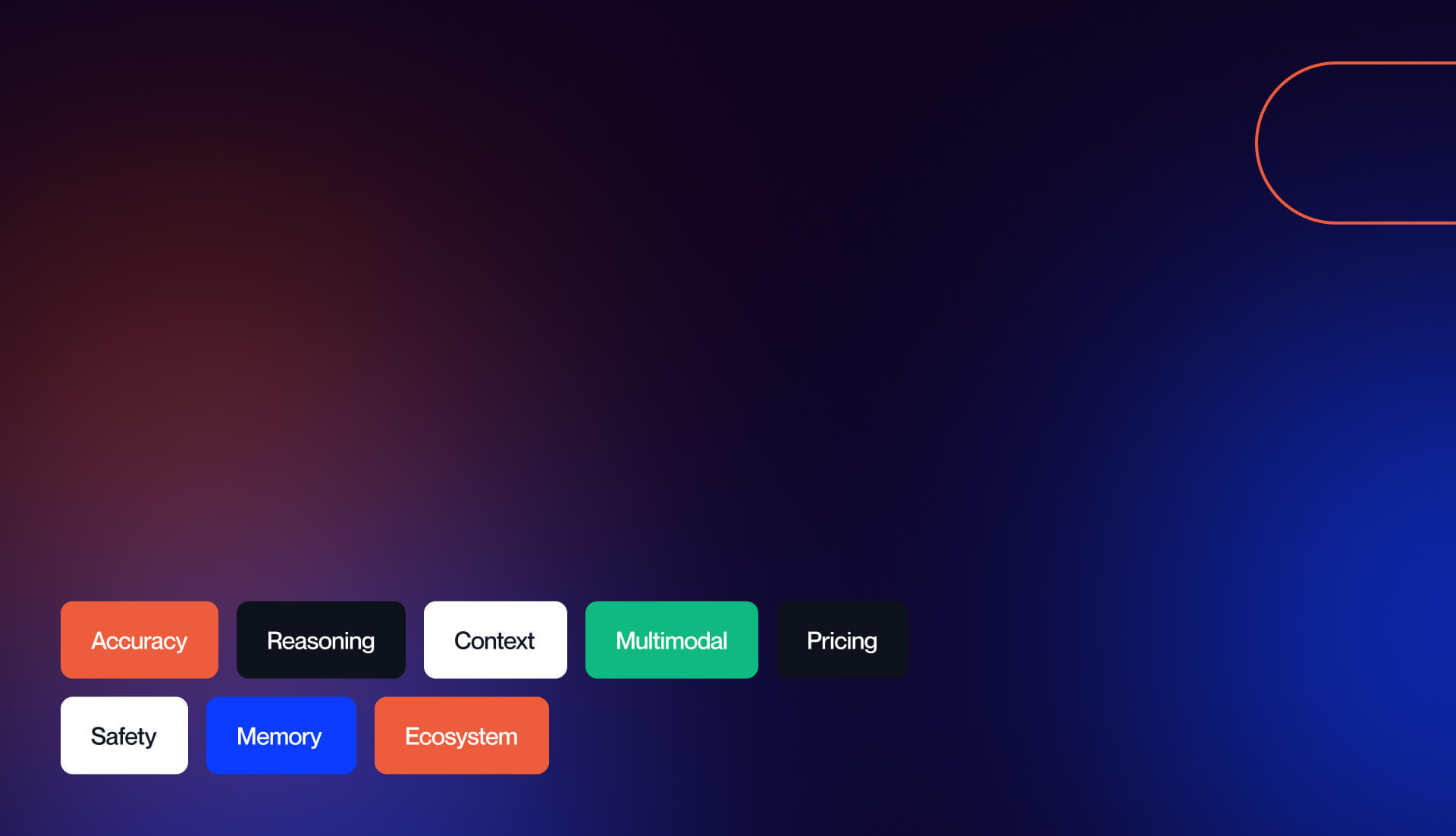
Here are the factors we evaluate when comparing AI chatbots as of 2026:
1. Accuracy/Hallucination Rate
How many times can an AI Model produce an inaccurate output?
While the risk of AI producing misleading information is greatly diminished compared to years prior, this is still a huge concern for Research Teams and Client-Facing Teams.
2. Reasoning Ability
There are big differences in the ability of various models to perform complex reasoning. This includes but is not limited to:
- Multi-Step Logic
- Structured Problem Solving
- Code Generation and Debugging
Here you see the biggest difference between models.
3. Context Window (Usable vs. Advertised)
Many AI Model Providers have made claims that their model can accept large amounts of information.
However, in reality, the actual amount of usable context that the model accepts tends to fall somewhere in the range of 60%-70% of the advertised limits after which point performance degrades significantly.
When performing activities such as working with long documents, working with large datasets, or engaging in multi-turn conversation, this becomes a far greater concern than most users may realize.
4. Multimodal Capabilities
Since Text is now being viewed as only one piece of the puzzle, strong AI Models must now include the ability to analyze:
- Images
- PDFs/Spreadsheets
- Video/Audio Inputs
This directly impacts the utility of the AI Model within real-world workflows.
5. Memory and Personalization
As AI continues to evolve, memory and personalization are beginning to become a key differentiators for AI Model Developers.
While many current AI Models (such as ChatGPT) continue to retain contextual information regarding the user's preferences, tone and previous interactions, other models still rely on a per-session basis. For long-term projects, this difference quickly adds up.
6. Ecosystem and Integration
An AI Model is no longer simply an isolated interface.
Users must consider the following:
- Native Integrations (e.g., Google Workspace, Microsoft 365, Slack, etc.)
- API Access
- The capability to integrate with internal systems
7. Pricing and Value
In recent years, the pricing of AI Models has evolved dramatically. No longer can users expect to pay $20/mo for a solution.
We now have:
- Mid-Tier Plans
- Premium Tiers ($100-$300/mo)
- Enterprise Contracts with Custom Pricing
The price difference between tiers is often quite dramatic.
8. Safety, Compliance, and Data Handling
For Businesses, this is not an option.
Examples of it are:
- Data Retention Policies
- Training on User Data
- Enterprise Security Controls
… and will ultimately decide if a given AI Model is suitable for business use.
In summary:
The best AI chatbot for a company is completely dependent on the function required of the AI. For more context, read our SEO vs GEO vs AEO article.
Major Players Shaping the 2026 AI Chatbot Landscape
A very clear example of this trend is in market share.
One year ago, there was one major tool in the space; now that one tool's dominance is eroding and its market share is being captured by competing tools designed to solve particular problems. Here is where those tools currently stand as of January 2026.
ChatGPT: 64-68% Market Share
Dropped from around ~87% in January 2025, a decline of ~19.2 percentage points.
Google Gemini: 18.2-21.5%
Increased from approximately 5.4%, an increase of more than 370 percent year-over-year.
Microsoft Copilot: Approximately 4.5%
Influential in enterprise environments and especially within Microsoft’s ecosystem.
Claude: Approximately 2% Market Share
Generating between $850 million and $2.2 billion in annual revenue and growing at 159 percent, it has clearly established some of the most valuable enterprise use cases.
Perplexity AI: Approximately 8.2%
Dropped from 14.1 percent in 2025, still well-positioned in research-based workflow.
DeepSeek: Approximately 1.5-4%
Growing rapidly in both technically sophisticated and cost-sensitive environments.
Grok: Approximately 0.9%
Niche still, but integrated tightly into the X (Twitter) ecosystem.
AI Chatbot Market Share (January 2026)
Source: Statcounter/Similarweb Jan 2026
Key Callout: The End of AI Monoculture: ChatGPT's market share dropped from 87% to 68% in just 12 months.
What Does This Trend Mean?
The headline isn't simply that ChatGPT is losing share. It is the amount it lost and the speed at which it lost it.
A 19-point drop in 12 months marks the end of AI monoculture. Users are no longer using a single tool. Instead, they are branching out for their unique needs.
Additionally, Google Gemini is increasing its market share through its inclusion in various ecosystems (Search, Docs, Gmail), Microsoft Copilot is integrating itself into enterprise workflows, Claude is establishing itself as the go-to for enterprise customers that need depth of understanding, reasoning and high-value users and the others have started specializing.
That is not random growth but a specialization.
Where Does This Leave You?
When evaluating AI tools today, your evaluation should be "which is the best chatbot for this particular task?" rather than "what is the best chatbot."
With that perspective, we will move forward breaking down each of these tools by feature to feature and then mapping them directly to real world use cases to help you evaluate which is the best for your purpose without any hesitation.
Top AI Chatbots of 2026: Detailed Comparison and Rankings
This section breaks down the major AI chatbots shaping the market in 2026.
The goal isn’t to rank them from best to worst. It’s to show where each tool performs well, where it falls short, and how that ties back to real use cases.
ChatGPT (OpenAI GPT-5.x Series)
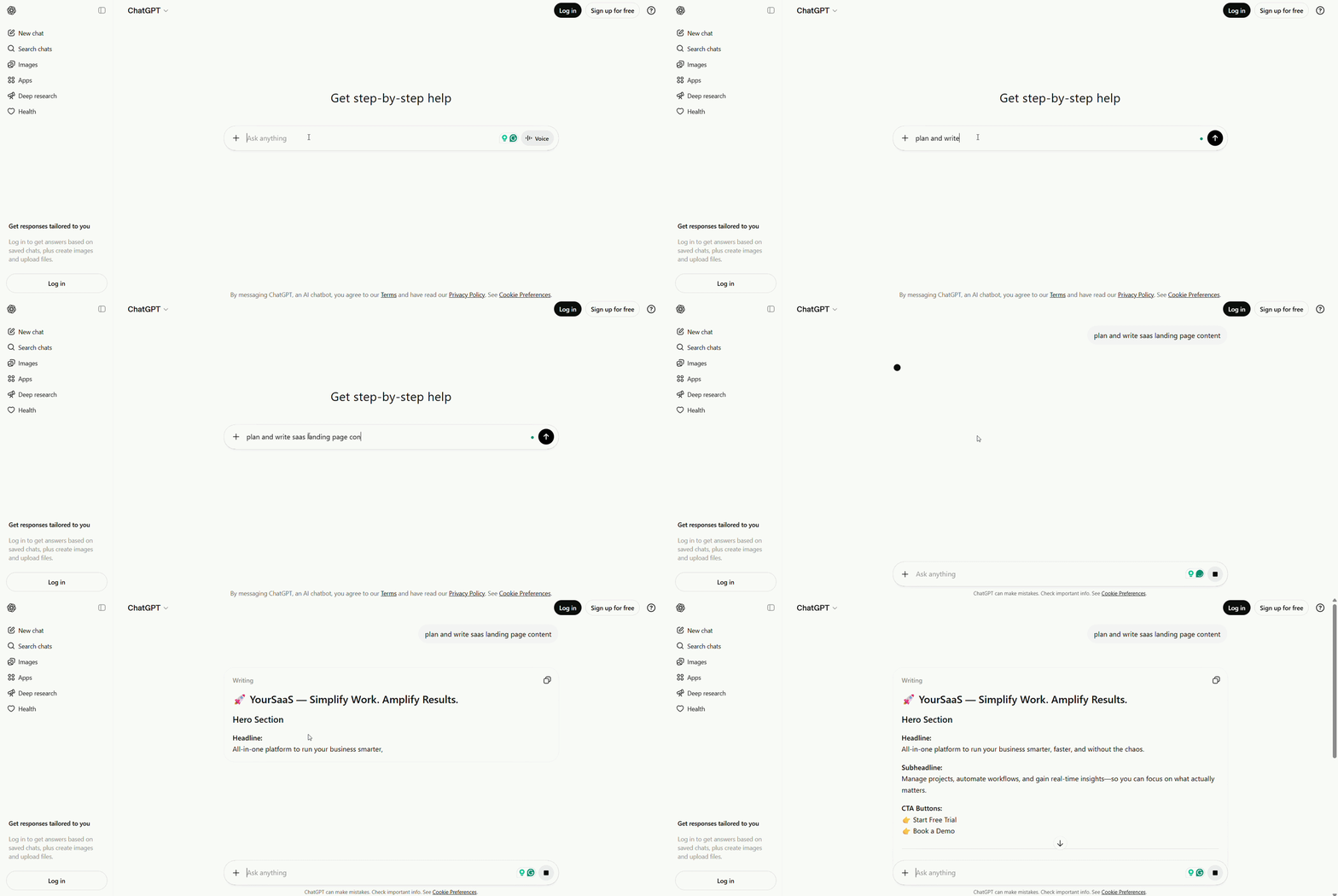
ChatGPT remains the most widely used AI chatbot worldwide, even as its market share declines.
- 800 million weekly active users
- 5.72-5.84 billion monthly visits
- $10 billion ARR as of June 2025
From a growth standpoint, it’s still the fastest-scaling software platform to date.
The GPT-5.x series pushed performance forward in measurable ways. GPT-5.2 (released December 2025) became the first AI system to achieve 100% on the AIME 2025 math benchmark without external tools, which signals a major improvement in reasoning consistency.
Context capacity has also expanded:
- 128K tokens standard
- Up to 1M tokens on GPT-5.4 (March 2026)
One feature that stands out is memory. ChatGPT is currently the only major chatbot that retains user preferences across conversations. This changes how it behaves over time, especially for ongoing workflows.
Pricing
- Free (limited)
- Go: $8/month
- Plus: $20/month
- Pro: $200/month
- Team: $25-30/user/month
Strengths
- Broad versatility across use cases
- Strong ecosystem (plugins, custom GPTs)
- Image generation with DALL·E 4
- Voice interaction and multimodal features
- Computer use capabilities for task execution
Weaknesses
- Higher hallucination rate than Claude on long or complex documents
- Voice output can feel standardized or less natural
- Performance can vary depending on prompt structure
Claude (Anthropic)
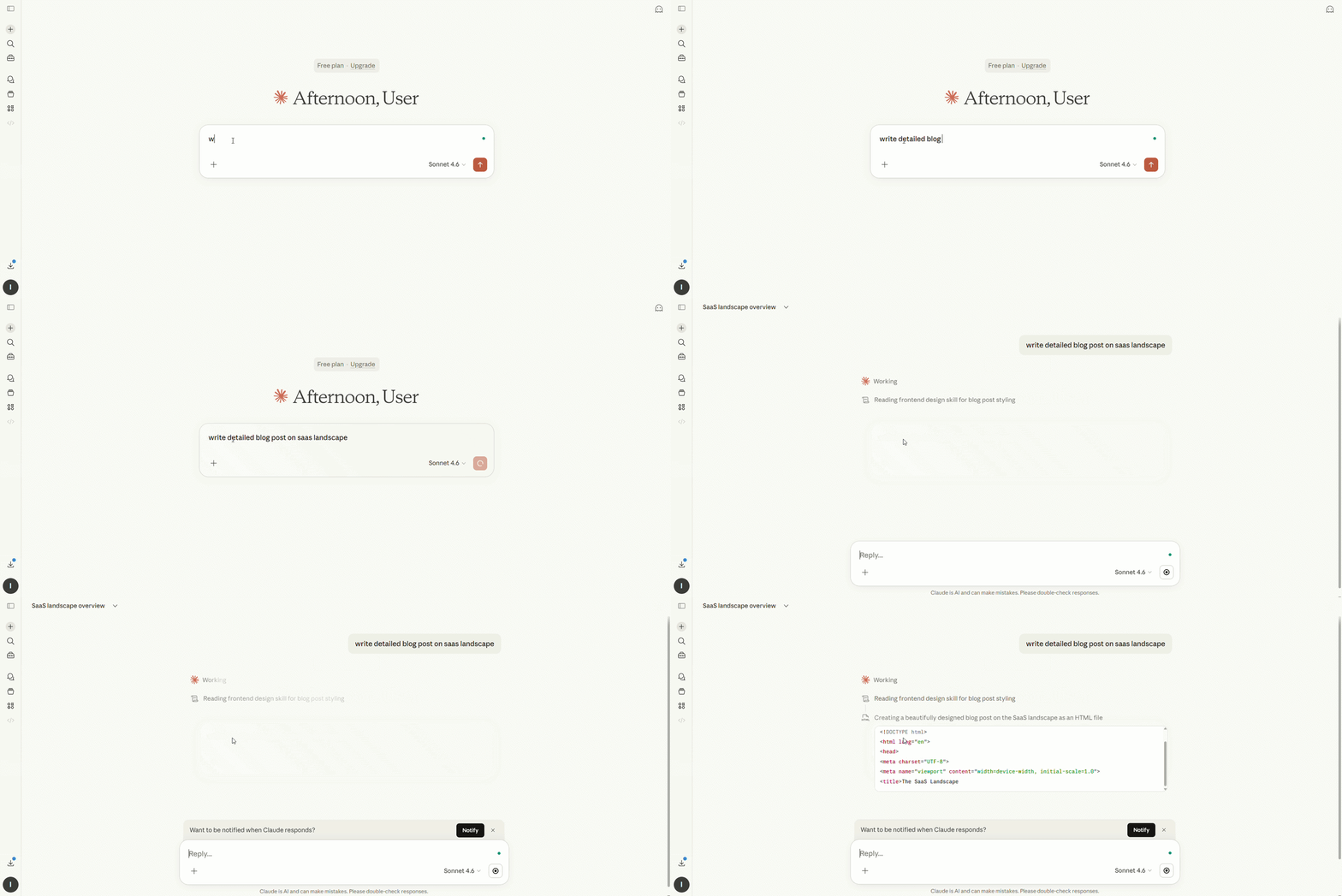
Claude has positioned itself as a high-quality, enterprise-focused alternative, especially in writing, reasoning, and coding.
- ~30 million monthly active users
- $850M to $2.2B annualized revenue
- 159% growth
Despite a smaller user base, revenue figures suggest strong adoption in high-value business environments.
Claude’s context handling is one of its defining features:
- 200K tokens standard
- 500K tokens (Enterprise)
- 1M tokens in beta
On technical benchmarks, it performs strongly in development workflows:
42% on SWE-bench Verified (ahead of ChatGPT at 39%)
Pricing
- Free
- Pro: $20/month
- Max: $100/month (5x usage)
- Max: $200/month (20x usage)
- Team: $25-150/user/month
Strengths
- High-quality writing output
- Strong long-document analysis
- Reliable coding performance
- Lower hallucination rates in structured tasks
- Strong safety and alignment behavior
- Effective in legal and analytical reasoning
Weaknesses
- No memory feature across conversations
- Smaller context window compared to Gemini at the high end
- No native web search functionality
- Enterprise Adoption
Clients include:
- NBIM
- IG Group
- HackerOne
- Palo Alto Networks
- Nordea
- BlackRock
Google Gemini
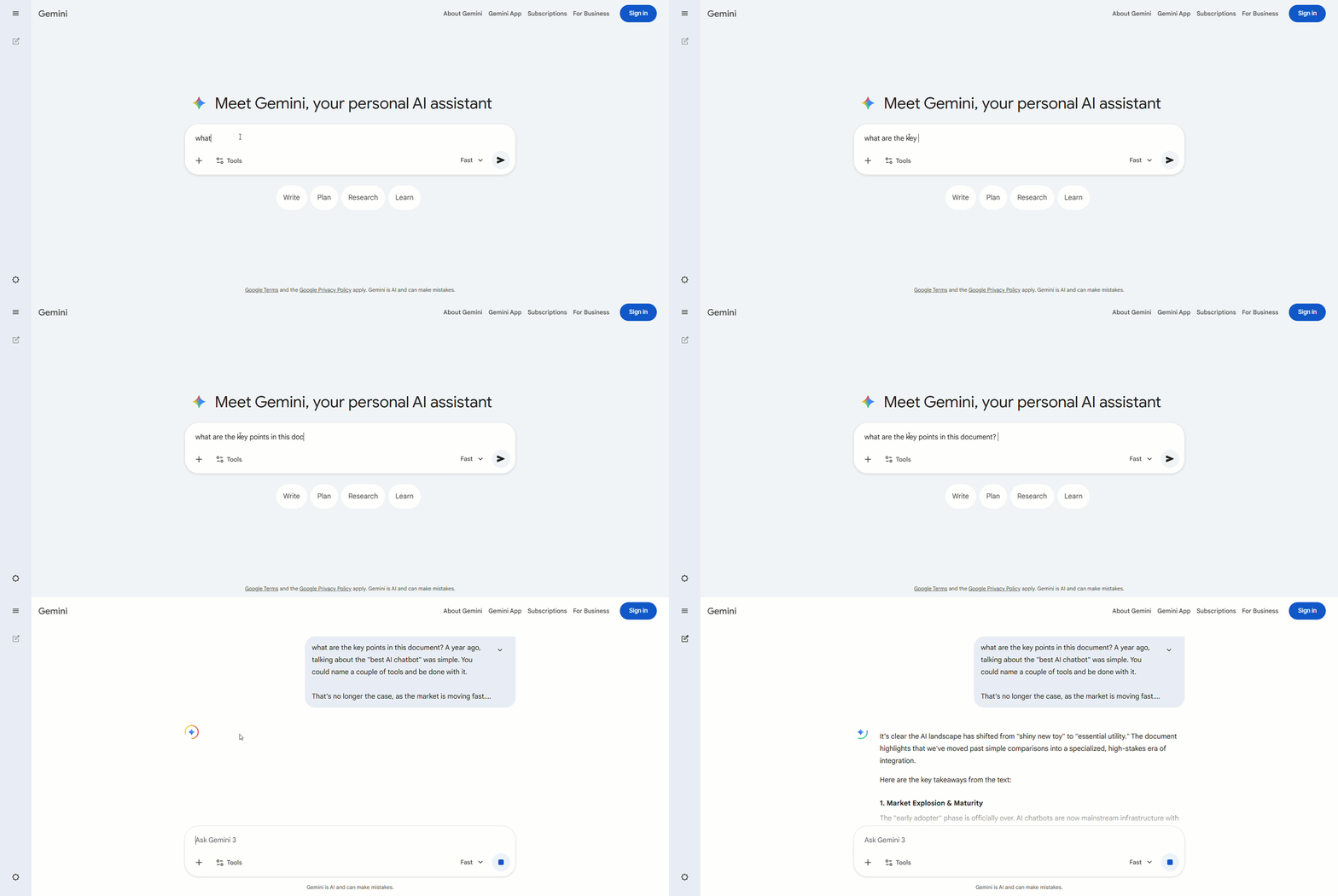
Google Gemini has grown rapidly, driven largely by integration into Google’s ecosystem.
- 600M+ monthly users
- Strong distribution through Search, Gmail, Docs, and Android
The release of Gemini 3.1 Pro (February 2026) placed it at the top of multiple benchmarks:
- Led 13 of 16 major benchmarks at launch
- Achieved 77.1% on ARC-AGI-2, one of the highest scores recorded
- Its context window is currently the largest widely available:
- 1M tokens standard
- 2M tokens planned
Another indicator of its role is referral behavior:
388% year-over-year growth in traffic sent to external sites (compared to ChatGPT’s 52%)
Pricing
- Free
- AI Plus: $7.99/month
- AI Pro: $19.99/month (includes 2TB storage)
- AI Ultra: $249.99/month
Strengths
- Strong multimodal capabilities (text, image, audio, video)
- Native integration with Google Workspace
- High benchmark performance
- Largest context window currently available
Weaknesses
- Less distinct personality or interaction style
- Lower standalone appeal outside the Google ecosystem
- Most effective when used within Google products
Microsoft Copilot
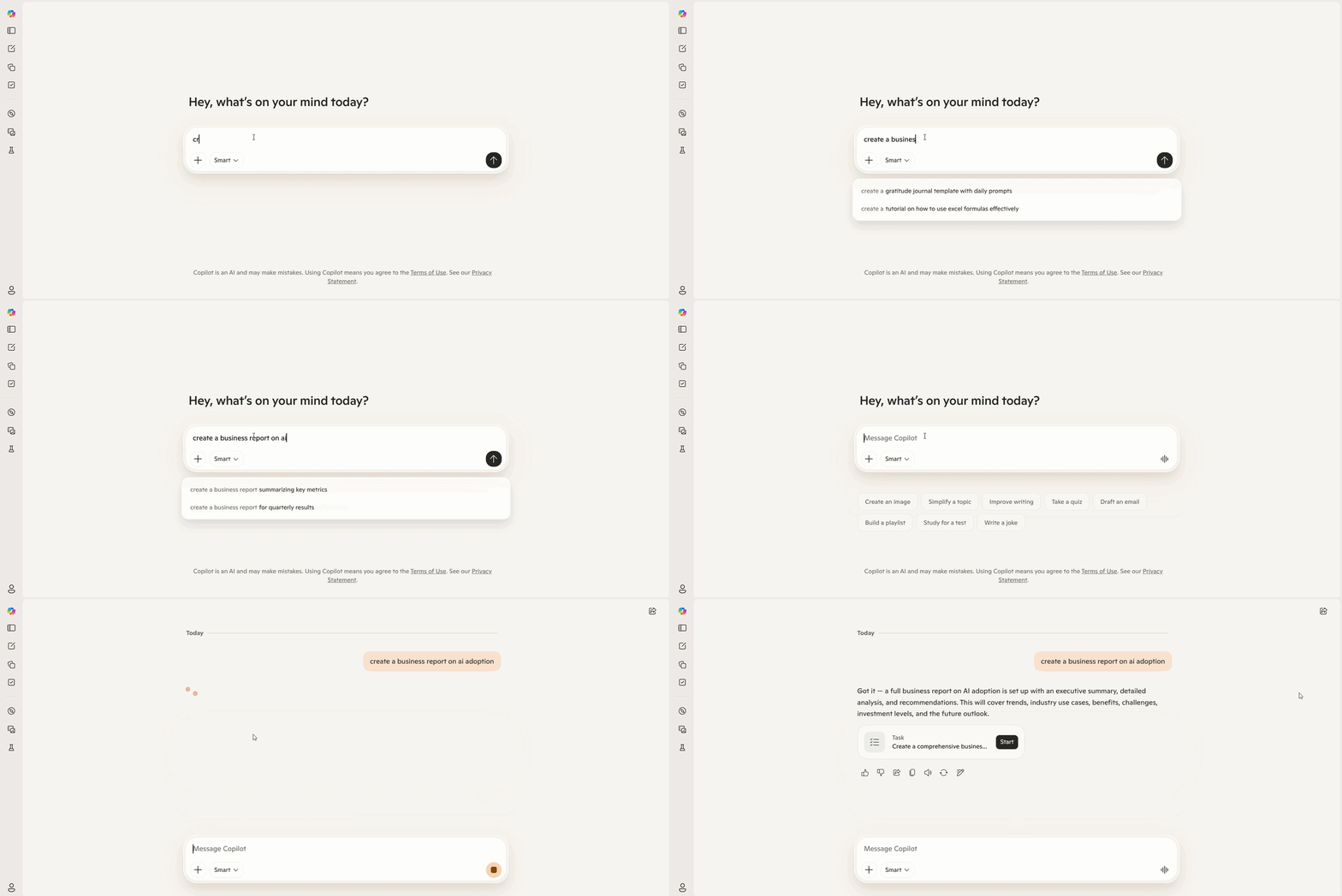
Microsoft Copilot is positioned differently from other tools. It is less of a standalone chatbot and more of an embedded productivity layer.
85% of Fortune 500 companies use Microsoft generative AI platforms
The main value comes from integration with Microsoft 365:
- Word
- Excel
- PowerPoint
- Outlook
- Teams
Pricing
- M365 Copilot Business: $21/user/month
- M365 Copilot Enterprise: $30/user/month add-on (requires M365 E3/E5)
- Copilot Pro (individual): $20/month
- Free Copilot Chat for M365 Entra users (rolled out Aug-Oct 2025)
Strengths
- Deep integration with business tools
- Work-context-aware responses
- Strong enterprise security and compliance features
- Designed for internal productivity use cases
Weaknesses
- Requires Microsoft 365 ecosystem for full value
- Limited usefulness as a standalone chatbot
- Consumer version offers less differentiation
Perplexity AI
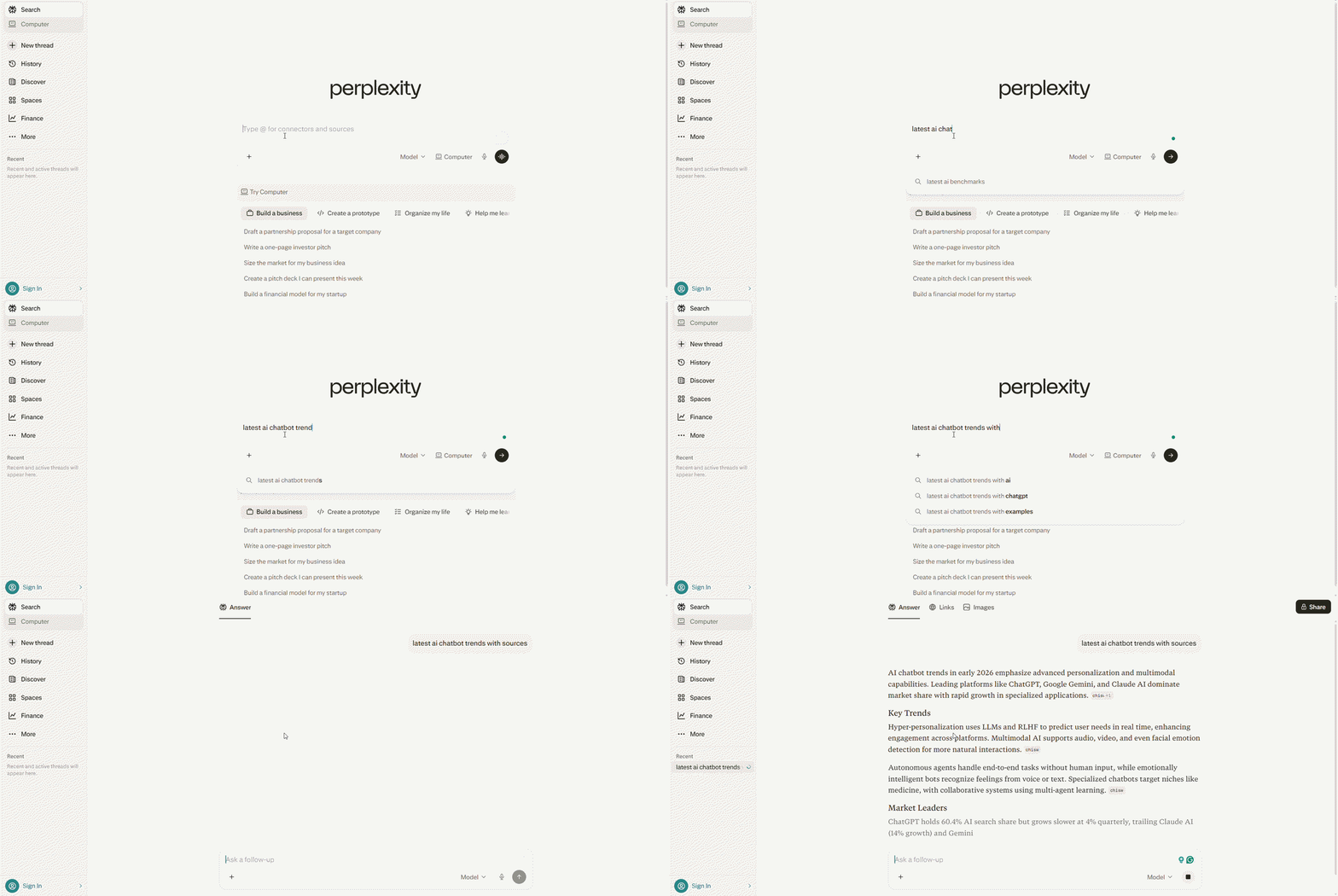
Perplexity AI focuses on research and information retrieval rather than general-purpose conversation.
- 780 million search queries (May 2025)
- 22 million active users
- 153 million monthly website visits
- $20 billion valuation (September 2025)
Its defining feature is how it handles information:
- Real-time web search
- Inline citations for nearly every claim
It also introduced the Model Council feature (February 2026), allowing users to compare outputs from multiple models, including GPT-5.2 and Claude 4.6.
Pricing
- Free
- Pro: $20/month or $200/year
- Max: $200/month
- Enterprise: $40-325/seat/month
Strengths
- High transparency through citations
- Strong research accuracy
- Access to multiple models in one interface
- Focus modes (Academic, YouTube, Reddit)
Weaknesses
- Not optimized for creative writing
- Limited use for internal business workflows
- Less suited for enterprise knowledge management
AI Chatbot Feature Comparison Matrix 2026
Legend: ★★★★★ = Excellent (industry-leading) | ★★★★☆ = Very Good | ★★★☆☆ = Good | ★★☆☆☆ = Limited | ✓ = Available | ✗ = Not available
Emerging Challengers: DeepSeek, Grok, Open-Source
The market is also being shaped by smaller, fast-moving players.
DeepSeek
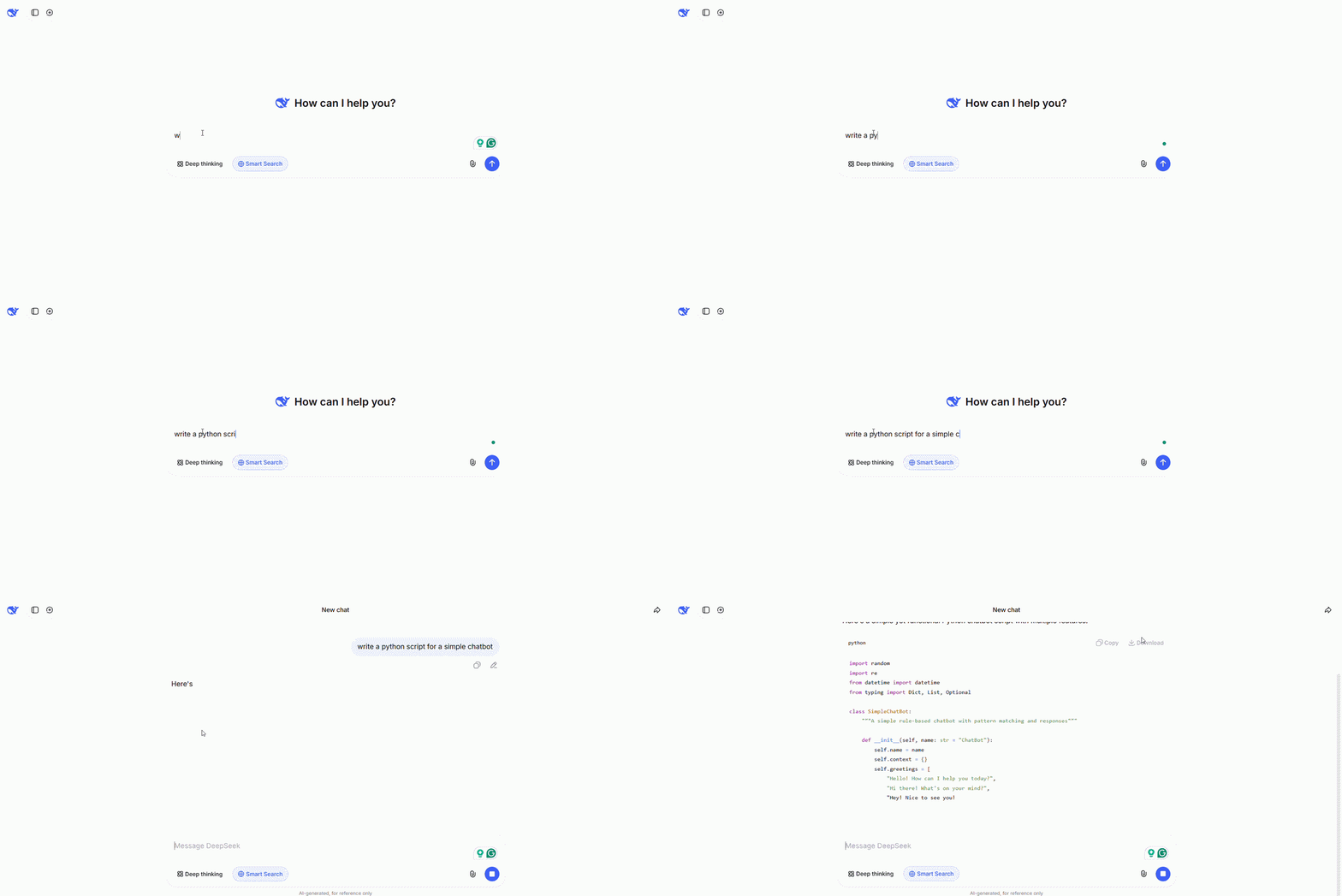
DeepSeek has gained traction through pricing and performance.
- 1.5-4% market share
- Pricing around $0.20 per 1M input tokens (compared to ~$1.75 for GPT-level models)
It is especially competitive in cost-sensitive and technical environments, with strong adoption in Asian markets.
Grok
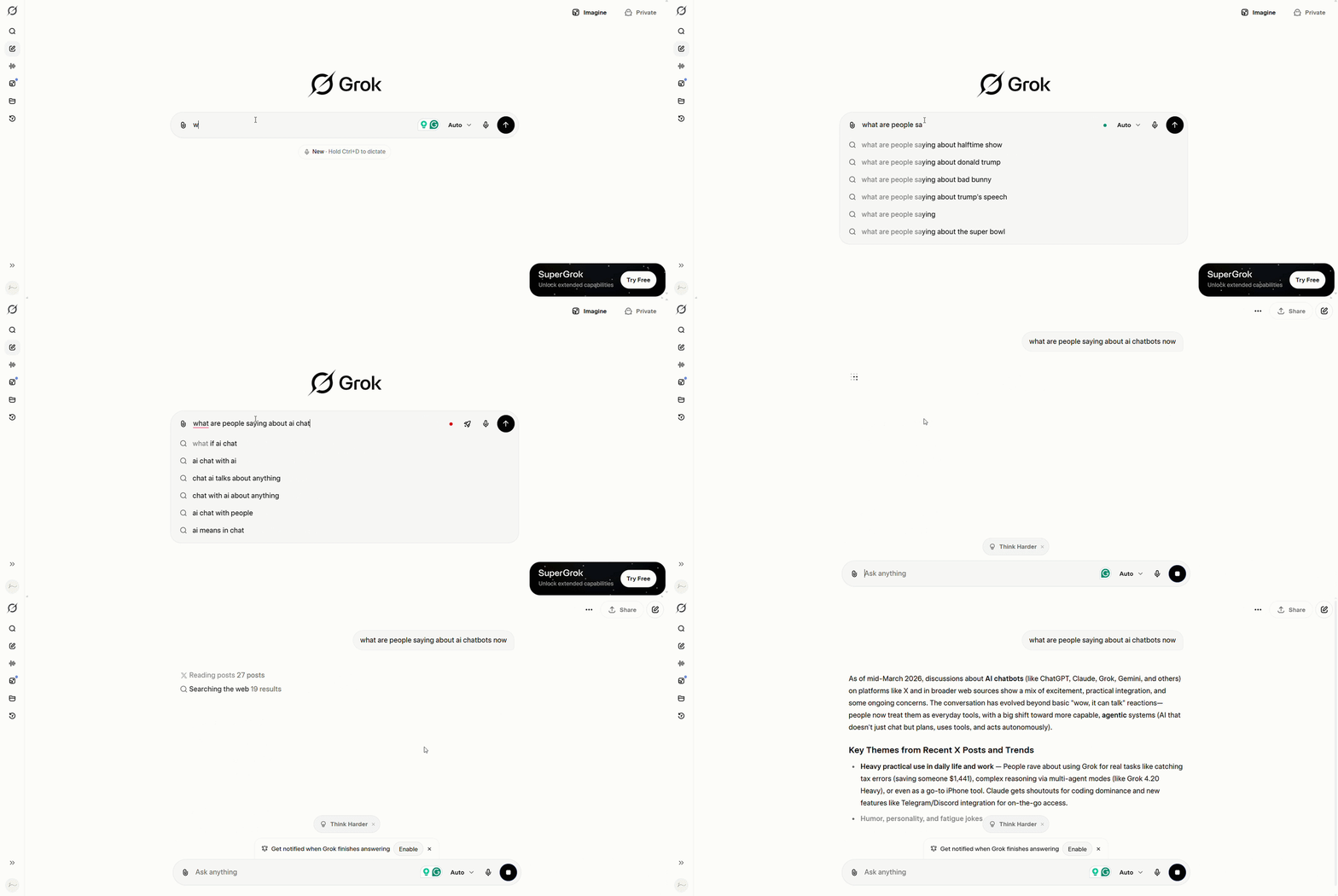
Grok is closely tied to the X platform.
Pricing is:
- SuperGrok: $30/month
- SuperGrok Heavy: $300/month
- X Premium+: $40/month
Its main differentiator is real-time access to X (Twitter) data, making it relevant for live information and social signal analysis.
Open-Source Models (Qwen and others)
Qwen 3 represents the leading edge of open-source development.
- Supports 119 languages
- Used by 90,000+ enterprises via Alibaba Cloud
Open-source models are becoming viable alternatives for companies that require:
- Cost control
- Custom deployment
Across all these tools, the pattern is consistent.
Each platform is optimized for a different set of tasks:
- General-purpose workflows - ChatGPT
- Writing, reasoning, coding - Claude
- Multimodal and large context - Google Gemini
- Enterprise productivity - Microsoft Copilot
- Research and citations - Perplexity AI
That distribution reflects the broader shift in the market.
Core Features and Capabilities That Define the Best AI Chatbots
At this point, comparing tools at a surface level isn’t enough.
If you’re making decisions about which AI chatbot to use across a team or business, you need to understand how these systems perform under the hood. The differences aren’t just about interface or pricing, they come down to model behavior, limitations, and how each platform handles real workloads.
Language Model Performance and Reasoning
Benchmark scores are often the first thing vendors highlight. They matter, but not in the way most people think.
The gap between advertised performance and real-world behavior is still significant. Models can score highly on controlled tests and still struggle with:
- Multi-step reasoning in messy inputs
- Long-context consistency
- Ambiguous instructions
That said, benchmarks still give a useful baseline.
Current Performance Signals
ChatGPT (GPT-5.2)
- 94.2% on MMLU-Pro
- 100% on AIME 2025
This points to strong structured reasoning and mathematical accuracy.
Claude (Claude 4.5)
- 42% on SWE-bench Verified
This remains the strongest signal for real-world coding performance.
Google Gemini (Gemini 3.1 Pro)
- 77.1% on ARC-AGI-2
This benchmark focuses on general reasoning and adaptability across tasks.
Hallucination Behavior
Hallucinations haven’t been eliminated. They’ve been reduced and shifted.
- Claude tends to produce the lowest hallucination rates, especially when working with long documents or structured analysis
- ChatGPT improved hallucination rates by roughly 33% with GPT-5.4, but still shows more variability in extended outputs
- Google Gemini performs well on benchmarks but can vary depending on how tightly the task is defined
The practical takeaway is simple: performance depends on the task type. Benchmarks help, but they don’t replace testing models against your own workflows.
Multimodal Functionality: Beyond Text
Text is no longer the primary limitation. Most leading chatbots now handle multiple input types, but the depth of that capability varies.
Current Positioning
Google Gemini
The most complete multimodal system.
Handles:
- Text
- Images
- Audio
- Video
All within a single model architecture.
ChatGPT
Strong across multiple formats:
- Image generation with DALL·E 4
- Voice interaction
- Video generation through Sora 2
Multimodal support is strong, but split across tools rather than fully unified.
Claude
Supports image input and analysis, but remains focused on:
- Text
- Code
- Multimodal capability is present, but not a primary strength.
Perplexity AI
Focuses on:
- Image understanding
- YouTube transcript search
Multimodal features are tied to research workflows rather than general use.
What This Means
If your workflows involve mixed media, documents, visuals, and recordings, multimodal depth becomes a deciding factor. If your work is primarily text-based, the gap matters less.
Memory, Personalization, and Context Retention
This is one of the most important differences between platforms in 2026.
Memory
ChatGPT is currently the only major chatbot with persistent cross-conversation memory
It can retain:
- Preferences
- Writing style
- Ongoing context
Other platforms:
- Claude - no persistent memory
- Google Gemini - limited session-based memory
- Microsoft Copilot - relies on document and workspace context instead
This creates a clear difference in long-term usability. Tools without memory require repeated setup and prompting.
Context Window Comparison
Google Gemini
- 1M tokens standard
- Up to 2M tokens (planned)
Claude
- 200K tokens standard
- 500K tokens (Enterprise)
- 1M tokens (beta)
ChatGPT
- 128K tokens standard
- Up to 1M tokens (GPT-5.4)
- Effective Capacity
In practice, most models don’t maintain full performance at maximum context.
Effective usable range tends to be 60-70% of the advertised limit.
Beyond that point, models:
- Lose consistency
- Miss details
- Produce lower-quality outputs
The difference here is not just about size. It’s about reliability at scale. Larger context windows help, but only if the model maintains accuracy within them.
AI Chatbot Context Windows: Advertised vs. Effective Capacity (2026)
Note on Effective Capacity: Performance typically degrades significantly once usage exceeds 60-70% of the advertised limit. Claude is noted for maintaining higher accuracy (<5% degradation) across its full range compared to competitors.
Coding Abilities and Developer Features
Coding performance has become one of the clearest areas of differentiation.Based on independent testing and real-world usage, the current ranking looks like this:
1. Claude
- Highest code quality
- Fewer logical errors
- Strong handling of large codebases
- Includes Claude Code, a terminal-based agent for development workflows
2. ChatGPT
- Most flexible across languages and frameworks
- Codex integration
- Computer use capabilities in GPT-5.4 allow execution-based workflows
3. Google Gemini
- Strong performance relative to cost
- Ranked #1 on WebDev Arena
- Effective for front-end and general development tasks
4. Microsoft Copilot
- Integrated into GitHub Copilot
- Optimized for enterprise development environments
- Best when used within existing Microsoft and GitHub workflows
What This Means
The gap isn’t just about output quality. It’s about how these tools fit into development processes:
- Standalone coding - Claude, ChatGPT
- Integrated workflows - Copilot
- Cost-efficient development - Gemini
Web Search, Real-Time Data, and Research
Access to up-to-date information is a major dividing line between platforms but also affects answer engine optimization.
Current Breakdown
Perplexity AI
- Best-in-class for research
- Provides citations on every claim
- Includes Focus modes (Academic, YouTube, Reddit)
Google Gemini
- Deep integration with Google Search
- Strong real-time data access
ChatGPT
- Web browsing capabilities
- Deep Research feature (limited usage on Plus plans)
Microsoft Copilot
- Built on Bing search
- Real-time information access within enterprise tools
Claude
- No native web search
- Relies on static knowledge unless paired with external tools
Practical Impact
If your work depends on:
- Up-to-date information
- Source verification
- Research accuracy
Then, the tool choice here becomes critical.
Static models perform well for reasoning and writing. They fall short when real-time data is required. To find out more, check the answer engine optimization guide.
Integrations, Customization, and Extensibility
The final layer is how well each chatbot connects to other systems. This determines whether a tool stays isolated or becomes part of a broader workflow.
Platform Comparison
ChatGPT
- Largest plugin ecosystem
- Custom GPTs for specific workflows
- Flexible API access
Microsoft Copilot
- Deepest enterprise integration
- Works across Microsoft 365, Power Platform, Azure
- Built for internal business processes
Google Gemini
- Native integration with Google Workspace
- Enterprise capabilities through Vertex AI
Claude
- Projects feature for structured workflows
- Artifacts for document and code iteration
Perplexity AI
- API access available
- Limited customization compared to other platforms
What This Means
Integration determines scalability.
- If you need flexibility - ChatGPT
- If you need enterprise embedding - Copilot
- If you’re inside Google’s ecosystem - Gemini
- If you need focused workflows - Claude
Across all these features, the pattern holds.
Each platform is optimized around a different set of priorities. Performance, context, integrations, and capabilities don’t line up evenly across tools. That’s why direct comparisons without context often miss the point.
The next step is mapping these capabilities to actual use cases, so the differences translate into clear decisions.
Use Cases, Pricing, and Choosing the Right AI Chatbot
Choosing an AI chatbot in 2026 isn’t about picking the most hyped tool. It’s about matching capabilities, cost, and workflow fit to your specific needs. Market fragmentation has made one-size-fits-all recommendations obsolete.
If you’re looking for a comprehensive solution for your enterprise, explore our WAIO framework.
Best AI Chatbots for Specific Use Cases
The fragmentation of the market means selecting a chatbot requires understanding which tool is strongest for each type of task. A framework helps turn comparison data into actionable decisions.
- Decision Flow: Many teams adopt a two-tool strategy. For example:
- Daily workflow: Claude or Gemini for internal docs, emails, and coding
- Research and verification: Perplexity for web citations and real-time accuracy
A single ChatGPT Pro subscription often can’t replace a targeted two-tool approach, especially when working across specialized workflows. Many teams extend this further by pairing chatbots with the best AI SEO tools for keyword research, content planning, and performance tracking.
Choosing the Right AI Chatbot: 2026 Decision Framework
Step 1: Decision Flowchart Logic
- START: What is your main AI use?
- Writing & Content Creation
- Need citations/research? → Perplexity Pro
- Need quality/nuance? → Claude Pro
- Coding & Development
- Need code quality/long codebases? → Claude Pro
- Need versatility/execution? → ChatGPT Plus
- Business & Enterprise
- Microsoft 365 user? → Copilot
- Google Workspace user? → Gemini
- Long document analysis? → Claude Enterprise
- Research & Information
- Need specific source citations? → Perplexity
- General research & massive context? → Gemini or ChatGPT
- Creative & Multimedia
- Image generation? → ChatGPT (DALL-E)
- Video generation? → ChatGPT (Sora) or Gemini (Veo)
- Voice/audio? → ChatGPT
- Budget Priority
- Best value overall → Gemini AI Pro ($19.99 + 2TB storage)
- Writing & Content Creation
Step 2: Recommendations by Role & Primary Need
Step 3: Ecosystem & Budget Alignment
AI Chatbot Pricing and Plans in 2026
Pricing has converged at the standard tier while diverging at premium levels. Understanding these differences is key for budgeting and ROI.
Insights
- Standard tier parity: $19-20/mo now covers basic capabilities for most users.
- Premium tier explosion: $100-300/mo for enterprise features or extended memory/context.
API costs vary dramatically:
Tools like Grok are extremely low-cost for large token volumes, while GPT is higher but more feature-rich.
Two-tool approach often yields better productivity: Combining Claude/Gemini for internal work with Perplexity for research covers more use cases than relying on ChatGPT alone.
Privacy, Data Security, and Ethical Considerations
AI adoption at scale brings regulatory and operational responsibility. Data governance, compliance, and ethical safeguards vary between platforms.
Regulatory Context:
- EU AI Act (Aug 2024): Requires transparency notices, risk categorization, and human oversight.
- Cost of compliance: Approximately €29,277 per AI system annually for audits, reporting, and governance.
Decision Implication:
Privacy and compliance are no longer optional considerations for enterprise deployment. Enterprise teams must weigh security certifications, data-handling policies, and compliance infrastructure alongside functional capabilities and cost.
In practice, aligning tool selection with use cases, budget, and compliance requirements ensures that an AI chatbot becomes a productivity asset rather than a management headache. In 2026, the smartest strategy is targeted adoption: match capabilities to workflows, and adopt multiple specialized tools when a single platform can’t cover every requirement.
Strengths, Weaknesses, and the Future
As 2026 unfolds, the AI chatbot landscape is defined by specialization rather than a single dominant platform. This section provides a snapshot of relative strengths, limitations, and emerging trends shaping the next phase of AI adoption.
Comparative Summary
A clear, concise view helps teams select the right tool without wading through long specifications.
2026 Category Winners & Rankings
The Bottom Line
- No single winner: The "best" tool is entirely dependent on your specific task.
- Two-tool strategy: Combining Claude (quality) with Perplexity (research) is often more effective than a single high-tier subscription.
- Budget Sweet Spot: At $19.99/mo, Gemini AI Pro offers the most objective value by including 2TB of cloud storage.
Innovation Trends Driving 2026
AI development is shifting from single-function chatbots to multi-agent, context-aware platforms. Key trends include:
Agentic AI:
- Claude Code demonstrates autonomous task execution for up to 14.5 hours without human intervention.
- ChatGPT’s computer use enables direct execution of file operations and code.
- Gemini agents leverage multimodal reasoning across text, images, and audio.
Context Window Expansion:
The race to 10M+ token windows continues, enabling longer, more complex interactions without losing context.
Multi-Model Strategies:
- Aggregators like Perplexity’s Model Council allow simultaneous benchmarking across multiple AI engines.
- Enterprises increasingly deploy hybrid models, combining research, coding, and productivity assistants.
Enterprise Integration:
AI platforms are becoming ‘AI-first, security-by-design,’ embedding governance, compliance, and workflow automation at the core rather than as add-ons.
What to Expect Beyond 2026
The next few years will reinforce fragmentation and specialized adoption. Key forward-looking considerations:
- Pricing Pressure: Analysts forecast ChatGPT Plus may rise to $25-30/month by late 2026, reflecting memory and extended context capabilities.
- Continued Fragmentation: Market share gains by Gemini and Claude indicate no return to the ChatGPT monoculture. Businesses must evaluate tools by function, not brand hype.
- Regulatory Impact: Ongoing compliance with GDPR, CCPA, and emerging AI-specific regulations will shape deployment choices, especially for enterprises handling sensitive data.
- Custom AI Solutions: Expect growth in AI solutions tailored to specific business needs, from integrated chatbots in SaaS platforms to AI-driven content pipelines.
Need AI-Integrated Web Experiences?
"AI chatbots handle the conversation. Your website handles the conversion."
Veza Digital builds conversion-optimized websites for B2B SaaS and marketing teams. Whether you're integrating AI chatbots, creating AI-powered landing pages, or need a website that converts alongside your AI tools, we've got you covered.
Action Center
Why Choose VezaDigital?
- Webflow Partner: Certified expertise in high-performance web builds.
- B2B SaaS Specialists: Focused on metrics that matter to software teams.
- AI-Integrated Experiences: Seamlessly merging AI utility with brand design.
FAQ
Q1: What is the best AI chatbot in 2026?
There isn’t a single “best” AI chatbot in 2026. Choice depends on use case. ChatGPT excels in versatility and memory, Claude leads in writing quality and coding, Gemini offers multimodal capabilities and large context, Perplexity is best for research, and Microsoft Copilot integrates deeply with enterprise workflows. Businesses often use a combination of tools to cover multiple needs effectively.
Q2: Is ChatGPT still the best AI chatbot?
ChatGPT remains a leading general-purpose chatbot, especially for versatility, memory, and ecosystem plugins. However, its market share has declined, and specialized tools like Claude or Gemini outperform it in certain areas such as coding or multimodal tasks. The “best” platform depends on specific business requirements, document complexity, and integration needs.
Q3: Which AI chatbot is best for coding?
Claude currently leads in coding quality, accuracy, and handling long code documents, particularly for enterprise workflows. ChatGPT is versatile with Codex integration and computer use, making it ideal for general-purpose coding and automation. Gemini also offers competitive developer capabilities. Choice should consider code complexity, integration needs, and preferred workflow environment.
Q4: What is the difference between ChatGPT and Claude?
ChatGPT offers broad versatility, memory across conversations, and a large plugin ecosystem. Claude excels in writing quality, coding accuracy, and honesty but lacks memory and web search. ChatGPT supports multimodal functions like images and voice, while Claude is more specialized for long-document reasoning, legal analysis, and enterprise coding. Pricing tiers and context windows also differ significantly.
Q5: Is Gemini better than ChatGPT?
Gemini is not strictly “better,” but it excels in multimodal tasks, large context windows, and integration within the Google ecosystem. ChatGPT remains stronger for general versatility, memory, and plugin support. Decision depends on the user’s environment: Gemini is ideal for Google Workspace-heavy workflows, while ChatGPT serves broader, cross-platform needs.
Q6: Which AI chatbot is best for research?
Perplexity AI is the top choice for research due to real-time web access and inline citations on every claim. Gemini also provides strong real-time data integration, while ChatGPT Plus supports web browsing and Deep Research features. Claude and Copilot are less effective for research-specific tasks. Combining tools can maximize coverage and reliability.
Q7: How much does ChatGPT cost in 2026?
ChatGPT offers several tiers: Free (limited access), Go $8/mo, Plus $20/mo, Pro $200/mo, and Team plans $25-30/user/mo. Pricing reflects memory, context window size, and plugin access. Enterprise customers may require Pro or Team plans for extended capabilities, integration, and compliance features.
Q8: What is the best free AI chatbot?
For free use, ChatGPT, Claude, Gemini, and Perplexity all offer no-cost tiers with basic functionality. ChatGPT and Gemini provide versatile general-purpose tools, while Perplexity supports research and citations. Free plans are suitable for light usage or testing, but heavy users may require paid tiers for larger context windows, memory, or enterprise integrations.
Q9: Which AI chatbot has the largest context window?
Gemini leads with 1-2 million tokens standard, with future expansions expected. ChatGPT supports 128K standard, up to 1M tokens on GPT-5.4. Claude provides 200K standard, 500K enterprise, and 1M beta. Effective capacity is usually 60-70% of advertised limits, so context window choice should align with document length and task complexity.
Q10: Is Microsoft Copilot worth it?
Microsoft Copilot is highly valuable for businesses using Microsoft 365, providing deep integration with Word, Excel, Outlook, Teams, and enterprise security. It’s less useful for standalone consumer use. Organizations prioritizing workflow efficiency, compliance, and M365 adoption benefit most from Copilot’s features.
Q11: What is Perplexity AI and how is it different?
Perplexity AI is a research-focused AI assistant with real-time web search and inline citations for every claim. It offers Model Council to compare multiple AI outputs simultaneously. Unlike general-purpose chatbots, it is optimized for accuracy, transparency, and research workflows rather than creative writing or enterprise integration.
Q12: Which AI chatbot is best for business use?
Claude Enterprise and Microsoft Copilot are top choices. Claude excels at analyzing long documents and legal reasoning, while Copilot integrates seamlessly with Microsoft 365 tools and enterprise workflows. ChatGPT can also serve business needs if versatility and memory across tasks are priorities. Choice depends on the platform ecosystem and regulatory requirements.
Q13: Do AI chatbots remember previous conversations?
ChatGPT is the only major AI chatbot in 2026 with true cross-conversation memory, remembering user preferences and context over time. Claude, Gemini, and Perplexity lack persistent memory, though they retain context within a single session. Memory is critical for workflows requiring continuity and personalization across interactions.
Q14: What is the best AI chatbot for writing?
Claude leads in writing quality, creativity, and long-document analysis. ChatGPT is versatile for general writing and supports multimodal content creation. Gemini performs well for structured or research-heavy writing, while Perplexity excels in citation-based or academic work. Selection depends on document type, length, and integration requirements.