.jpeg)
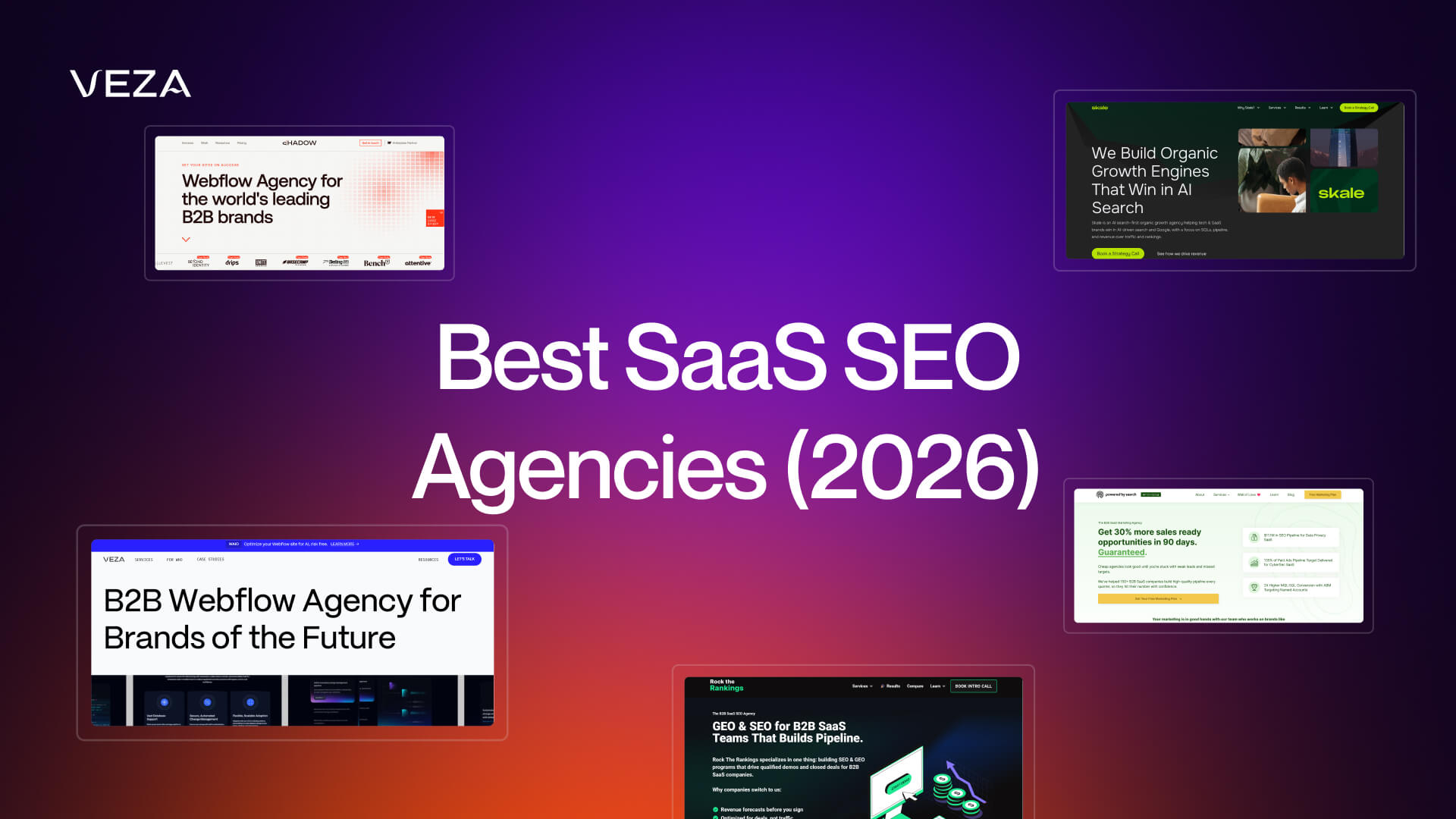
The best SaaS SEO agencies combine a deep understanding of the SaaS business model with proven SEO expertise. Top agencies for 2026 include Veza Digital (SaaS-native SEO + Webflow expertise), Rock The Rankings (B2B SaaS SEO specialists), and Shadow Digital (enterprise SaaS focus). Look for agencies with SaaS case studies, understanding of metrics like MRR and CAC, and strategies that tie SEO to pipeline — not just traffic.
Abstract
Some SEO agencies can unintentionally ruin your SaaS growth. They’ll try to chase a page one ranking for top keywords, while your sales team will sit around waiting for signed demos that aren’t coming.
They may celebrate traffic jumps in your monthly reports while your CAC climbs and your pipeline stays flat. This doesn't mean they're bad at SEO. They simply aren’t familiar with how SaaS companies generate revenue. Above all, they don't focus on your product, extended sales cycles, and buyers who research thoroughly before booking a demo.
That’s why SaaS companies need a specialized SaaS SEO agency that understands that rankings are vanity, pipeline is sanity, and revenue is reality.
Quick Agency Comparison Table
SaaS SEO Reality Check:
Generalist SEO agencies celebrate rankings, traffic growth, and domain authority while your sales pipeline stays flat. SaaS-specialized agencies report on pipeline contribution, demo and trial requests, CAC trends, and revenue influenced by organic search. If your agency can’t clearly explain how SEO impacts MRR, CAC, and LTV, they’re optimizing for vanity metrics, not growth. In SaaS, rankings are noise, pipeline is proof, and revenue is the only KPI that matters.
What Makes SaaS SEO Different
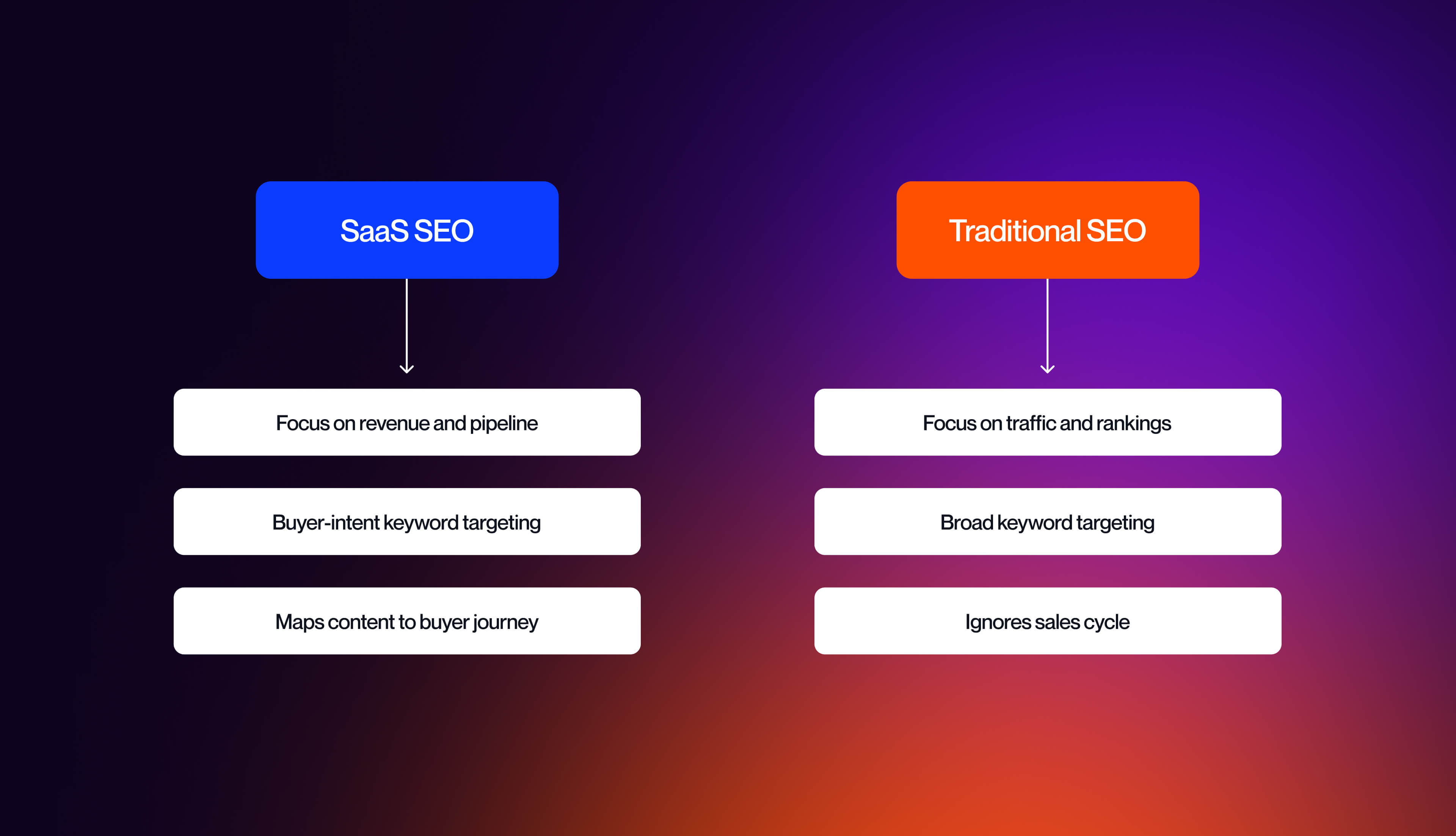
Traditional SEO tactics are a good starting point, but they won’t grow your SaaS business. The approach, the tools, and the strategy are similar in both, but the intent and what you are building are different.
SaaS SEO vs. Traditional SEO
There’s one key difference when comparing SaaS SEO vs traditional SEO - competing for traffic vs competing for revenue.
When you work with a traditional SEO agency, you will see that:
- Traffic is climbing
- Rankings are improving
- Domain authority is growing
- Your backlink profile looks healthy
But if you ask your sales team how many demos they've booked from organic search, they may stay silent. In simple terms, general SEO agencies focus on quantity, not the quality SaaS firms require.
On the other hand, SaaS SEO agencies track different numbers:
- How much pipeline came from organic search this quarter?
- What's the CAC for customers who found you through SEO versus paid ads?
- Which blog posts are actually generating trial signups?
- What's the LTV of users who convert from comparison pages?
The difference isn’t subtle.
Traditional SEO treats every visitor the same. SaaS SEO targets a specific audience. For example, one enterprise buyer researching "project management software for remote teams" is worth more than a hundred students looking for "free project management tools. When you understand how SaaS business models really work, SEO will lead to different choices.
In practice, this means that:
- You're selling subscriptions, not one-time purchases.
- You need content that nurtures people through a three-month decision process, not content that drives immediate clicks.
- You need to rank for "Asana vs Monday" and "Slack integrations," not just broad category terms that bring in everyone.
- Your sales cycle has five stakeholders and four budget approvals.
For SaaS, mere traffic without a pipeline is just expensive content marketing. While it’s quite tempting to celebrate 10,000 new monthly visitors, if demo requests stayed flat, SEO optimization has missed the point.
Core Components of SaaS SEO
SaaS SEO is fluid, and it has different components and moving parts that have to work together. It’s the synergy of all SaaS SEO best practices rather than one tactic you just check off the list.
Core components of SaaS SEO include:
- Technical SEO keeps your site fast and crawlable
- Core Web Vitals matter when your competitor loads in half the time. Content strategy for the bottom-funnel pages that convert
- Keyword research targeting buyer intent at every stage
- Link building targets SaaS publications and industry sites
- Conversion optimization that turns visitors into trial users and demo requests
- Analytics connects every piece back to revenue.
To summarize, high traffic is pointless if it doesn't move people toward a purchase decision.
You need to know which pages contribute to the pipeline, which keywords bring in qualified leads, and what your actual customer acquisition cost is for organic traffic. Without this, you're just guessing.
Why Generalist Agencies Fail SaaS
They're solving the wrong problem. They may be doing their job, but they:
- Don't understand subscription economics
- Never had to explain why a customer with $200 MRR matters more than 1,000 free users
- Optimize for traffic volume because that's what they know how to measure.
- Miss the high-intent keywords, the comparison pages, the alternative searches, the integration queries
- Can't draw a line from their work to your revenue.
Ask them how SEO impacted your pipeline last quarter, and you'll get a story about rankings and traffic. Ask a SaaS-focused agency the same question, and they'll show you which content assets generated qualified leads and what the conversion rate was.
If your agency doesn't know what MRR stands for, they don't understand your business. And if they don't understand your business, they can't grow it.
Key insight:
A generalist SEO agency will optimize for traffic. A SaaS SEO agency optimizes for pipeline and revenue.
How to Evaluate SaaS SEO Agencies
Picking an SEO agency is harder than it should be. Everyone has case studies on their website. Everyone talks about results in the first call. Then six months in, you realize they don't actually understand what you do for a living.
Essential Evaluation Criteria
Not all criteria matter equally - some things are nice to have while others will determine whether your SaaS partner is worth your six-month budget.
Start with the SaaS experience and search for case studies from actual projects. A SaaS SEO agency should be able to show you examples of projects like yours.
Also, they should understand your unique business model without needing you to explain what MRR, CAC, or LTV mean.
Next, check how they’re writing content for SaaS.
Anyone can write a blog post, but here you need an agency that knows how to create comparison pages, alternative content, and integration guides that actually convert.
Technical capability matters more than you think. Traffic from 'what is project management' doesn't bring leads. Traffic from "Asana vs Monday.com" does.
Site architecture, Core Web Vitals, crawlability - these aren't flashy, but they're the foundation. If your competitor's site loads faster and has better structure, you're fighting uphill on every keyword.
Revenue focus separates specialists from generalists - reports should tie SEO work to pipeline contribution, not just show you keyword rankings. You need to see which content generates qualified leads and what the conversion rates are.
Transparent reporting builds trust - Clear metrics, regular communication, and honest assessments when something isn't working. If they only show you wins and hide the losses, you can't make good decisions.
Here's how to weigh these:
- SaaS case studies and experience: 25%
- Business model understanding: 20%
- Content strategy approach: 20%
- Technical SEO capability: 15%
- Reporting and transparency: 10%
- Pricing and value: 10%2
Questions to Ask Potential Agencies
The questions you ask in early calls reveal a lot about your potential SaaS SEO partner. Here's the list of questions you could ask:
- "Show me three SaaS clients you've worked with and their results." If they can't, stop the call.
- "How do you measure SEO success for SaaS companies?" Listen for pipeline and revenue, not traffic.
- "What's your approach to bottom-of-funnel content?" You want specific examples, not theory.
- "How do you connect SEO to pipeline and revenue?" If they say "Google Analytics," dig deeper.
- "Walk me through your reporting. What metrics do you track?" Monthly traffic reports are table stakes. You need attribution.
- "What's your experience with our specific SaaS vertical?" Industry context changes keyword strategy.
- "How do you approach competitors and alternative content?" This is where deals close.
- "What does your first 90 days look like?" You need a plan, not vague promises about audits.
Take notes on how they answer, not just what they say. Confident answers with examples beat polished pitches every time.
Red Flags to Watch For
Some warning signs are obvious, while others hide behind nice presentations. No SaaS-specific case studies means they're starting from scratch with your budget. A focus only on traffic and rankings means they don't understand how you make money.
If they can't explain how SEO connects to revenue, they likely haven't had to prove ROI to a SaaS CFO. Guarantees of specific rankings are a red flag in any SEO, but especially in competitive SaaS verticals. No one controls Google's algorithm. Anyone who promises page one by a certain date is either lying or inexperienced.
No understanding of SaaS metrics means every conversation will require translation. A one-size-fits-all approach means they're applying the same playbook to your HR software that they used for an e-commerce store. Lack of content strategy expertise means you'll get blog posts but no conversion pages.
If an agency doesn't show technical SEO capability, it means your site stays slow and broken while they write articles. If an agency promises page one rankings without understanding your business model, skip it.
Top SaaS SEO Agencies (2026)
Below is our 2026 list of the Top SaaS SEO Agencies, recognized for proven results and SaaS-focused expertise.
Veza Digital ⭐ (Featured)
Overview
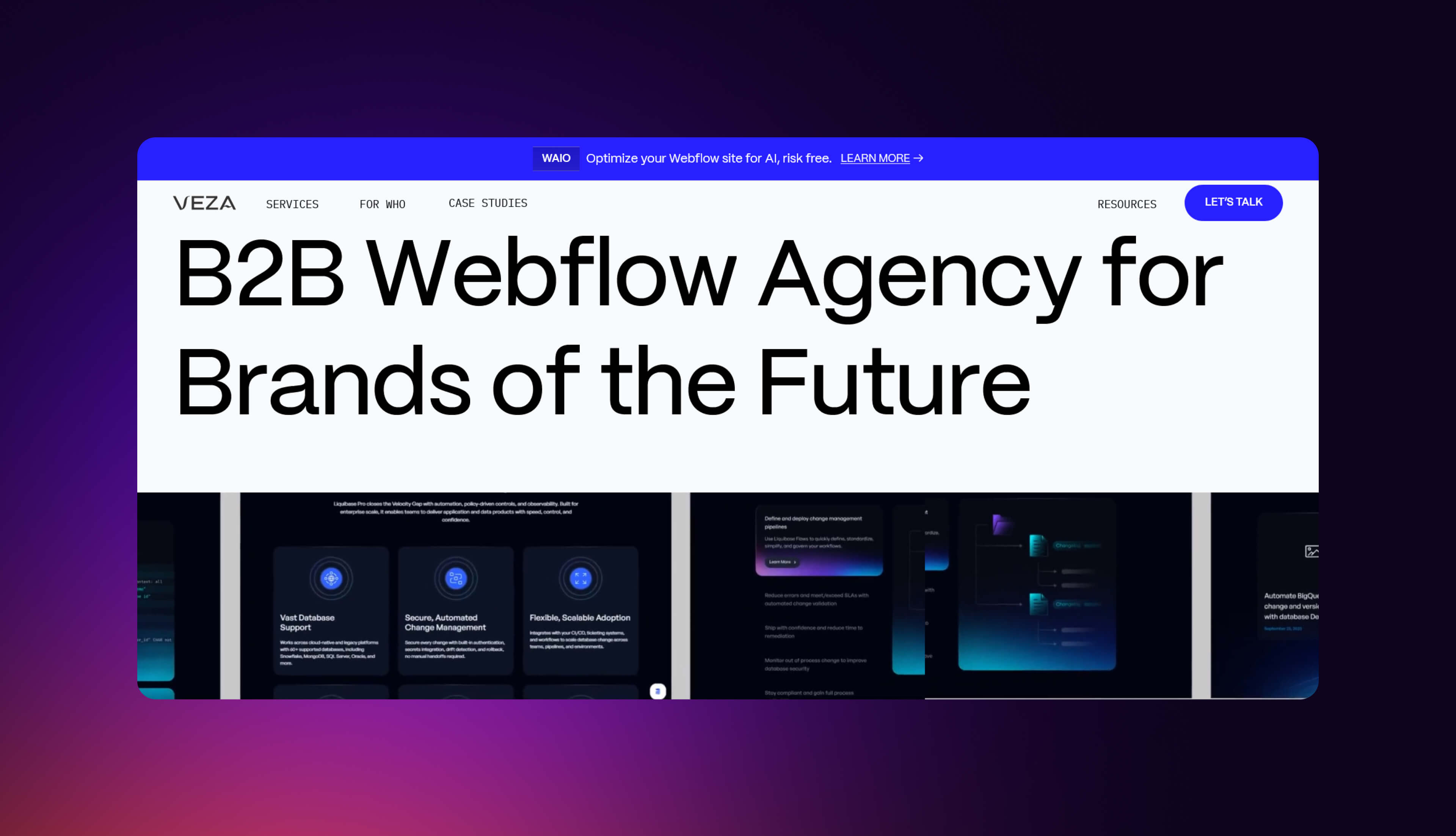
Veza Digital builds and manages websites for B2B SaaS teams that prioritize revenue over brand aesthetics. Operating primarily on Webflow, they optimize sites to support complex sales cycles and multiple stakeholders.
SaaS SEO approach
Veza Digital targets high-intent keywords, such as comparisons, alternatives, and integrations, to drive pipeline rather than general traffic. They integrate technical SEO directly into the Webflow structure to align strategy with execution. Their team uses SaaS metrics like CAC, LTV, and MRR to guide all SEO planning.
Key differentiators
Veza specializes exclusively in Webflow and B2B SaaS rather than general SEO. They design content to drive conversions, treating SEO, CRO, and site structure as a single integrated system. Clients can also access the broader Veza Agency Network for additional resources.
Services
- SEO strategy and consulting
- SaaS content strategy and production
- Technical SEO audits and fixes
- Webflow SEO optimization
- Link building for SaaS
Best for
- B2B SaaS companies on Webflow
- Growth-stage teams investing in organic
- Teams that want SEO and web execution in one place
Considerations
Best fit for Webflow sites, SaaS companies, and teams open to migrating.
Proof points
- 30%+ traffic and conversion growth across multiple clients
- 70% conversion lift through SEO and CRO
- Strong portfolio of B2B SaaS case studies
- For more projects, check our case studies.
SaaS SEO Agency Evaluation Scorecard
Scoring Guide (1-5 Scale)
- 5 = Excellent - deep SaaS expertise with multiple verified case studies
- 4 = Strong - clear SaaS experience and solid business understanding
- 3 = Adequate - some SaaS experience, but limited depth
- 2 = Limited - mostly generalist with light SaaS exposure
- 1 = None - no SaaS-specific expertise
How to Use This Scorecard
Score each agency 1-5 for every criterion. Multiply the score by the assigned weight, then sum all weighted scores to get a total.
Prioritize agencies scoring 4 or higher on both SaaS Case Studies/Experience and Business Model Understanding. If they fail there, no other strengths will compensate.
Rock The Rankings

Overview
Rock The Rankings builds SEO and GEO programs for B2B SaaS teams designed to generate high-quality demos and revenue. The agency’s mission is simple: focus on measurable pipeline growth that powers your business forward.
SaaS SEO approach
Their revenue forecasting approach ensures every SEO effort maps directly to the pipeline and revenue. The agency’s strategy prioritizes buyer intent and deal stages over raw search volume, optimizing content for Google, ChatGPT, and AI search tools. By linking SEO outcomes to ARR, Rock The Rankings turns SEO into a predictable growth engine for SaaS companies.
Key Differentiators
Rock The Rankings optimizes for closed deals instead of page views. Client work is directly connected to senior operators and the founder, receiving reports centered on pipeline impact. This data-driven process removes guesswork and provides the evidence needed to defend SEO budgets internally.
Services
- SaaS SEO management
- SEO and AI search strategy
- Revenue-focused content creation
- Programmatic SEO
- Link and mention building
Best for
- B2B SaaS teams under pressure to prove ROI
- Companies selling through demos or trials
- Teams that need SEO tied clearly to revenue
Considerations
Not for teams looking for instant traffic wins without pipeline accountability. Works best with teams ready to move fast and grow.
Proof points
- 100+ B2B SaaS companies supported
- 3× MQL growth for SaaS platforms
- 83% increase in demos
Shadow Digital
Overview
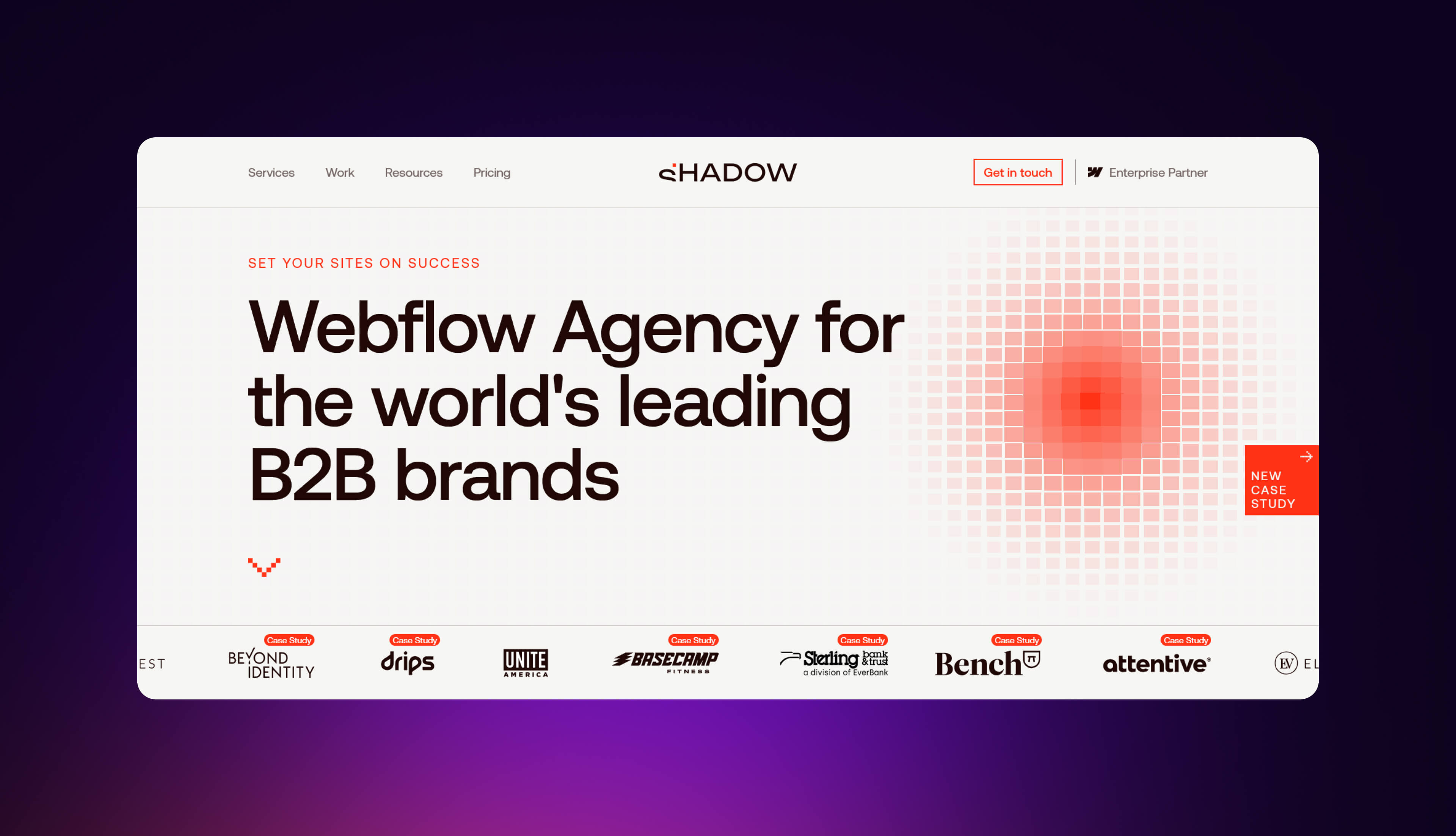
Shadow Digital provides Webflow-focused SEO and development for B2B SaaS teams. They solve common issues such as poor rankings, slow load times, and rigid CMS workflows. Their service empowers marketing teams to manage and update sites without CMS bottlenecks.
SaaS SEO approach
Shadow Digital prioritizes technical foundations, including site speed and clean code structure. They optimize high-value pages to drive demand and capture leads. By integrating SEO directly with Webflow development, they eliminate engineering backlogs and accelerate site iterations.
Key Differentiators
As a Webflow Enterprise partner, Shadow Digital fuses SEO and development into a single process. This specialization removes silos and allows marketers to control site content while maintaining technical SEO integrity.
Services
- Webflow SEO audits and technical SEO
- On-page SEO optimization
- Webflow migrations and SEO preservation
- Ongoing SEO maintenance
- Webflow development and performance optimization
Best for
- B2B SaaS teams on Webflow
- Companies migrating from WordPress or enterprise CMSs
- Marketing teams that need faster execution and control
Considerations
Less focused on broad content engines. Best fit when Webflow and technical SEO are core needs.
Proof points
- 50% faster load times delivered
- 30-50% higher lead capture rates
- 112% mobile speed improvement reported by clients
Read our guides
Powered By Search

Overview
Powered By Search specializes in demand generation for B2B SaaS companies with high annual contract values (ACVs) and complex buyer committees. The agency replaces inconsistent lead quality with a systematic approach to customer acquisition.
SaaS SEO approach
Powered By Search aligns SEO and content marketing with the B2B sales funnel to drive demos and trials. They integrate organic search with paid media and ABM to reach decision-makers throughout the buyer journey. By focusing on metrics like MQL-to-SQL conversion and ARR, they ensure every content asset contributes directly to revenue.
Key Differentiators
Clients work directly with senior consultants and global specialists, bypassing traditional account managers. The agency uses a proprietary 'Predictable Growth' methodology - a three-step 'Attract, Engage, Convert' framework designed to deliver measurable revenue impact within 90 days.
Services
- Paid advertising (PPC)
- SEO & content marketing
- ABM & demand generation
- Digital PR & link building
- SaaS web design & development
Best for
- B2B SaaS companies needing a scalable marketing system
- Teams frustrated by slow growth despite strong products
- Companies that want a predictable pipeline in 90 days
Considerations
Best for companies ready to invest in integrated marketing and follow through on strategy.
Proof points
- $11.1M in SEO pipeline for a data privacy SaaS
- 135% of paid ads pipeline target delivered for cybersecurity SaaS
- 500% lead increase for enterprise clients
Triple Dart
Overview
Triple Dart is a SaaS SEO agency that builds scalable SEO and GEO systems to drive demos, pipeline, and revenue. Strategy, execution, and reporting are aligned with measurable business outcomes.
SaaS SEO Approach
Triple Dart starts every project with a deep understanding of product, ICP, and buying journey. The agency combines human expertise with AI-driven execution to deliver faster results. SEO initiatives are tied directly to MQLs, pipeline, and revenue.
Key Differentiators
- Work directly with senior SaaS strategists
- Proprietary Human + AI system (Slate) for research, content, optimization, and distribution
- Scales output while maintaining quality
Services
- SaaS SEO and GEO
- AI search and LLM optimization
- Revenue-focused content production
- Programmatic SEO
- Backlink and brand mention building
- CRO-driven technical optimization
Best For
- B2B SaaS teams needing pipeline-driven SEO
- Companies selling via demos, trials, or PLG
- Teams navigating traffic drops and AI-driven search changes
Considerations
Best for SaaS companies ready to invest in a structured, revenue-focused SEO system.
Proof Points
- 3.2x average pipeline increase in 9 months
- 200+ SEO clients, 100+ AI SEO clients
- 300% traffic growth for multiple clients
Simple Tiger
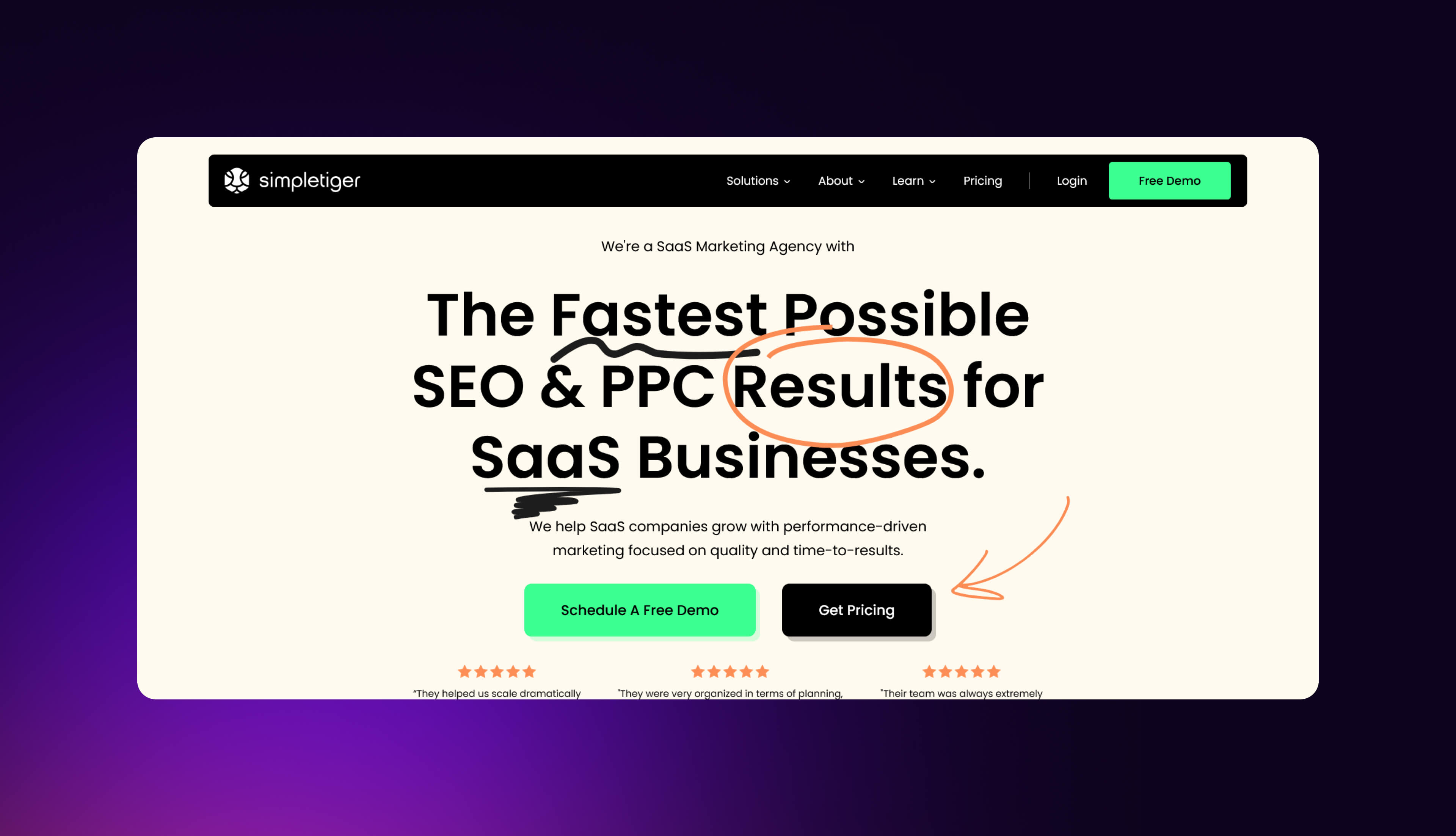
Overview
Simple Tiger provides performance-driven SEO and PPC for B2B and B2C SaaS companies. They use a proprietary AI-led playbook to expedite organic traffic, lead generation, and revenue growth. Their model prioritizes actionable execution over theoretical strategy.
SaaS SEO approach
SimpleTiger integrates SEO, content, and paid campaigns using AI-driven insights to align with buyer intent. They apply an 80/20 methodology, focusing on the 20% of high-impact actions, such as keyword clustering and technical foundations, that drive 80% of results.
Key Differentiators
SimpleTiger uses proprietary AI tools to accelerate keyword discovery and content prioritization. As a SaaS-only agency, they specialize in industry-specific behavior and metrics. Their remote-first structure provides direct access to specialists, while their "synergized" search strategy reduces CAC by coordinating organic and paid efforts.
Services
- SaaS SEO
- Paid advertising (PPC, paid social)
- Content strategy, production, and promotion
- Web design and scalable CMS systems
- SEO & PPC reporting and performance tracking
Best for
- B2B and B2C SaaS companies seeking rapid SEO and PPC results
- Teams that need a scalable, data-driven marketing system
- Companies looking to integrate organic and paid strategies efficiently
Considerations
Best for companies ready to act quickly on recommendations and leverage AI-driven prioritization. Less suited for businesses wanting slow, experimental campaigns or vanity metrics.
Proof points
- 1,200% increase in first-page keyword rankings in 12 months
- 127% organic traffic increase to key pages in 2 months
- 600,000+ organic site visits
Skale

Skale operates as an AI-first organic growth agency for SaaS and tech brands. The team builds predictable SEO engines that drive SQLs and revenue instead of vanity metrics. Their model ensures a fast CAC payback by focusing strictly on scalable business impact.
SaaS SEO approach
Skale integrates technical SEO, content creation, and link building to generate measurable revenue. Skale SaaS SEO agency uses proprietary AI models to forecast leads and signups, allowing them to prioritize high-intent keywords. Every action ties directly to KPIs such as MRR and demo requests while balancing immediate wins with sustained growth.
Key Differentiators
The agency draws on deep in-house experience from high-growth SaaS brands dating back to 2015. They utilize AI-driven prioritization to forecast ROI and lead volume before starting work. Their strategy emphasizes topical relevance and high-quality links to future-proof rankings.
Services
- SEO strategy & execution
- Content production & optimization
- Link-building & outreach
- Technical SEO audits & AI search optimization
- Revenue-driven reporting & growth modeling
Best for
- SaaS or tech companies seeking revenue-first SEO
- Teams needing a scalable, high-ROI SEO channel
- Companies aiming to quickly fill ARR gaps with profitable customer acquisition
Considerations
Best for businesses ready to act on recommendations and integrate SEO with broader growth goals. Less suitable for those focused solely on traffic or vanity metrics without revenue accountability.
Proof points
- +176% in revenue
- +450% in monthly signups
- +120% in organic signups
Breaking B2B
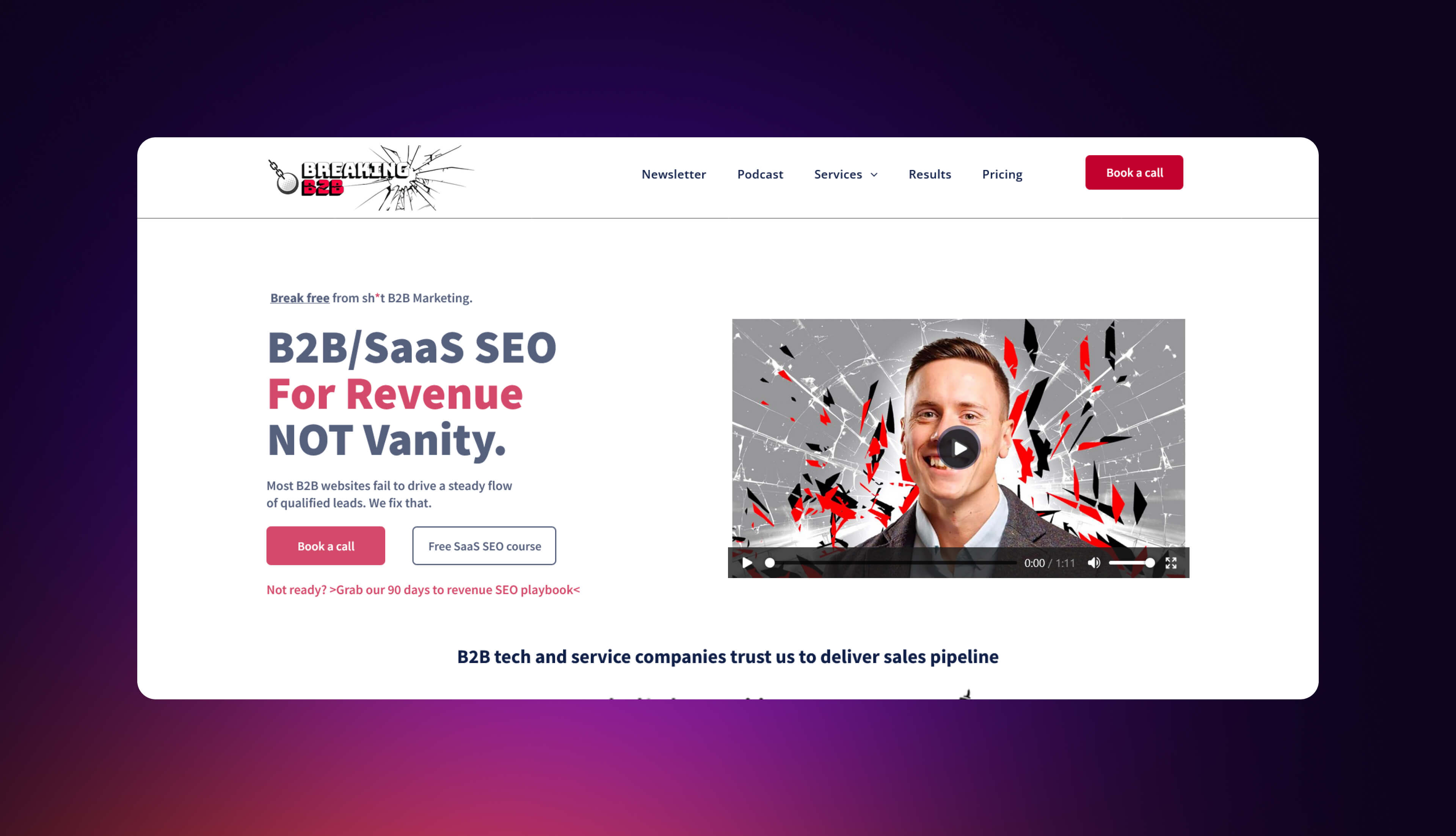
Overview
Breaking B2B specializes in SEO for B2B and SaaS companies to drive pipeline and revenue rather than vanity metrics. The agency helps tech and service brands generate qualified leads and demos from organic search to reduce reliance on paid advertising.
SaaS SEO approach
Breaking B2B builds revenue-driven programs tailored to specific ideal customer profiles and product positioning. The agency captures bottom-funnel search intent to drive sign-ups while managing technical optimizations to maximize site performance.
Key Differentiators
The team applies deep expertise across B2B SaaS, logistics, and fintech sectors to deliver measurable gains within 90 days. They focus exclusively on revenue-driving keywords instead of general traffic volume. The agency maintains an agile execution model that scales alongside a company’s internal resources.
Services
- B2B & SaaS SEO strategy and execution
- Content creation and optimization
- Technical SEO audits and fixes
- Link building and off-page optimization
- Keyword research and competitor/alternative analysis
Best for
- B2B and SaaS companies are struggling to generate leads from organic search
- Teams looking to reduce paid media dependency while driving pipeline
- Businesses needing rapid, measurable SEO results and scalable content production
Considerations
Breaking B2B works best for companies ready to act on recommendations and integrate SEO into a broader revenue-focused growth plan. Less suited for brands seeking only traffic or vanity rankings without bottom-line impact.
Proof points
- #1 ranking for demo-driving competitor alternative keywords in 30 days
- 182% increase in Page #1 keywords over 6 months
- 40% increase in organic search sessions
Agency Comparison Summary
Note: Veza Digital and Shadow Digital are part of the Veza Agency Network, offering combined capabilities for comprehensive SaaS marketing needs. Our SEO services and Webflow development drive revenue and handle enterprise-level execution.
SaaS SEO Services: What to Expect
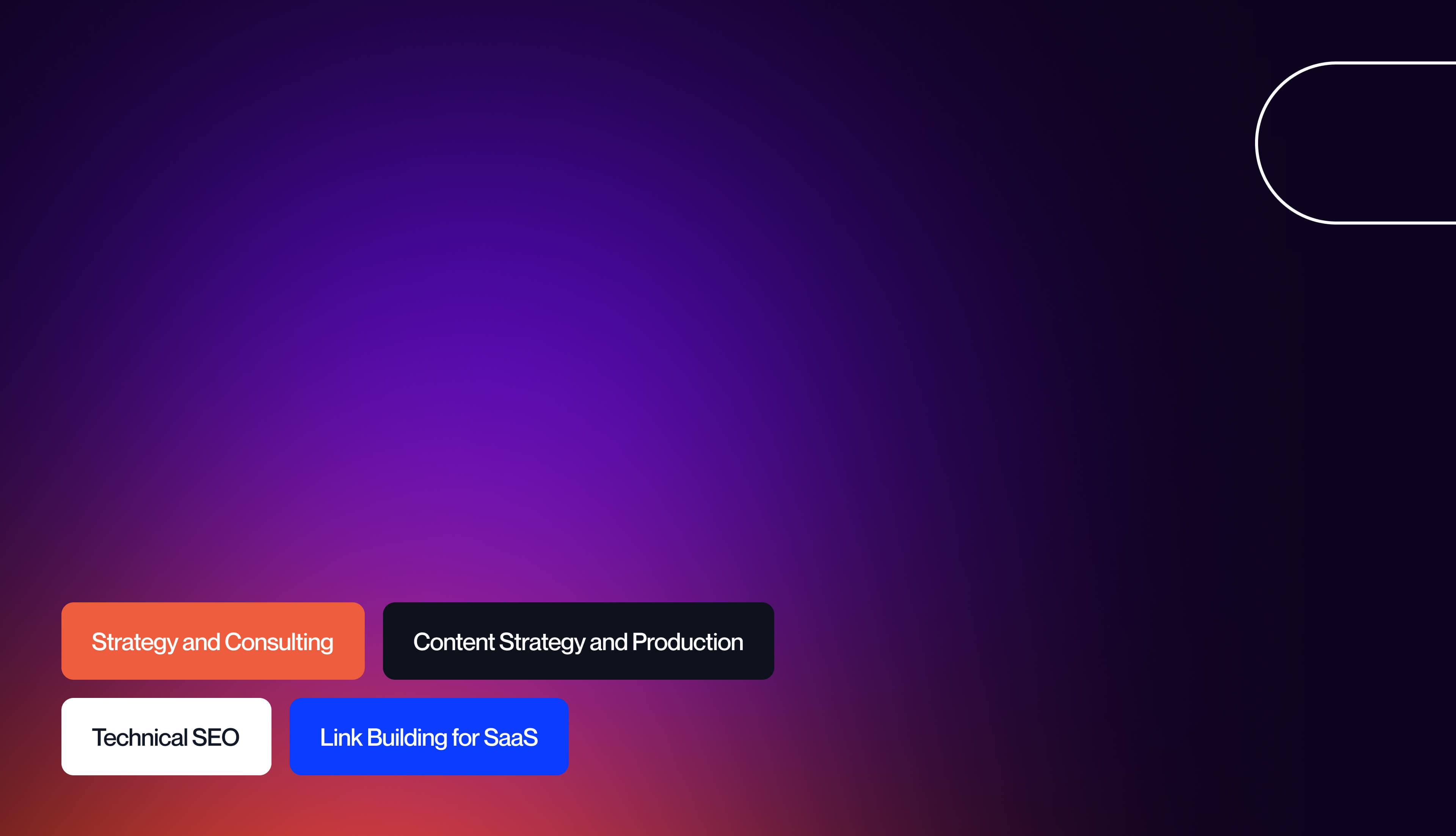
When you hire a SaaS SEO agency, you're not buying a list of tasks. You're buying a system that connects search visibility to revenue.
Here's what SaaS SEO services look like in practice.
Strategy and Consulting
Good agencies start with diagnosis, not prescription. They need to see what's broken before they can fix it.
SEO audits cover three areas: technical issues that slow your site down or block search engines, content gaps where your competitors are ranking and you're not, and competitive analysis that shows you exactly where you're losing. Keyword research goes beyond search volume; it maps keywords to buyer intent and stages of your sales cycle.
Strategy development means a six to twelve-month roadmap with priorities, not a list of every possible tactic. You need to know what happens first, what happens next, and why. Competitive analysis identifies gaps you can fill and opportunities your competitors haven't noticed yet.
Goal setting ties everything to numbers that matter. Pipeline targets, revenue influence, qualified lead generation, not just traffic milestones. If your agency sets a goal of "50,000 monthly visitors" without connecting that to how many demos it should generate, they're optimizing for the wrong outcome.
Content Strategy and Production
Content breaks into two categories, and most agencies only focus on one.
Bottom-of-funnel content is where deals close:
- Comparison pages that rank for "[Your Product] vs [Competitor]"
- Alternatives pages that capture searches like 'alternatives to [Competitor]'."
- Integration pages that show up when someone searches "[Your Product] Slack integration."
- Use case pages targeting specific problems and industries
Top-of-funnel content builds your authority:
- Educational content that answers early research questions
- Thought leadership that positions your team as experts
- Industry trend pieces that attract backlinks
Content optimization breathes new life into existing pages. Your old blog posts and product pages can rank better with updates, better structure, and stronger calls to action. Content briefs give your team or writers clear guidelines so every new piece is optimized from the start.
Bottom-of-funnel content converts. Top-of-funnel content builds authority. You need both. An agency that only wants to write blog posts is leaving money on the table.
Technical SEO
Technical SEO is the foundation nobody sees until it breaks. Site architecture optimization makes sure search engines and users can find your important pages. Core Web Vitals improvement keeps your site fast, crucial when buyers are comparing you to competitors.
Crawlability and indexation make sure Google can actually see your content. Schema markup helps search engines understand what your pages are about. Page speed optimization and mobile optimization keep visitors from bouncing before they see your value.
Internal linking strategy connects your content and passes authority to pages that need it. None of this is glamorous. All of it matters.
Link Building for SaaS
Link building for SaaS isn't about volume; it’s about relevance and authority.
Industry publication placements get your name in front of your target market while building domain authority. SaaS directory listings put you where buyers are already looking. Integration partner links come naturally when you have real partnerships and build pages around them.
Thought leadership and guest posting position your team as experts while earning backlinks. Digital PR for SaaS means coverage in places your buyers actually read, not random blogs that accept your pitch.
Quality beats quantity. Ten links from respected SaaS publications are worth more than a hundred links from sites nobody's heard of.
SaaS SEO Services Explained
Key insight:
The best SaaS SEO agencies deliver all of these services as one integrated system, not disconnected tactics run in separate silos.
SaaS SEO Metrics That Matter
Your agency sends monthly reports full of charts and numbers. Traffic is up. Rankings have improved. Domain authority increased by three points. Then you look at your bank account and wonder where the customers are.
The metrics that make agencies look good aren't always the metrics that grow your business. Here's how to tell the difference.
Pipeline and Revenue Metrics
These are the numbers that matter the most to your CFO.
Organic pipeline contribution shows how much revenue is influenced by organic traffic. Someone found you through a search, requested a demo, and turned into a deal. That's real attribution, not guesswork.
Demo and trial requests from organic traffic tell you if your SEO is bringing in qualified leads or just curious visitors. If traffic doubled but demo requests stayed flat, something's broken in your conversion path or keyword targeting.
Customer acquisition cost should drop as SEO matures. Paid ads cost money every time someone clicks. Organic traffic costs money upfront but compounds over time. If your CAC isn't trending down as organic traffic grows, either the traffic quality is poor, or your conversion rates need work.
Revenue per visitor separates high-intent traffic from noise. One hundred enterprise buyers researching solutions is worth more than ten thousand students looking for free tools. This metric forces you to focus on quality, not just quantity.
Organic MRR influence connects SEO directly to recurring revenue. Which customers found you through organic search, and what's their monthly value? This number proves SEO is a growth channel, not just a marketing expense.
If your SEO agency doesn't report on the pipeline, they're not a SaaS agency. They're a traffic agency that happens to have a SaaS client.
SEO Performance Metrics
These are the health indicators that tell you if your foundation is solid.
Organic traffic growth matters, but only when combined with quality metrics. Traffic without conversions is vanity. Keyword rankings matter most when broken down by intent tier: are you ranking for bottom-funnel keywords that convert, or just top-funnel terms that bring in browsers?
Domain authority and domain rating track your overall site strength. They're not perfect, but they give you a sense of whether you're gaining ground on competitors. Backlink growth matters, but quality beats quantity. Ten links from respected SaaS publications move the needle more than a hundred links from random blogs.
Core Web Vitals scores affect rankings and user experience. If your site is slow, you're losing visitors and rankings. Indexation and crawl health make sure Google can actually see your content. Problems here quietly kill your visibility.
Content Performance Metrics
Content metrics show you what's working and what's wasting budget.
Traffic by content type tells you if your comparison pages are pulling their weight versus blog posts. Conversion rate by page type reveals which content actually generates leads. Your alternatives pages might get less traffic than your blog, but convert at five times the rate.
Time to rank for new content shows you how much authority your site has. Established sites rank new content faster. If your pages take six months to rank, you need more domain strength.
Content ROI compares traffic value to production cost. If a page costs two thousand dollars to create and generates five thousand dollars in pipeline annually, that's a win. If it generates nothing, stop making more like it.
Engagement metrics like time on page and bounce rate give you clues about content quality and targeting. High bounce rates on bottom-funnel pages mean your traffic or your content is wrong.
SaaS SEO Metrics That Matter
Key insight:
If your SEO agency only reports on the middle category (SEO performance), they’re not thinking like a SaaS business. Pipeline and revenue metrics should lead every report.
Budget and Investment Expectations
SEO costs money. The question isn't whether to spend it; the question is whether you're buying something that compounds or something that disappears the moment you stop paying.
Paid ads work until you turn them off. SEO works harder the longer you invest in it. A blog post you published six months ago still ranks, still drives traffic, still generates demos. An ad you ran six months ago is gone.
But that compounding effect requires patience and realistic expectations about what different budgets can buy you.
SaaS SEO Pricing Models
Most agencies work on monthly retainers because SEO isn't a one-time project; it's an ongoing system. Retainers typically range from five thousand to twenty-five thousand dollars per month, depending on scope, company size, and how competitive your space is.
Project-based pricing works for specific initiatives like a comprehensive audit, site migration, or content overhaul. These projects usually run between ten thousand and fifty thousand dollars. They solve a defined problem but don't give you the ongoing optimization and content production that drives results.
Performance-based pricing sounds appealing, but rarely works well. SEO takes time, and too many variables sit outside the agency's control. Be cautious of agencies that only want to charge based on results; they either don't understand SEO timelines or they're planning to cut corners.
Here's what different budget levels typically get you:
The budget needs to match your stage and goals. An early-stage company trying to compete on a three-thousand-dollar monthly budget in a crowded vertical will struggle. A growth-stage company with fifteen thousand per month to invest can build serious momentum.
ROI Expectations
SEO doesn't work like flipping a switch. You need six to twelve months before you see meaningful results, and the timeline depends on your starting point, competition, and how much you're investing.
The returns compound over time. Month three looks modest. Month nine looks promising. Month fifteen changes your customer acquisition strategy because organic is now your most efficient channel.
CAC reduction is where SEO proves its value. Your blended customer acquisition cost should drop as organic traffic grows and converts. If it doesn't, either your traffic quality is wrong or your conversion path needs work.
Pipeline contribution becomes significant as your content library grows and ranks. Target twenty to forty percent of your pipeline coming from organic within eighteen months. Companies that nail their SEO strategy often see organic become their largest pipeline source.
Break-even typically happens within twelve to eighteen months for most SaaS companies. After that, every additional dollar of pipeline comes at a fraction of the cost of paid channels.
SEO is an investment, not an expense. The compounding returns make it one of the best CAC-reducing channels for SaaS. But you have to give it time to work.
SaaS SEO Budget by Company Stage
Notes:
- SEO is an investment with compounding returns; the earlier you start, the better.
- Most SaaS companies see positive ROI within 12-18 months.
- The budget should scale with ARR, typically 5-10% of your overall marketing spend.
In-House vs Agency: When to Hire External Help

You can build an in-house SEO team. You can hire an agency. You can try to do it yourself between product launches and board meetings. Each choice has tradeoffs, and the right answer changes as your company grows.
The question isn't which option is better in abstract terms; it's which option matches where you are right now and where you're trying to go.
When to Hire a SaaS SEO Agency
If you have no in-house SEO expertise, you need both strategy and execution. Hiring a junior person and hoping they figure it out wastes time and budget. An agency brings experience from day one.
Agencies help you scale fast when speed matters. They have writers, technical specialists, and strategists ready to go. Building that team in-house takes months of recruiting and onboarding.
Proven playbooks mean you're not starting from scratch. Agencies have tested strategies across dozens of clients. They know what works in competitive SaaS verticals and what doesn't. You skip the expensive learning curve.
Cost-effectiveness matters at early stages. A good agency costs less than hiring a senior SEO manager, content writer, and technical specialist full-time. You get the team without the benefits, equity, and overhead.
Specialized knowledge in SaaS SEO requires specific expertise. General marketers can't build this from scratch. Agencies that focus on SaaS have seen your challenges before and know how to solve them.
Bandwidth constraints hit most marketing teams. If your team is already stretched between product launches, demand gen, and customer marketing, adding SEO to the pile means it gets done poorly or not at all.
When to Build In-House
Once you hit $10M in ARR or more, you can justify dedicated SEO headcount. At that scale, the investment in building institutional knowledge pays off.
Content as a core competency requires deep product and industry knowledge that takes time to develop. If your content strategy depends on technical expertise or niche insights, in-house writers who live and breathe your product create better work.
Long-term investment in building institutional knowledge makes sense at scale. An in-house team understands your product roadmap, customer feedback, and strategic priorities in ways an agency never will.
The hybrid model often works best: an in-house SEO lead who owns strategy and coordinates with an agency that handles execution, content production, and specialized technical work. You get strategic ownership without building an entire department.
Most SaaS companies benefit from starting with an agency, then building in-house as they scale. The best model at twenty million plus in ARR is often a hybrid: in-house lead with agency support. You keep strategic control while leveraging the agency's capacity and specialized skills.
In-House vs Agency SEO for SaaS Companies
Key insight:
The best model for $20M+ ARR companies is often hybrid: an in-house SEO lead with agency support for specialized projects and overflow capacity.
Agency Selection by Company Stage
Your SEO needs at half a million in ARR look nothing like your needs at twenty million. The agency that's perfect for an early-stage company will frustrate a growth-stage team, and the enterprise specialist will be overkill for a seed-stage startup.
Here's how to match agency selection to your stage:
Stage-specific advice:
- Seed: Don’t overspend, but get strategy right from day one
- Series A: Agency investment pays off, full-service makes sense
- Series B: Scale what’s working, start building institutional knowledge
- Series C+: In-house team owns strategy, agency provides specialized support
Building a Successful Agency Partnership
Hiring an agency doesn't guarantee results. How you work together determines whether the partnership succeeds or stalls for six months before you start looking for a replacement.
Setting Up for Success
Clear goals from day one prevent misalignment six months in. Define pipeline and revenue targets, not just traffic milestones. If your goal is "generate twenty percent of demos from organic within twelve months," everyone knows what success looks like.
Access provision sounds basic, but it trips up plenty of partnerships. Your agency needs access to Google Analytics, Search Console, your CMS, and any other tools that matter. Delays here waste weeks.
Internal alignment matters more than most companies realize. Get buy-in from sales so they understand what SEO-sourced leads look like. Work with product teams so they know which features and integrations need content support. SEO doesn't happen in a marketing silo.
Realistic timeline expectations prevent frustration. SEO takes time. Results at month three look different than results at month nine. Set expectations early so stakeholders don't panic when rankings don't jump overnight.
Communication cadence keeps everyone aligned. Weekly check-ins work well during the first few months when you're building a foundation and making quick decisions. Monthly work once the strategy is set and execution is humming. Pick a rhythm and stick to it.
What to Expect in the First 90 Days
Month one is discovery and planning. The agency audits your site, researches your market and competitors, and develops a strategy. You won't see traffic growth yet, but you should see a clear plan.
Month two brings quick wins and foundation building. Technical fixes start getting implemented. Content planning happens. You might see some early ranking improvements on low-hanging fruit, but the real work is setting up systems.
Month three is when production ramps up. Content starts publishing consistently. Link building begins. The foundation is set, and now you're building on it.
Judge an agency on their process in the first ninety days, not results. Judgment results in six to twelve months. If they're asking good questions, building a solid strategy, and executing cleanly early on, trust the process. If they're disorganized or unclear about priorities from the start, that won't improve.
Conclusion: Choosing Your SaaS SEO Partner
- Generic SEO agencies chase traffic while your pipeline stays flat and CAC climbs. They celebrate rankings and charts, but your sales team still wonders where the qualified leads are.
- SaaS SEO is different, with subscription models, long sales cycles, and recurring revenue demand specialized expertise. Generalist agencies miss high-intent keywords and focus on the wrong metrics.
- Look for agencies with verified SaaS case studies, pipeline-focused success metrics, and fluency in MRR, CAC, and LTV. Early-stage companies need strategy and technical foundations. Veza Digital delivers this efficiently. Growth-stage companies need consistent content, technical SEO, and strategic oversight. Veza Digital or Rock The Rankings fit. Enterprise companies need large-scale content and complex execution; Shadow Digital specializes here.
- Across all stages, prioritize SaaS experience, revenue-focused metrics, content for conversions, and clear reporting.
Ready to turn organic into a revenue channel? Veza Digital combines SaaS SEO expertise with Webflow development for B2B SaaS companies serious about growth. Contact us and schedule your discovery call.
FAQ – Frequently Asked Questions
General
What is SaaS SEO?
SaaS SEO is search engine optimization designed specifically for software-as-a-service companies. It focuses on driving qualified leads and pipeline contribution rather than just traffic. SaaS SEO accounts for long sales cycles, recurring revenue models, and bottom-funnel conversions like demo requests and trial signups.
It prioritizes content that targets high-intent keywords, including competitor comparisons, alternative searches, and integration queries. The goal is to reduce customer acquisition cost and increase organic's contribution to MRR.
Why do SaaS companies need specialized SEO agencies?
SaaS business models require different metrics, content strategies, and conversion approaches than e-commerce or local businesses. Generic agencies optimize for traffic volume, but SaaS companies need pipeline contribution and qualified leads. Specialized agencies understand subscription economics, MRR, CAC, and LTV.
They know which keywords drive conversions versus tire-kickers. They create comparison pages, alternative content, and integration guides that actually close deals. Without SaaS expertise, agencies waste budget chasing the wrong metrics and missing high-intent opportunities.
How is SaaS SEO different from traditional SEO?
Traditional SEO measures success through traffic, rankings, and domain authority. SaaS SEO measures pipeline contribution, demo requests, and CAC reduction. Traditional SEO creates top-funnel content for awareness.
SaaS SEO prioritizes bottom-funnel content like competitor comparisons and alternatives pages that drive conversions. Traditional SEO treats all visitors equally. SaaS SEO values one qualified enterprise buyer more than a hundred students searching for free tools. The focus shifts from volume to quality, from rankings to revenue.
Agencies
What should I look for in a SaaS SEO agency?
Look for proven SaaS case studies with measurable pipeline results, not just traffic growth. The agency should understand subscription metrics like MRR, CAC, and LTV without explanation.
Check their content strategy approach; they should prioritize bottom-funnel pages over blog volume. Reporting must tie SEO work to pipeline and revenue, not just keyword rankings. Ask about their experience in your specific SaaS vertical and how they handle competitor and alternative content. Technical SEO capability and transparent communication matter too.
How much do SaaS SEO agencies cost?
Monthly retainers typically range from five thousand to twenty-five thousand dollars, depending on the company's stage and scope.
- Early-stage companies with foundation work pay three thousand to seven thousand monthly.
- Growth-stage companies needing full-service SEO invest eight thousand to fifteen thousand dollars.
- Enterprise companies with complex needs spend fifteen thousand to thirty thousand or more. Project-based work, like audits or migrations, runs ten thousand to fifty thousand.
The budget should match your stage and competition level.
How long does it take to see results from SaaS SEO?
Expect six to twelve months before seeing a meaningful pipeline contribution. Month three shows foundation progress and some quick wins. Month six reveals ranking improvements and traffic growth. Months nine to twelve demonstrate real pipeline impact and CAC reduction.
SEO compounds over time, results accelerate as your content library grows and domain authority builds. Companies typically reach break-even within twelve to eighteen months. After that, organic becomes one of your most efficient acquisition channels.
Strategy
What content should SaaS companies focus on for SEO?
Prioritize bottom-funnel content that converts: competitor comparison pages, alternatives pages targeting competitor names, integration guides, and use case pages for specific industries or problems. Balance this with top-funnel educational content that builds authority and attracts backlinks.
Create product pages optimized for feature searches. Develop thought leadership that positions your team as experts. The ratio should favor conversion content early, then expand educational content as the foundation solidifies. Bottom-funnel content drives revenue. Top-funnel builds authority.
How do you measure SaaS SEO success?
Track organic pipeline contribution, revenue influenced by organic traffic. Monitor demo and trial requests from search visitors. Measure CAC reduction as organic scales. Calculate revenue per visitor to assess traffic quality. Watch organic MRR influence to connect SEO to recurring revenue.
Secondary metrics include qualified traffic growth, keyword rankings by intent tier, conversion rates by page type, and content ROI. Domain authority and backlink quality indicate long-term health. Pipeline and revenue metrics matter most.
What is bottom-of-funnel content for SaaS?
Bottom-of-funnel content targets buyers ready to evaluate solutions. This includes competitor comparison pages ranking for "[Your Product] vs [Competitor]," alternatives pages capturing "[Competitor] alternatives" searches, integration pages for "[Your Product] [Tool] integration," pricing and feature comparison pages, and detailed use case pages.
This content serves high-intent searches from people with budget and authority who are actively comparing options. It converts at much higher rates than educational blog posts because readers are closer to purchase decisions.
Practical
Can I do SaaS SEO in-house?
You can build in-house once you hit ten million plus in ARR and can justify dedicated headcount. Before that, agencies provide better ROI; you get a full team for less than one senior hire.
Most successful SaaS companies start with agencies to establish a foundation and strategy, then hire in-house as they scale. The best model at twenty million plus ARR combines an in-house SEO lead with agency support for execution and specialized work. This gives you strategic control and institutional knowledge while leveraging agency capacity.
How do I know if my SEO agency is performing?
Check if the organic pipeline contribution is growing quarter over quarter. Look for increasing demo and trial requests from organic traffic. Your CAC should be trending down as organic scales. The content they produce should rank within three to six months.
Reports should connect SEO work to revenue, not just show traffic charts. Technical issues should be fixed promptly. Communication should be clear and proactive. If they only talk about rankings and traffic without discussing pipeline impact, performance is lacking.
What metrics should a SaaS SEO agency report on?
Agencies must report organic pipeline contribution, demo and trial requests from organic traffic, CAC trends, and revenue per visitor. They should track organic MRR influence and conversion rates by page type. Secondary metrics include qualified traffic growth, keyword rankings by intent tier, domain authority trends, and backlink quality.
Content performance reports should show which pages drive conversions, not just traffic. Technical health metrics like Core Web Vitals and crawl errors matter too. Pipeline and revenue metrics prove value. Everything else is context.