.jpeg)
In the marketing world, the terminology can feel like a carnival sideshow - special effects, a rollercoaster, and plenty of distractions - all pointing to the term “AI.” And now, the sideshow has reached B2B marketing, where most “AI tools” are just spreadsheets wearing sunglasses. The real tools are unnoticed.
You'll start noticing the right tools and their effects when:
- Your team stops arguing all the time about top-of-the-funnel metrics.
- You start paying attention to signals that lead to actual revenue.
- You are flagged on accounts that you would have easily ignored.
- You get sales reps angry about deals they think came out of nowhere.
The main focus is now on fewer AI and automation tools. The line between them has blurred so much that most things labeled AI should probably just be labeled automation. Automation handles repetitive tasks, while AI analyzes patterns across the funnel to inform decisions.
AI should help spot patterns and add context to moments you've been guessing at. It should also show you that a big part of the buying cycle happens where you have zero visibility. That can feel frustrating, but it also frees you from a lot of guesswork.
The questions you're facing when building out your tools won't be about which one has the most features. It's about which one helps you see your market with fewer blind spots while taking repetitive call blocks off your plate. Some tools just make production faster. Others shift how you target, score, react to intent, and learn from wins and losses.
This guide walks through that landscape from a practical angle, not the AI hype. We'll cover what these tools actually do, why they matter, and where they fit when you're trying to build a cleaner, sharper revenue engine.
Understanding AI in B2B Marketing
AI in the B2B SaaS industry isn’t about generating engaging speeches and high-tech presentations. It is about making conclusions based on data. Traditionally, marketers create rules based on what actions someone might take and then dictate moves based on those actions. Even if this still exists, it’s outdated.
To make this clearer, here’s a simple table.
| User need | What AI does | Result |
|---|---|---|
| Better leads | Spots active companies even without forms | You reach people who might buy |
| Clear interest signals | Tracks repeat visits and page jumps | You act at the right time |
| Messages that fit | Adjusts emails or site content to role or industry | People get info that fits them |
| Understand what buyers care about | Pulls themes from calls, reviews, and site actions | You fix problems sooner |
| Pick the right accounts | Scores leads based on likely next steps | Teams focus on the right people |
| Keep customers around | Flags early signs of drop-off | You reach out before things slip |
When AI is integrated into systems, decisions and suggestions may become more relevant, and customer lists can become accurate. The internal conversation switches from “How can we get more inquiries?” to “How can we get more relevant inquiries?”, and the complexity of over-demanded systems realigns.
AI promises better funnel visibility with real-time messaging and quick strategy tweaks. It doesn’t replace the funnel; it sharpens how you use it. Inside your own systems, AI cuts down the need to react to every small thing that triggers the next step. Simple automation repeats the same actions nonstop. AI works on a longer timeline, collects data, and instead of pinging you with tiny rule tweaks, it steps in when the shifts actually matter.
What AI Actually Means in a B2B Marketing Context
When high expectations are no longer present, AI is moving from responding to what already happened to responding to what’s most likely to happen next. While an old automation system performs the same actions every day, AI detects patterns that shift over time and steps in only when something important changes.
The most painful aspect is the number of potential buyer research activities that go unnoticed.
For example, buyers often look up your website, competitor sites, and various review sites without even submitting an email. AI systems that link web traffic patterns to buyers can feel uncomfortable to some, but the signal is too strong to ignore. You no longer have to guess who is active in your market when you know a particular company is likely to be a buyer.
There is also the part where we personalize. In B2B, there is a gap between the founder, the CFO, and the practitioner. Having every one view the same site or email used to be the norm. That takes on a different feeling with AI. When a system can change a subject line or angle of the email based on industry or tech stack, the entire engagement feels a little more like you are meeting them where they are, instead of placing them on a single funnel.
How AI Is Transforming B2B Growth, Revenue, and Customer Acquisition
AI is taking on more tasks every day, and with it is the focus on accuracy and precision, rather than just volume.
- The more leads you touch, the more likely you will close.
- Increase the volume, and hope for more leads.
- Do more and more, and you will likely close the deal.
Also, we can see the difference in predictive scoring. AI can organize large sets of static data, identify, and record entities to classify a current piece of data. AI tools identify patterns in the info. If a visitor repeatedly navigates between product and legal pages, AI can flag unusual behavior faster than a rep. You can feel the difference in the obvious initiation tools of a change.
There's the value from the absence of noise that builds up on the back end. Call analytics can show various patterns that no one on the team has time to track manually. You see an objection that keeps rising up or a competitor's feature getting mentioned frequently. This feedback loop, without needing a meeting of importance or a spreadsheet ritual, marketing cares.
Customer success teams feel this void as well. AI does analysis on usage patterns and notifies you when an account begins to drift. You can reach out months before renewal season instead of frantically hoping to schedule a call at the end.
The Evolution of AI Across the B2B Marketing Landscape
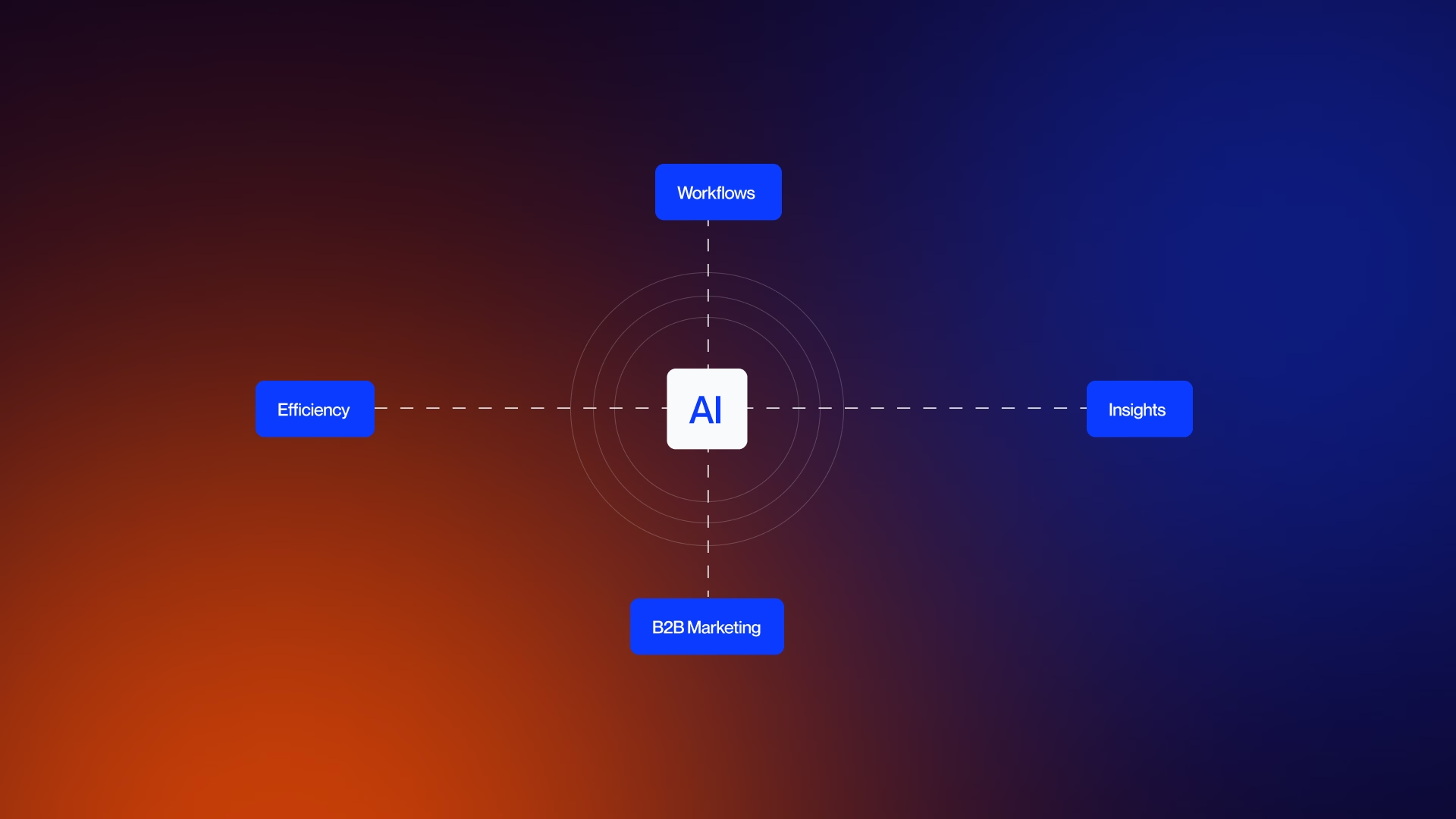
The debut of AI in B2B marketing was gradual rather than immediate. It first appeared in routine processes, campaign execution, lead scoring, and content distribution, then began improving them for greater efficiency.
The changes in marketing technology were more than just speed improvements. It was the application of intelligent technology to old marketing workflows. Instead of doing marketing tasks faster, AI changes the questions that need to be answered:
- Which accounts are most likely to close?
- What content works for which particular buyer?
- Where is the team working without fully understanding the revised, efficient work processes?
The changes in intelligent workflows can be summarized as:
| Stage | What it is | What it changes |
|---|---|---|
| Automation 1.0 | Basic rules, simple tasks, emails, alerts | You get repeatable work but no real insight |
| Predictive Layer | Looks at past data and spots early buying or churn signals | Teams act sooner instead of waiting for problems |
| Actionable Intelligence | Gives clear steps, real time account tips, and simple content tweaks | Workflows feel cleaner and teams stay on the same page |
The changes in intelligent workflows described above resulted in a paradigm shift from simply increasing the volume of work to increasing work efficiency, which is the core of integration between marketing, sales, and customer success teams.
From Traditional Manual Workflows to AI-Orchestrated Systems
In the past, B2B teams survived on spreadsheets, CRM reports, and gut instinct. Campaigns were planned on calendar blocks, lead scores were static, and personalization stopped at first-name tokens. AI changes that by connecting all these moving parts.
For example, instead of manually tagging leads or exporting reports, AI can:
- Assign scores based on thousands of behavioral and firmographic signals.
- Detect early buying intent from anonymous traffic.
- Suggest next steps to sales based on real patterns rather than assumptions.
The difference feels like night and day. You go from reactive firefighting to a proactive marketing and SEO strategy. You can see weak points in the funnel before they become urgent, and reps focus on the accounts that actually matter.
AI Trends Reshaping B2B GTM in 2025 and Beyond
Looking ahead, several trends are starting to dominate:
- Intent-Driven Targeting: Predictive signals let marketing reach companies before they raise their hand.
- Dynamic Content Personalization: Websites, emails, and ads adjust automatically based on role, industry, or previous interactions.
- Revenue Intelligence: Calls, emails, and deal activity feed insights back to marketing to optimize messaging and campaigns.
- Predictive Lead Scoring & Churn Prevention: AI doesn’t just tell you who might buy, it flags accounts likely to leave, giving your team time to act.
These trends don’t just improve efficiency; they redefine how GTM motions function. Teams that embrace them spend less time guessing and more time acting on meaningful signals.
Top 10 AI Tools for B2B Marketing
There are a lot of AI tools out there for marketing, but before we dive into the full list, our research shows that these 10 are the most popular and widely used by teams across industries.
Let’s check them!
| Tool | Category | Key Feature | Best For |
|---|---|---|---|
| HubSpot Predictive Scoring | Lead Scoring | Scores leads on Fit & Engagement | Teams already in HubSpot |
| Salesforce Einstein | Lead Scoring | Automates nurture & triage | Large organizations |
| Apollo | Lead Generation | Builds lists, drafts emails, scores intent | SMB & mid-market sales |
| ZoomInfo | Lead Generation | Enterprise data with AI summaries | Large enterprise teams |
| Mutiny | Personalization | 1:1 microsites & tailored content | High-value accounts |
| 6sense | Personalization | Revenue intelligence, sequence automation | Mid-market & enterprise |
| Intercom Fin | AI Chat | Automated support & diagnostics | SMB & mid-market |
| Jasper | Content Creation | Plans, drafts, and schedules content | Marketing & content teams |
| SurferSEO | SEO | Optimizes content for search ranking | Content-heavy teams |
| MarketMuse | SEO | Topic planning & content authority | Enterprise content teams |
AI Tools for Lead Generation and Qualification
AI in lead generation is no longer just about scraping emails or running simple automation. The tools today can research, score, and even engage prospects autonomously.
They help you focus on the accounts that actually matter and reduce time spent on manual list-building and cold outreach.
AI Lead Generation Platforms
These platforms help you find, enrich, and prioritize contacts so your outreach hits the right people at the right time.
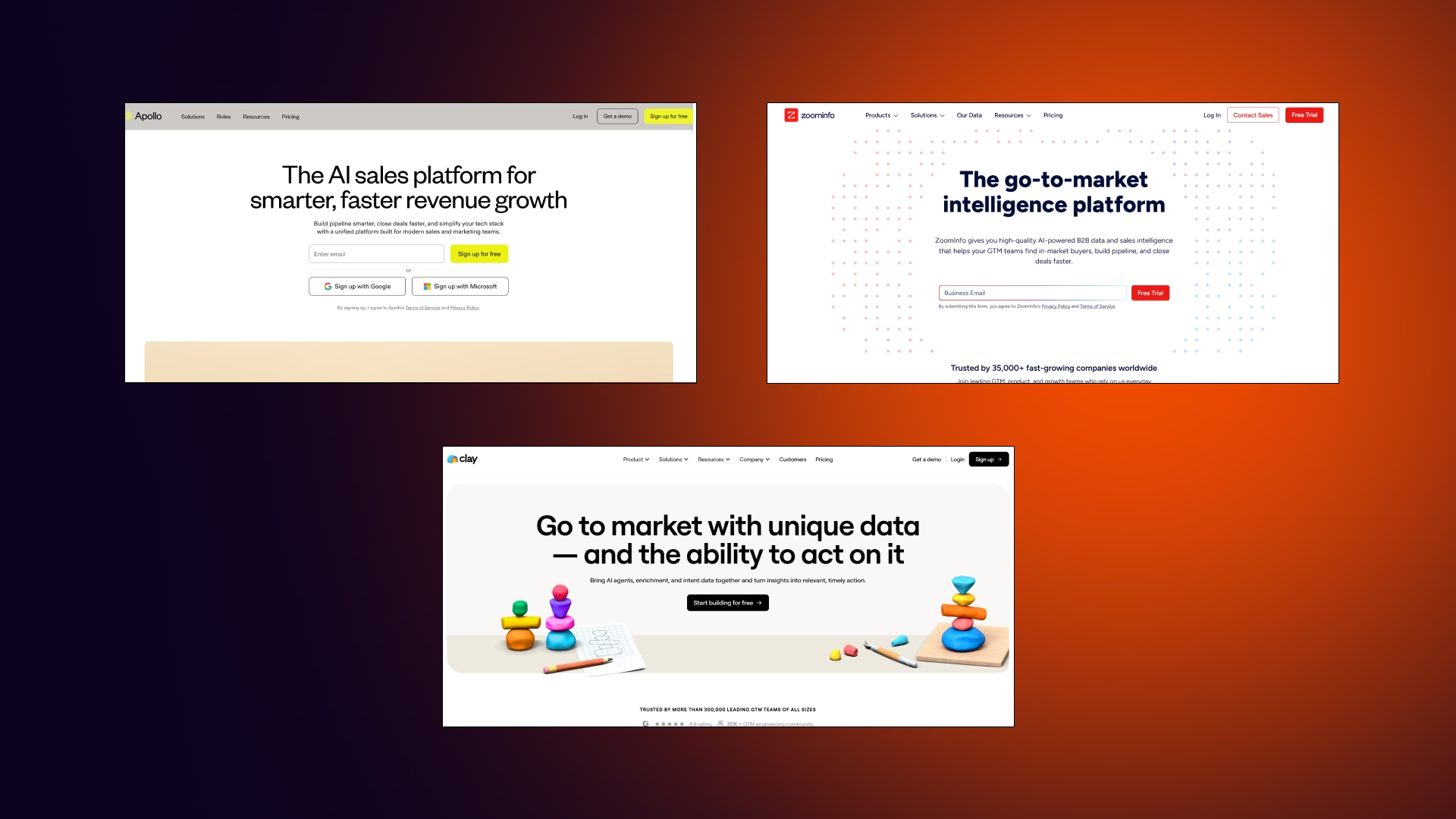
Apollo
- What it does: Apollo combines data, engagement tools, and AI into one platform. Its AI Copilot can build prospect lists, draft emails, and answer pipeline questions in chat.
- When you need it: Ideal for SMB and mid-market sales teams that want an all-in-one solution without juggling multiple tools.
- Extra point: Its Buying Intent 2.0 scores combine contact behavior and account-level signals, so you focus on leads showing real interest.
ZoomInfo
- What it does: ZoomInfo is the enterprise standard for data accuracy, now enhanced with AI Copilot and a specialized AI Builder Catalog for technical talent.
- When you need it: Best for large enterprise teams that rely on precise data and need deep insights into accounts.
- Extra point: It summarizes account news, earnings calls, and suggests the optimal time to reach out, reducing guesswork for sales.
Clay
- What it does: Clay aggregates data from 75+ sources and includes Claygent, an AI agent that can research complex account-level questions.
- When you need it: Perfect for growth marketers, RevOps, or teams building highly targeted lists that standard databases miss.
- Extra point: Waterfall enrichment maximizes coverage automatically, cycling through multiple data sources to ensure nothing falls through the cracks.
Leadfeeder (by Dealfront)
- What it does: Tracks anonymous website visitors and uses AI to qualify them against your Ideal Customer Profile.
- When you need it: Useful for B2B companies with significant web traffic, especially selling in Europe, where GDPR compliance matters.
- Extra point: AI List Alerts flag high-value accounts hitting your site, so your team doesn’t waste time on low-quality leads.
Cognism
- What it does: Provides global, phone-verified contact data with Smart Personas that automatically surface leads matching your ICP.
- When you need it: Ideal for cold calling teams or businesses needing accurate data in the UK, Europe, or APAC.
- Extra point: Natural language search allows quick filtering without manually configuring multiple fields, saving hours of setup.
AI Lead Scoring and Qualification Tools
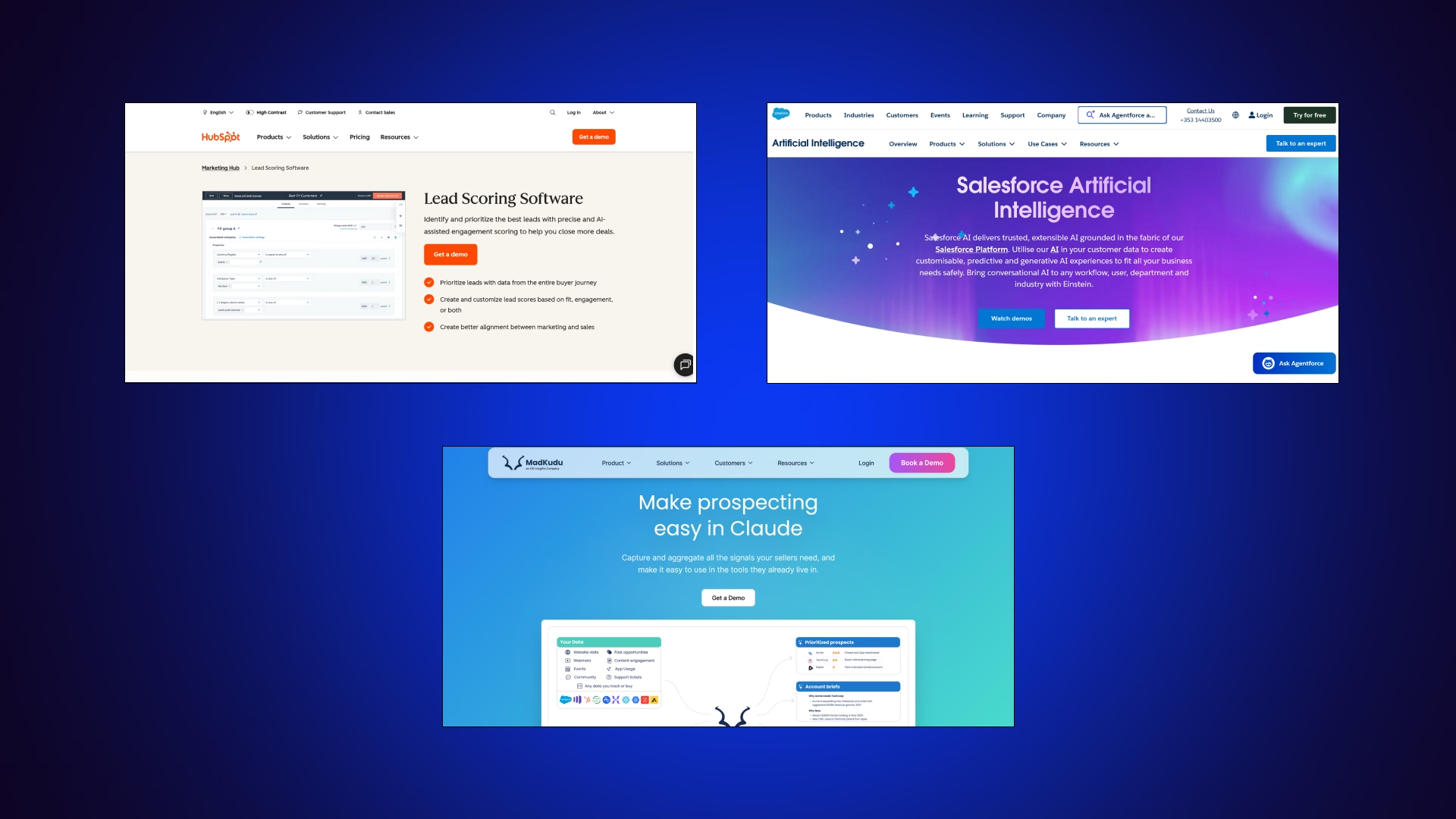
These tools analyze your existing leads and tell you who is ready to buy, helping sales focus on the highest-impact opportunities.
HubSpot Predictive Scoring
- What it does: Uses AI to score leads on two axes, Fit (right company) and Engagement (interest level).
- When you need it: Useful for teams already in HubSpot who want automated scoring without heavy configuration.
- Extra point: Scores feed directly into predictive forecasting, giving marketing and sales a clearer picture of pipeline health.
Salesforce Einstein
- What it does: Part of the Agentforce ecosystem, Einstein can nurture inbound leads autonomously and map relationships from public sources.
- When you need it: Best for large organizations that want to automate speed-to-lead and reduce manual outreach.
- Extra point: Can automate lead triage, manage case routing, and provide real-time suggestions to sales reps (Next Best Action).
MadKudu
- What it does: Focuses on explainable AI scoring with Signal-Based Playbooks that trigger actions based on lead behavior.
- When you need it: Ideal for PLG SaaS companies with high volumes of free users needing to identify upsell opportunities.
- Extra point: No-code model training lets marketing ops adjust AI weights without relying on data scientists.
Freshsales AI (Freddy AI)
- What it does: Scores deals and contacts while recommending the next best action for reps.
- When you need it: Best for SMB teams wanting enterprise-grade scoring without the complexity or cost of Salesforce/HubSpot Enterprise.
- Extra point: Freshchat AI assists agents with conversation summaries and suggested next steps.
AI Tools for Personalization and Customer Engagement
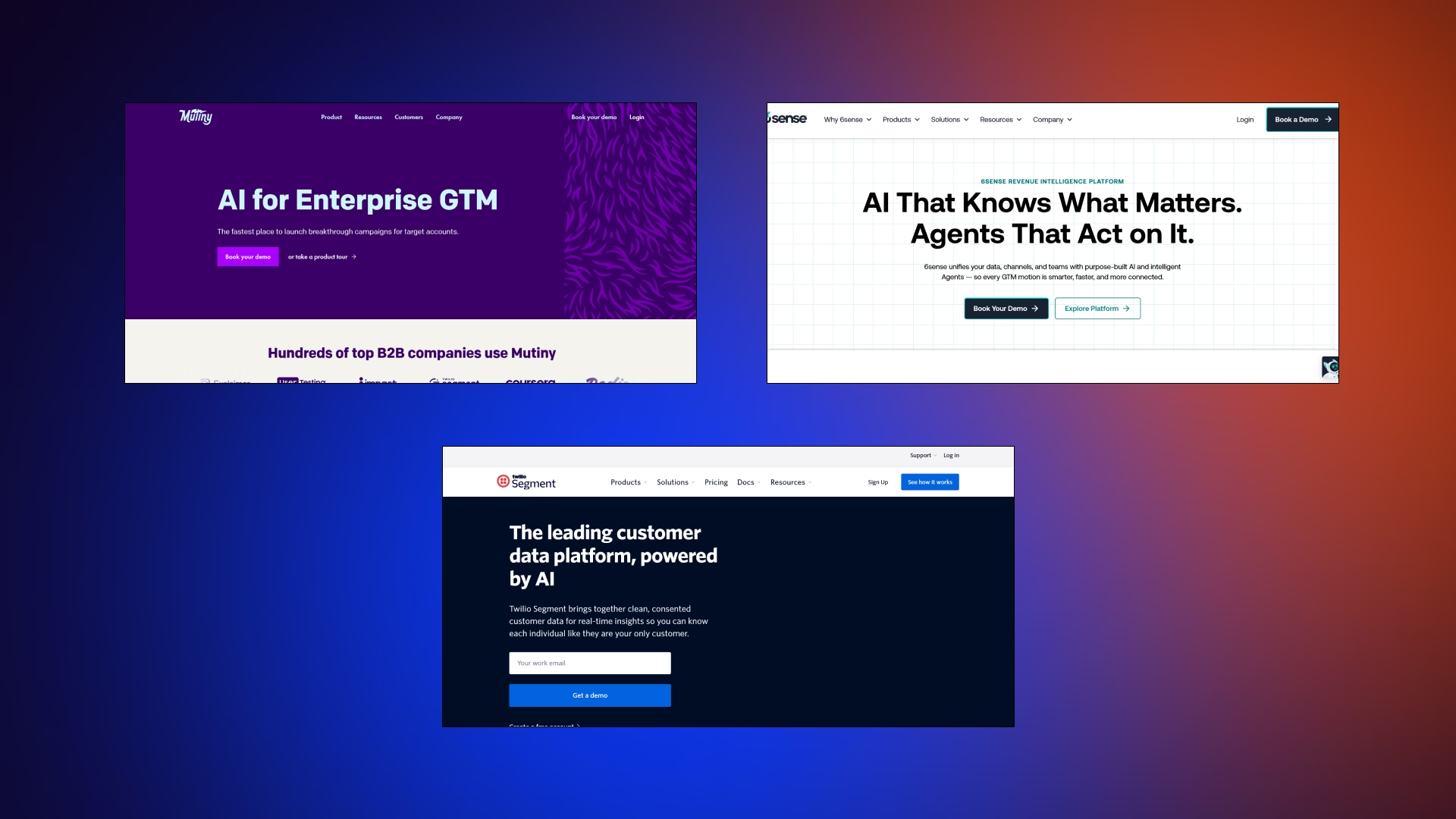
Lists, scoring models, and engagement sequences all feed into a single feedback loop: the AI watches what works, what doesn’t, and adapts your targeting and messaging in near real-time.
For teams that adopt this approach, the benefit isn’t just efficiency; it’s seeing the market clearly enough to act before competitors do.
AI Personalization Engines
These platforms focus on dynamically tailoring content, messaging, and experiences to individual accounts or visitors.
Mutiny
- What it does: Creates fully personalized web experiences, including 1:1 microsites, for target accounts. Its Account Studio AI researches target accounts and generates copy automatically.
- When you need it: Useful when your deals involve high-value accounts that respond better to tailored messaging than generic pages.
- Extra point: Microsite Generator can spin up dedicated "Deal Rooms" pre-filled with relevant case studies and value propositions, saving hours of manual work.
6sense
- What it does: Functions as a revenue intelligence platform with AI agents that orchestrate GTM actions, not just score leads.
- When you need it: Ideal for mid-market and enterprise teams that want AI to handle sequences, ad spend, and personalized outreach automatically.
- Extra point: Intelligent Workflows let you set “if/then” scenarios, so the AI triggers actions like alerting a VP or launching a LinkedIn ad when key accounts show intent.
Segment (Twilio)
- What it does: Bridges data collection with AI activation, building audience segments and predictive models automatically.
- When you need it: Useful for teams that want to personalize across channels without manually building complex queries.
- Extra point: Generative Audiences and CustomerAI predictions score users on likelihood to buy, churn, or engage, which feeds directly into targeted campaigns.
Demandbase
- What it does: Focuses on buying groups rather than individual leads, using AI to identify key stakeholders and filter out irrelevant signals.
- When you need it: Best for enterprise sales working on multi-stakeholder deals where aligning messaging across a group is critical.
- Extra point: Pipeline AI predicts deal velocity and win probability based on the collective behavior of the buying group.
AI Chat, Conversational Marketing, and Real-Time Interaction
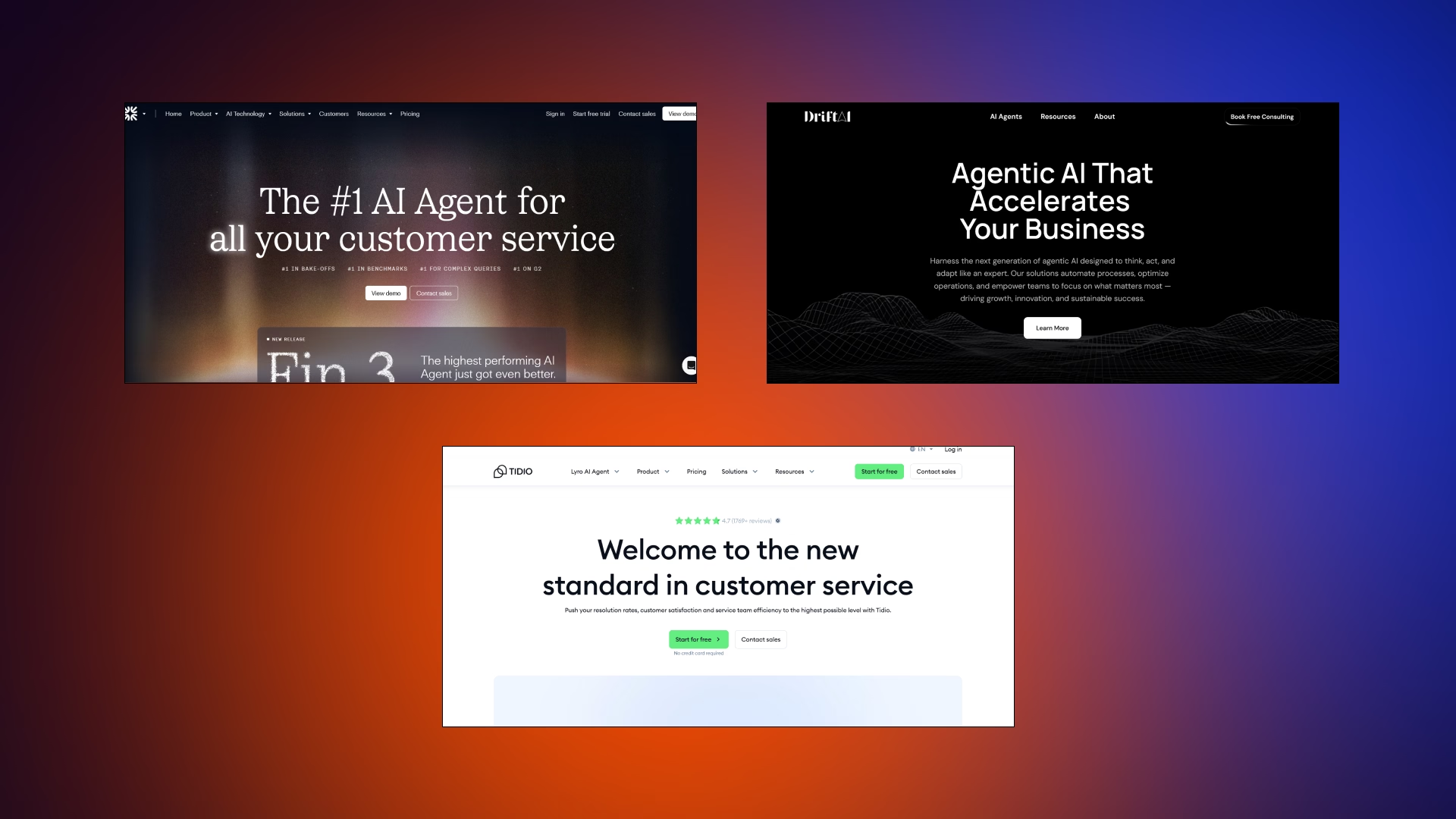
Hybrid AI chat tools are now capable of resolving most queries autonomously while knowing exactly when to pass interactions to humans. They help scale customer engagement, qualify leads, and maintain personalized touchpoints.
Intercom Fin
- What it does: An AI agent for support that follows strict procedures and can diagnose issues from screenshots or uploaded error messages.
- When you need it: Ideal for SMBs or mid-market teams wanting reliable, automated customer support without sacrificing quality.
- Extra point: Simulations let teams test thousands of scenarios before letting the AI handle live conversations.
Drift AI
- What it does: Enterprise-focused AI chat agents that qualify leads in natural language and schedule meetings.
- When you need it: Best for Salesforce-centric enterprise teams needing revenue orchestration at scale.
- Extra point: GPT Suggested Replies assist human agents in real-time and suggest video outreach for high-intent accounts.
Tidio AI
- What it does: Tidio AI can respond to common queries and escalate complex ones to humans.
- When you need it: Great for SMBs looking for enterprise-grade AI chat without the complexity or cost of enterprise solutions.
- Extra point: Smart Handoff routes complex queries to humans, ensuring high-intent or frustrated visitors get attention immediately.
Freshchat AI
- What it does: Vertical AI agents trained for specific industries, integrated across omnichannel touchpoints. Freddy Copilot supports human agents with conversation summaries and suggested next steps.
- When you need it: Useful for teams needing consistent AI-assisted support and engagement across WhatsApp, Instagram, Web, and SMS.
Extra point: Maintains context across channels, so conversations don’t feel disjointed if the user switches platforms.
Predictive Personalization: Using AI Models To Boost Conversions Across Touchpoints
AI personalization today isn’t just about swapping tokens. It learns from behavior, predicts intent, and delivers the right content or interaction at the right moment.
Across web, email, chat, and ads, predictive models help marketing teams surface the offers and messaging most likely to convert.
The payoff is measurable: shorter cycles, higher engagement, and fewer wasted touches across accounts that aren’t ready to act.
AI Marketing Automation and Workflow Optimization
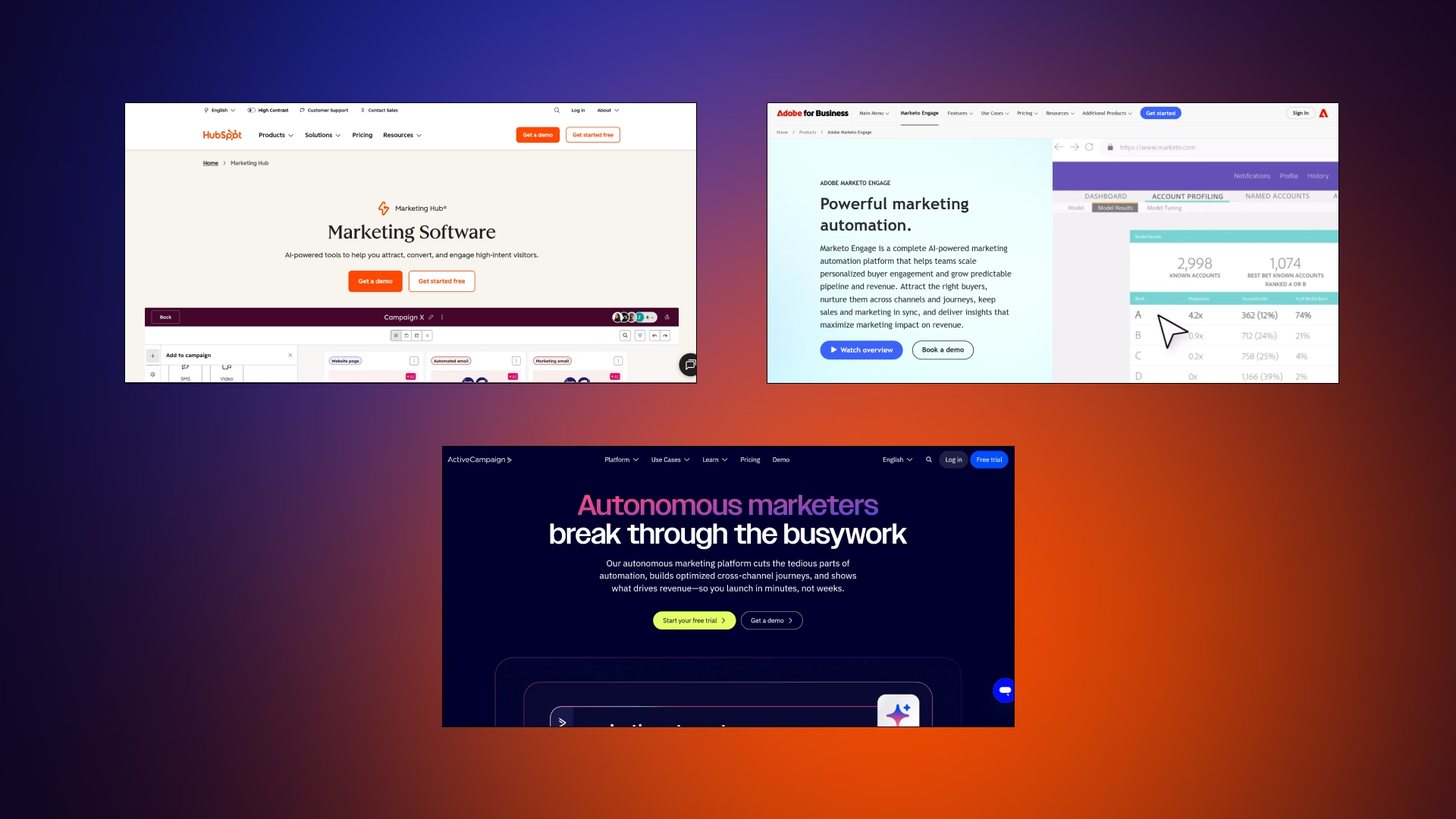
Marketing automation has moved from rigid workflows to AI agents that can orchestrate campaigns, optimize tasks, and adjust on the fly.
Operations and marketing teams now rely on these tools to free up human bandwidth while ensuring consistency and speed across campaigns and projects.
AI Marketing Automation Platforms
These platforms go beyond basic email triggers, using autonomous AI to plan, execute, and optimize campaigns.
HubSpot Marketing Hub
- What it does: Breeze AI runs autonomous agents for content creation, prospect research, and customer service tasks. Campaigns, social posts, emails, and lead engagement can all be automated.
- When you need it: Best for scaling companies that want a unified source of truth across Sales, Marketing, and Service data.
- Extra point: Breeze Intelligence enriches contact records automatically, reducing reliance on multiple third-party tools.
Marketo (Adobe)
- What it does: Uses Agentic AI to automate the content supply chain and build complex customer journeys.
- When you need it: Ideal for large enterprises with multi-stage workflows and strict brand compliance.
- Extra point: Adobe GenStudio links creative assets to workflows, ensuring AI-generated content is correctly tagged and personalized for the audience.
ActiveCampaign
- What it does: Autonomous Marketing Agents create segments, send emails, and optimize campaigns toward a goal without manual step-by-step setup.
- When you need it: Suitable for SMB and mid-market teams who want enterprise-level AI automation without the complexity or cost of Adobe or Salesforce.
- Extra point: Predictive Content allows dynamic swapping of content blocks for each user to maximize engagement.
Customer.io
- What it does: Uses AI-driven data activation to generate segments and suggest in-app messaging based on user behavior.
- When you need it: Perfect for SaaS and tech companies looking for granular, event-triggered automation tied to actual product usage.
- Extra point: AI Assistant integrates with external AI tools, enabling complex, customized data pipelines.
AI Workflow and Operations Tools
These tools move beyond simple app connections, letting AI reason, plan, and execute multi-step processes across platforms.
Zapier AI
- What it does: Turns Zaps into AI-powered agents that can interact with multiple tools and execute complex workflows on command.
- When you need it: Useful for operations teams that want custom AI “employees” working across hundreds of apps.
- Extra point: Copilot lets you describe workflows in plain English, lowering the barrier for complex automation.
Make.com AI
- What it does: Builds autonomous agents in a visual canvas, looping through tasks until goals are met.
- When you need it: Ideal for technical users needing precise control over multi-branch workflows and error handling.
- Extra point: AI Assistant analyzes errors and suggests fixes, reducing manual troubleshooting.
Notion AI SOPs
- What it does: Turns SOP documents into actionable workflows, executing tasks automatically.
- When you need it: Best for knowledge-centric teams that want to turn static documentation into operational processes.
- Extra point: Enterprise Search connects multiple sources, letting the AI answer questions by referencing the right SOP instantly.
ClickUp AI
- What it does: ClickUp Brain manages tasks, docs, and teams by generating subtasks, updating statuses, and writing standup summaries automatically.
- When you need it: Ideal for project-heavy teams using Agile/Scrum who want to reduce admin overhead.
- Extra point: The Ask Q&A feature lets teams query the workspace for task ownership or progress without hunting through multiple tools.
AI as the Operating System Behind Modern B2B Go-To-Market Teams
AI is no longer just a helper; it’s the backbone of B2B GTM. From lead scoring to personalization, marketing automation, and workflow orchestration, these tools coordinate across teams and data sources, letting humans focus on strategy while AI executes operational complexity.
In practice, this means faster cycle times, better alignment between marketing and sales, and smarter decisions driven by real-time signals rather than static reports.
AI Tools for Content Creation and Optimization
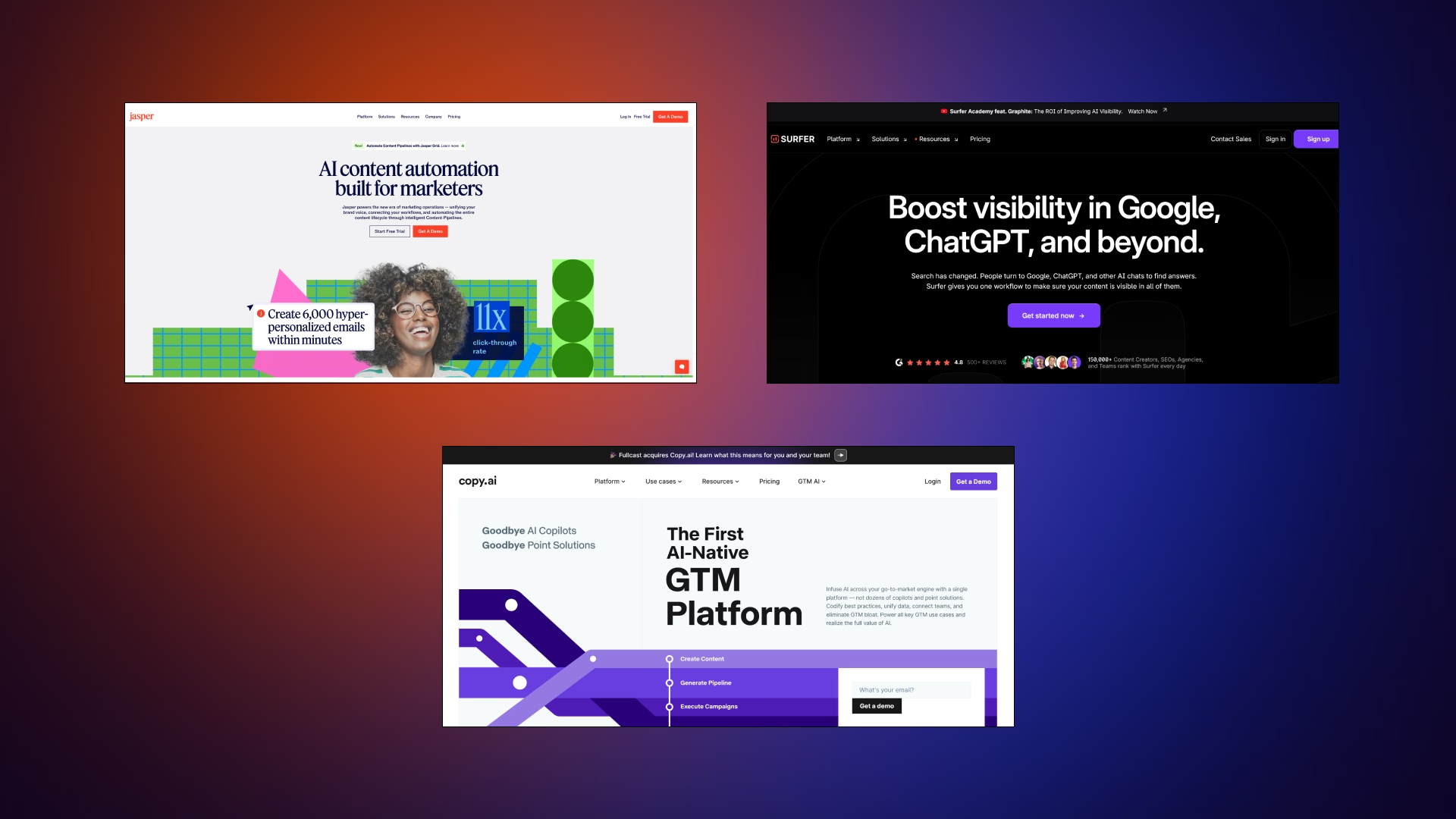
In 2025, content creation isn’t just about generating text. The best tools now act as strategic assistants, helping teams plan, produce, and optimize content across channels.
AI Content Creation Platforms
These platforms go beyond drafting content. They can plan campaigns, maintain brand consistency, and connect content production to measurable business outcomes.
Jasper
- What it does: An AI marketing copilot that plans, drafts, and schedules content for blogs, social media, and email campaigns.
- Why you need it: You want a system that can handle end-to-end content production without having to coordinate multiple tools.
- Extra point: Its knowledge base, Jasper IQ, keeps content accurate by referencing internal product specs and guidelines.
Copy.ai
- What it does: A GTM AI platform that automates content workflows, from prospect research to outreach drafts.
- Why you need it: If you have repetitive content or sales sequences to scale, Copy.ai turns each BDR into a high-output content creator.
- Extra point: The Prospecting Cockpit centralizes bulk tasks so teams can operate like a “10x engineer” without coding.
Writer
- What it does: An enterprise-grade AI content platform with proprietary LLMs and full knowledge integration.
- Why you need it: If data privacy is critical or you need brand-specific, auditable content, Writer ensures compliance.
- Extra point: Offers granular governance across teams, preventing inconsistencies in messaging.
ChatGPT
- What it does: A raw intelligence model for ideation, drafting, and analysis.
- Why you need it: Useful for quick prototypes, brainstorming, or creating rough drafts before handing off to enterprise tools.
- Extra point: Often restricted in enterprises for final content due to privacy concerns.
Claude
- What it does: A high-context AI model for analyzing and summarizing large documents.
- Why you need it: If you need a nuanced understanding of complex content, like long reports or whitepapers.
- Extra point: Preferred for long-form strategy work where context preservation is crucial.
AI SEO and Content Optimization Tools
SEO has moved from keywords to semantic understanding and content intelligence. These tools can be used within Webflow SEO services, or individually, and they guide what should be written, how to structure it, and how to maintain ranking over time.
SurferSEO
- What it does: Automates content optimization for search intent and high-volume production. Also, it writes entire drafts optimized for ranking, reducing manual SEO edits.
- Why you need it: To scale content while staying aligned with search algorithms.
- Extra point: Useful when speed and volume are more important than deep editorial nuance.
Clearscope
- What it does: Focuses on editorial depth and semantic coverage, and Flags content that is decaying in relevance, guiding updates to protect ranking.
- Why you need it: To maintain authority and quality in existing content libraries.
- Extra point: Works best when content quality is prioritized over quantity.
MarketMuse
- What it does: A strategic AI platform for topic planning and content authority.
- Why you need it: To identify content gaps that can yield measurable traffic gains.
- Extra point: Excellent for enterprise content teams aiming for domain authority.
Frase
- What it does: Optimizes content for answer engine visibility (Google SGE and featured snippets).
- Why you need it: If you want AI-driven content to surface directly in search summaries.
Extra point: Can increase discoverability for zero-click search traffic.
AI-First Prospecting: How AI Shapes ICP Targeting and Buying Signals
Targeting and engagement strategy overlap more and more in 2025. AI tools now determine the appropriate engagement strategy and the exact timing.
Account-based strategies driven by broad demographics, hunches, or proxies have all been replaced by targeted marketers focused on in-market accounts. This practice improves the already increased precision of sales and marketing motions more than ever. Your targeting, messaging, and time prioritization get instant feedback in the automation model. Fine-tuned engagement sequence targeting optimizes in real time based on score lists.
This approach becomes more widely adopted, and it’s highly recommended by marketing leaders, even by the leading Webflow agency for B2B Brands. The advantage becomes the ability to identify and act on new opportunities in the marketplace before competitors, in addition to the time saved.
Predictive Topic Modeling and AI-Based Content Performance Algorithms
These systems go beyond creating content; they forecast what will perform, helping teams prioritize the most impactful topics.
AI Data Foundations: Preparing Your Organization for AI Adoption
AI can only perform as well as the data it sees. Before layering autonomous agents or predictive engines on top, organizations need to get the fundamentals right, clean data, structured inputs, and accessible systems.
Why Data Quality Determines AI ROI
Data quality is about accuracy, completeness, and consistency across all your sales and marketing records. Poor or outdated data causes AI models to make wrong predictions, mis-score leads, or send irrelevant messages, wasting time and budget.
On the other hand, high-quality data allows AI agents to identify true buying signals, target the right accounts, and optimize campaigns effectively.
How To Structure Your CRM and MAP for AI Inputs
Organizing your CRM (Salesforce, HubSpot) and Marketing Automation Platform (MAP) so AI can consume the data efficiently.
You need this practice because AI models need consistent field names, standardized values, and clear relationships between contacts, accounts, and deals. Proper structuring enables AI to generate reliable scoring, forecasting, and personalization without manual corrections.
Eliminating Data Silos To Improve Machine Learning Accuracy
Consolidating data across platforms, CRM, MAP, website analytics, and product usage into a single, accessible system. Silos prevent AI from seeing the full picture, leading to incomplete predictions or misaligned recommendations.
Keep in mind that unified data lets AI agents cross-reference behavior, firmographics, and intent signals to produce smarter segmentation, scoring, and outreach.
AI Governance, Compliance, and Model Safety in B2B Organizations
You can have the best AI stack in the world, but without rules and oversight, it can create more problems than it solves. Governance isn’t about bureaucracy; it’s about making AI reliable, safe, and aligned with your business objectives.
Setting AI Usage Policies for Marketing and Sales Teams
Guidelines that define how your teams can interact with AI tools, what tasks AI can perform autonomously, and who approves critical decisions.
Without policies, reps might rely on AI to send unvetted messages, generate inaccurate lead scores, or misinterpret signals, exposing your brand. Clear rules reduce errors, keep teams accountable, and ensure AI outputs are consistent with company standards.
Note: Policies should be living documents, updated as AI capabilities evolve and new risks appear.
Data Privacy, Compliance, and Ethical AI Standards
Data privacy, compliance, and ethical AI standards are measures that ensure AI processes customer and prospect data according to GDPR, CCPA, and other regulations, while respecting ethical principles.
You need to follow this because AI models can easily ingest sensitive data and generate outputs that expose personally identifiable information or unfairly profile individuals.
With the right compliance controls this protect the company is protected from fines, users are protected from misuse, and trust is maintained with customers.
Keep an eye on: Audit logs, anonymization, and model monitoring are simple but effective ways to maintain oversight.
Avoiding Hallucination, Bias, and Security Risks in AI Workflows
These are strategies to detect and correct AI errors, including false predictions, biased recommendations, and potential data breaches. Hallucinations can mislead sales teams, bias can reinforce poor targeting, and security flaws can leak sensitive business or customer data.Building Your AI Marketing Stack: How To Choose the Right Tools
Picking AI tools isn’t about grabbing every shiny platform. It’s about understanding your team, your processes, and your data maturity, while layering AI where it actually solves friction. The stack should feel like an extension of your people, not a replacement.
Framework for Selecting AI Tools Based on Maturity Level
This method refers to matching AI capabilities to your organization’s readiness. Jumping straight to enterprise-grade agents without the right data or process maturity creates noise, not impact. By evaluating your team, data quality, and workflow sophistication, you pick tools that provide immediate ROI while laying the foundation for more advanced AI.
Consider three layers:
- Data layer - CRM, MAP, analytics tools. Are they clean and structured?
- Execution layer - Automation and AI agents for campaigns, scoring, and personalization.
- Intelligence layer - Predictive models, revenue operations, and content optimization.
AI Stack for Startups
Startups need tools that move fast and don’t require a big team to manage. Focus on tools that help you find leads, score them, and reach out in a personal way without getting bogged down in complexity.
Typical setup:
- Apollo or Clay for finding prospects
- HubSpot or ActiveCampaign for basic automation
- Jasper or Copy.ai for content
- Tidio AI for chat support
Tip: Start small, see what works, and build on it as your team grows.
AI Stack for SaaS Companies
SaaS companies deal with free users, trials, and retention. A stack here helps you predict which users will convert, personalize experiences based on behavior, and run campaigns automatically.
Typical setup:
- HubSpot or Salesforce Einstein for lead scoring
- MadKudu for understanding product usage and upsell opportunities
- 6sense or Mutiny for personalized content and website experiences
- Jasper or Writer for content
- Intercom Fin for chat support
It helps with routine validation, controlled model training, and security checks, reducing errors and maintaining confidence in AI-driven decisions.
Tip: Make sure your product data flows smoothly into marketing and sales AI so everything works together.
AI Stack for Enterprise Organizations
Enterprises need systems that connect multiple teams, data sources, and AI tools. This stack helps manage large, complex campaigns, multiple buyers, and compliance rules, while still personalizing and predicting outcomes at scale.
Typical setup:
- ZoomInfo and Apollo for data
- Salesforce Einstein for lead scoring
- 6sense or Demandbase for account-based marketing
- Marketo or HubSpot with Breeze AI for automation
- Jasper or Writer for content
- Drift AI for high-touch engagement
- Clari for revenue forecasting and insights
Tip: Big stacks need clear rules, training, and documentation so the AI doesn’t create confusion.
Key Takeaways
The following points are the most essential from this article:
1. AI Helps Your Business Grow Faster and Make Smarter Moves
AI is not simply another box to check off on your tech stack-it alters how teams function. If configured correctly, AI allows you to respond to leads quickly than competitors, and achieve faster execution and smarter decisions at all levels.
You begin noticing patterns in buyer activity that, in the past, were hidden, and your campaigns adjust to buyer activity in real-time, rather than following pre-established workflows.
2. The Right AI Tools Bring Better Leads and Personalized Experiences
It's not about employing the numerous tools that AI has to offer; rather, it's about integrating them into your team and workflows. When tools work in harmony with one another, and your data is well-maintained, leads become lower in volume but higher in quality, content meets better personalization, and the buyer's journey is frictionless.
AI is powerful, but the real value is achieved when you combine AI with your entrepreneurial strategy.
3. Using AI Across Your Team Gives You a Lasting Advantage
When businesses implement AI across marketing, sales, and operational functions, they begin to reap exponential rewards. Benefits such as unhindered flow of insights, self-optimizing marketing campaigns, and improved visibility across pipelines.
Competing businesses that still rely on manual processes or unintegrated automation begin to lose ground, and not just in efficiency, but in understanding their customers. AI becomes a part of the company’s muscle memory, not just a tool, giving them an edge that’s hard to replicate.
FAQ
What Are the Best AI Tools for B2B Lead Generation?
Tools like Apollo, ZoomInfo, Clay, Leadfeeder, and Cognism help you find and qualify leads faster. They look at signals like company activity and help you focus on the leads most likely to buy.
How Can AI Improve B2B Personalization and ABM?
AI can change website content, emails, and ads for each account or person automatically. Tools like Mutiny, 6sense, and Demandbase make messages feel personal without you doing all the work.
Which AI Tools Are Best for Small B2B Marketing Teams?
Startups and small teams benefit from simple, easy-to-use tools like Apollo or Clay for leads, HubSpot or ActiveCampaign for automation, Jasper or Copy.ai for content, and Tidio AI for chat. They get results without needing a full team.
Can AI Replace Copywriters or Marketers in B2B?
AI helps with writing, scoring leads, and personalizing campaigns, but it doesn’t replace human strategy. Marketers guide AI, check its work, and make creative decisions.
What AI Tools Improve SEO and Content Performance?
Tools like SurferSEO, Clearscope, MarketMuse, and Frase help you plan content, optimize for search, and find gaps in your topics. They make your writing more likely to be found by customers.
How Does AI Improve B2B Sales and Marketing Alignment?
AI scores lead, tracks signals, and shares insights across teams. Tools like Salesforce Einstein, Gong, and Outreach help marketing and sales work together, so leads move faster through the funnel.
Which AI Tools Improve Forecasting and Pipeline Accuracy?
Clari, People.ai, and Akkio use data and signals to predict which deals are likely to close. This helps teams plan better and avoid surprises in the pipeline.
What Is the Best AI Stack for a SaaS Company?
A good stack includes tools for scoring (HubSpot or Salesforce Einstein), PLG insights (MadKudu), personalization (6sense or Mutiny), content (Jasper or Writer), and chat (Intercom Fin). It balances growth, product use, and buyer journeys.
What Are the Risks of Using AI in B2B Marketing?
AI can make mistakes, show biased results, or expose data if not managed well. Relying only on AI without human checks can lead to wrong leads, off-brand messages, or privacy issues.
How Can Companies Ensure AI Models Stay Accurate Over Time?
Keep your data clean, update AI models with new information, monitor outputs, and have humans review results regularly. This makes sure AI decisions stay useful and correct.